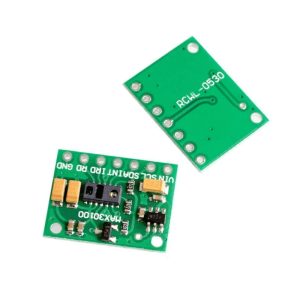
Description
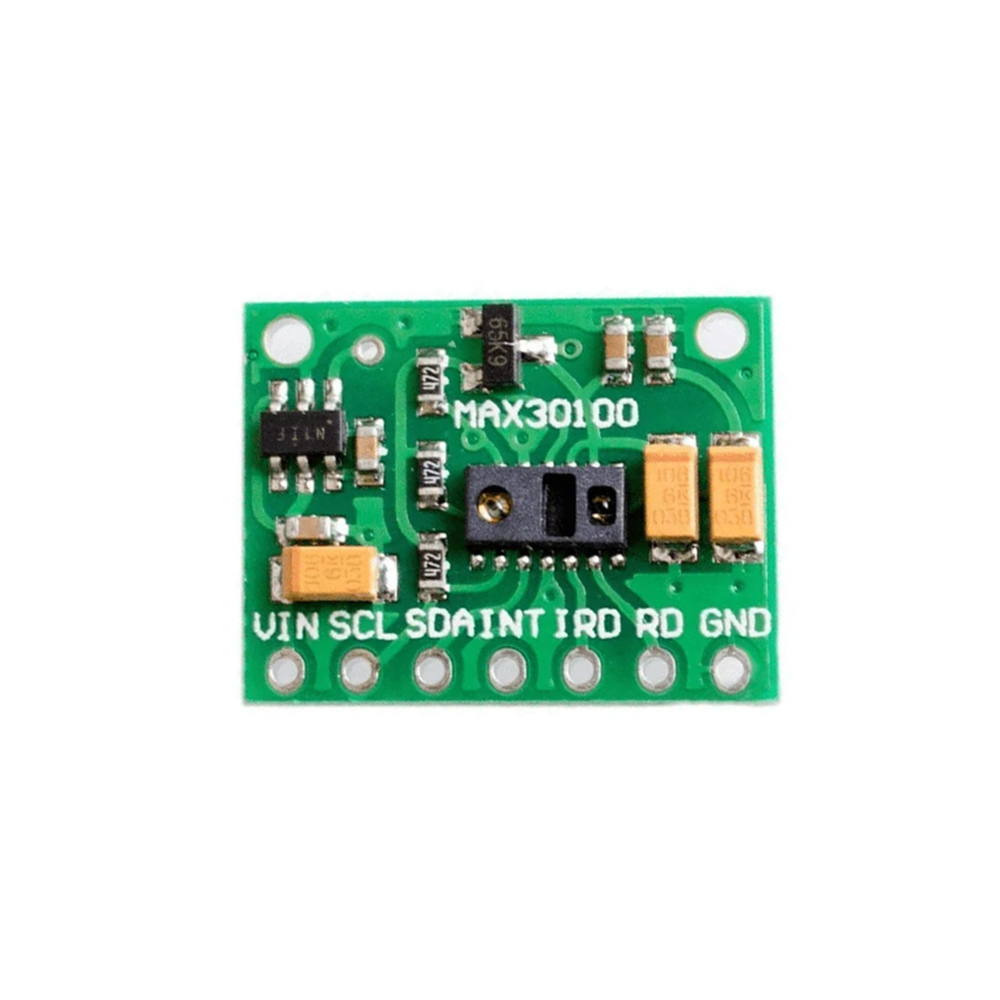
The MAX30100 is an integrated pulse oximetry and heart-rate monitor sensor solution that combines two LEDs (red and IR), a photodetector, optimized optics, and low-noise analog signal processing to detect pulse oximetry and heart-rate signals . It operates from 1.8V and 3.3V supplies and supports I2C communication at address 0x57.
The sensor uses photoplethysmography (PPG) to measure light absorption changes in blood vessels. The red (660nm) and infrared (880nm) LEDs illuminate the skin, and the reflected light is captured by the photodetector. The resulting raw data can be processed by a host microcontroller to calculate heart rate and SpO2 .
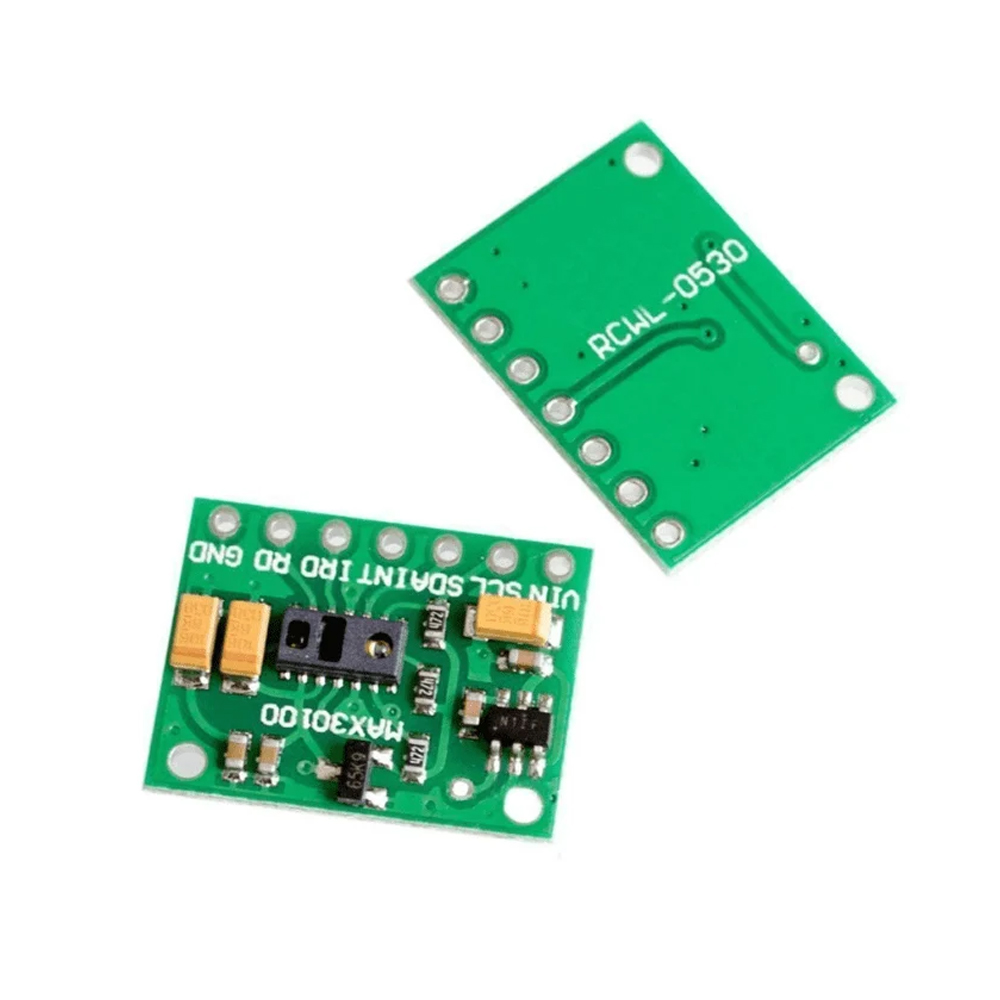
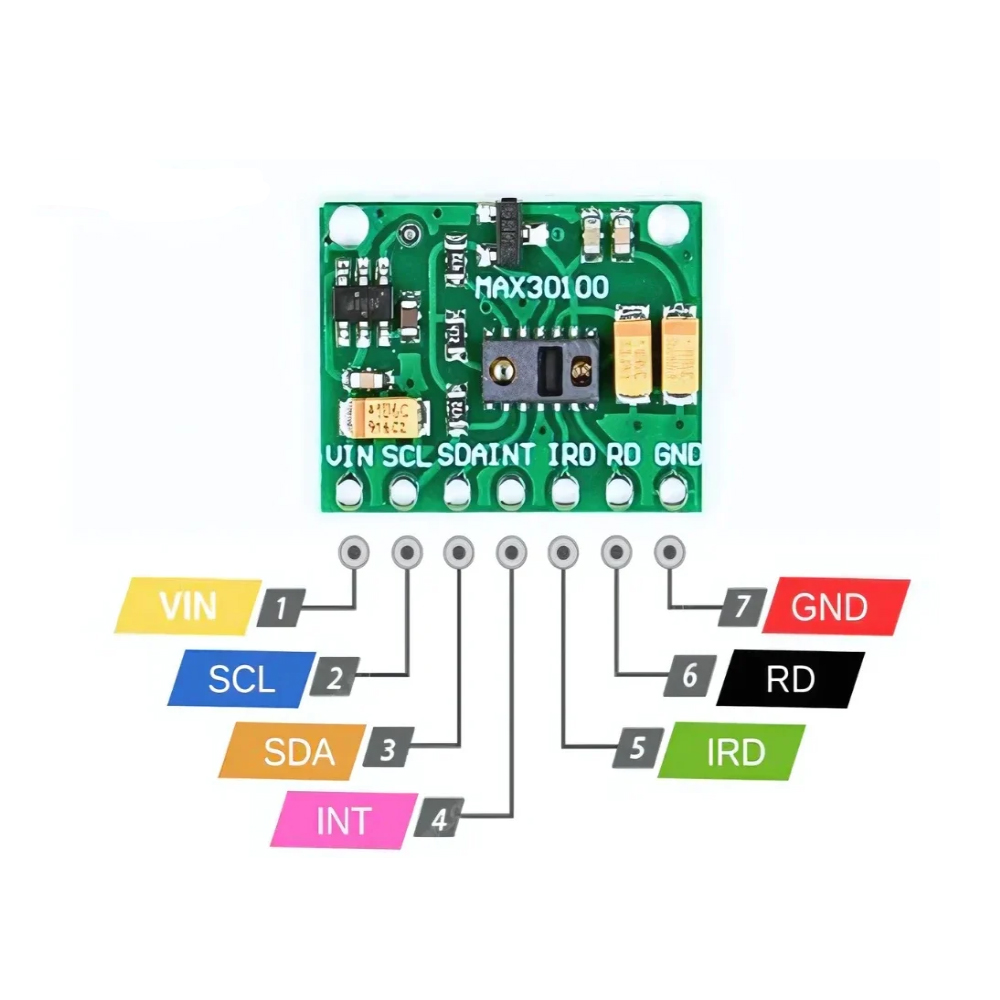
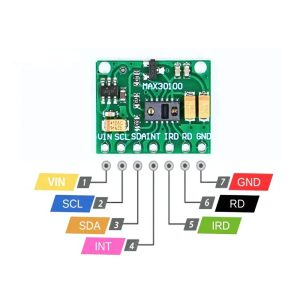
Breakout modules typically provide 3.3V input compatibility and expose the I2C pins (SDA, SCL) plus an optional INT pin. The module is intended for fitness assistant devices, wearable devices, and medical monitoring equipment prototypes .
Critical limitations: The MAX30100 outputs raw PPG data—heart rate and SpO2 calculation require host-side algorithms. It is not a medical device and is not suitable for clinical diagnosis. Direct skin contact is required, and motion artifacts significantly degrade signal quality . Most importantly, the IC is obsolete—new designs should use the MAX30102 or MAX30101 .
Module-specific hardware issue: Many MAX30100 breakout modules have a known design flaw—the I2C pull-up resistors are connected to the 1.8V rail instead of 3.3V, which prevents detection on 5V Arduino boards and can cause unreliable operation even on 3.3V systems. A hardware modification (cutting a trace and rewiring pull-ups to 3.3V) is often required . This is a significant support burden to communicate to customers.
Features
-
Integrated Optical Sensing: Red and IR LEDs, photodetector, and analog front-end in a single package .
-
I2C Interface: Standard communication at address 0x57.
-
Ultra-Low Power: Shutdown current of 0.7µA typical .
-
Ambient Light Cancellation: Integrated circuitry reduces interference .
-
Programmable Sample Rate and LED Current: Flexible configuration for power/accuracy trade-offs .
-
16-Deep FIFO: Buffers sensor data to reduce host polling overhead .
-
Compact Package: 5.6mm × 2.8mm × 1.2mm 14-pin optically enhanced system-in-package .
-
Legacy Arduino Library Support: Existing libraries (Arduino-MAX30100) provide basic heart rate and SpO2 calculation .
Technical Specifications
| Parameter | Specification |
|---|---|
| Sensor IC | Analog Devices MAX30100 (discontinued) |
| LED Wavelengths | Red: 660nm; IR: 880nm |
| Supply Voltage (IC) | 1.8V and 3.3V |
| Supply Voltage (Module) | 3.3V recommended (VIN pin accepts 1.8–5.5V per some modules) |
| Current Draw | 0.7mA typical; 0.7µA standby |
| Output Interface | I2C (address 0x57) |
| ADC Resolution | 16-bit |
| Sampling Rate | Programmable (50–1000 Hz) |
| Operating Temperature | -40°C to +85°C |
| PCB Size | Approx. 19 × 14.5mm (varies) |


Reviews
There are no reviews yet.