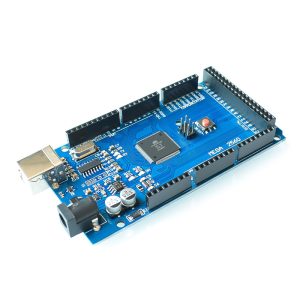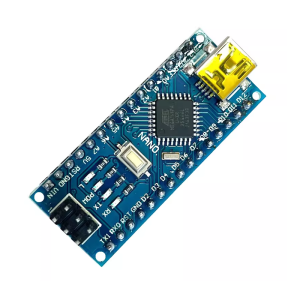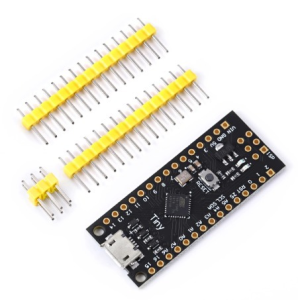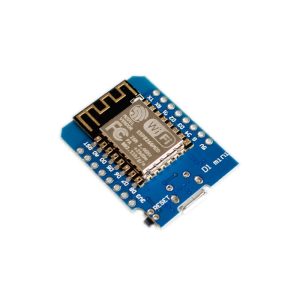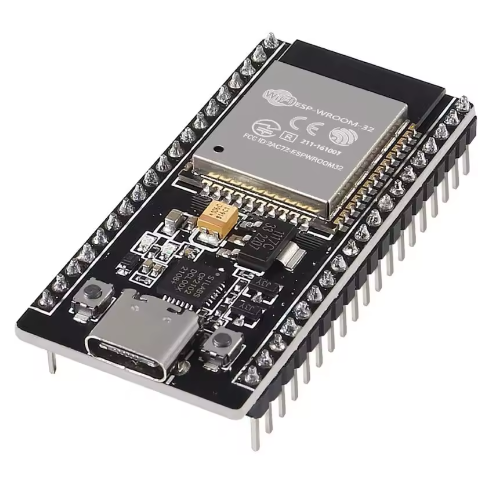
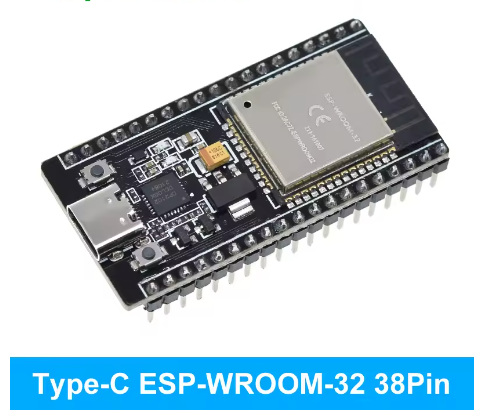
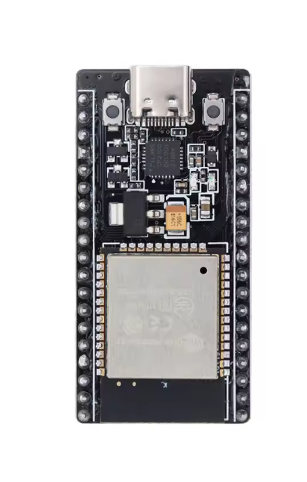
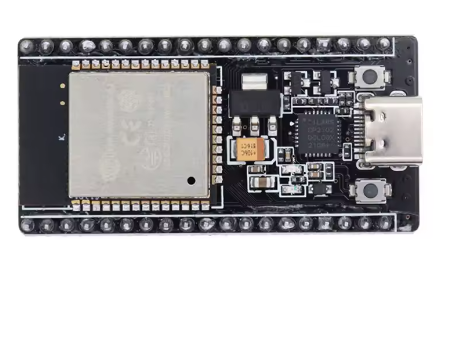
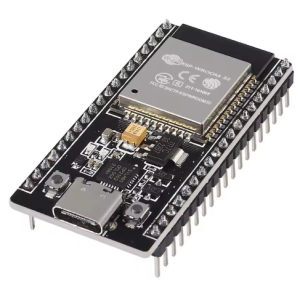
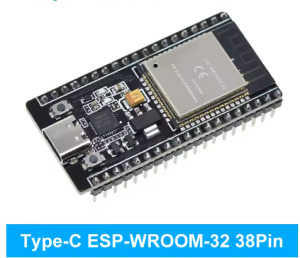
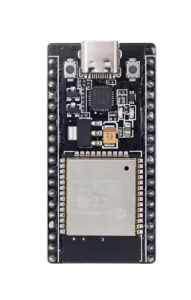
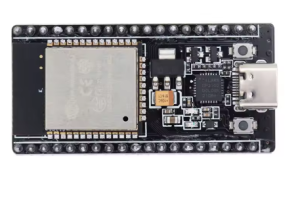
The ESP-32S / ESP-WROOM-32 38-pin development board with a Type-C USB interface offers modern connectivity and maximum pin breakout for highly versatile IoT projects. Pre-welded pins simplify immediate use on a breadboard, combining the powerful dual-core processor, ultra-low power consumption, and integrated Wi-Fi/Bluetooth capabilities of the ESP32 chip with the convenience and robustness of a Type-C port.
Description
This 38-pin development board represents a modern iteration of the highly popular ESP32 platform, utilizing the reliable ESP-WROOM-32 or compatible ESP-32S module. It is engineered around the Xtensa® 32-bit LX6 dual-core microprocessor, which can be dynamically clocked up to 240 MHz to handle complex real-time applications and data processing tasks efficiently.
The board’s standout feature is the inclusion of a Type-C USB interface, offering a more durable, reversible, and future-proof connection standard compared to older Micro-USB ports. This interface is managed by a stable USB-to-UART bridge chip (commonly the CH9102F or CP2102, depending on the manufacturer), ensuring reliable programming and serial debugging capabilities.
With 38 pins broken out to headers, this version provides access to nearly all available GPIOs, making it ideal for projects requiring numerous peripherals, sensors, and actuators. The pins come pre-soldered (welded), allowing instant plug-and-play functionality on a standard breadboard.
Connectivity is comprehensive, with integrated 2.4 GHz dual-mode Wi-Fi (802.11b/g/n) and Bluetooth (v4.2 BR/EDR and BLE), enabling a wide spectrum of wireless applications. The board is designed with ultra-low power consumption in mind, making it suitable for battery-operated devices when utilizing its various sleep modes. It is fully compatible with major development environments like the Arduino IDE and ESP-IDF, making it accessible for a wide range of users from hobbyists to industrial developers.
Features
- Modern Type-C USB Interface: Offers a durable, reversible, and current-standard connection port for programming and power.
- Powerful Dual-Core Processing: Xtensa® 32-bit LX6 dual-core CPU, running at up to 240 MHz.
- Integrated Wireless Connectivity: Onboard 2.4 GHz Wi-Fi (802.11b/g/n) and Bluetooth v4.2 BR/EDR and BLE.
- Maximized GPIO Access: The 38-pin configuration exposes nearly all available I/O pins for versatile project design.
- Pre-Welded Headers: Pins come pre-soldered, ready for immediate breadboard use.
- Ultra-Low Power Consumption: Efficient power management for extended battery life in portable applications.
- Rich Peripheral Interfaces: Supports UART, SPI, I²C, I²S, PWM, ADC (18 channels), DAC (2 channels), touch sensors (10), and a Hall sensor.
- Wide Compatibility: Programmable with Arduino IDE, ESP-IDF, Lua, and MicroPython.
Parameters
| Feature | Detail |
|---|---|
| Microcontroller | ESP32-D0WDQ6 (within the WROOM-32/ESP-32S module) |
| Processor Cores | Xtensa dual-core 32-bit LX6 |
| Clock Speed | Adjustable from 80 MHz to 240 MHz |
| SRAM | 520 KB |
| Flash Memory | 4 MB SPI Flash (32 Mbit) |
| Operating Voltage | 3.3V (Logic level) |
| Input Voltage (via USB Type-C) | 5V DC |
| Connectivity | Wi-Fi (802.11b/g/n), Bluetooth 4.2 BR/EDR & BLE |
| USB Interface Chip | CH9102F or CP2102 (varies by manufacturer) |
| Pin Count | 38 Pins (DIP-38 package) |
| USB Interface Type | Type-C |