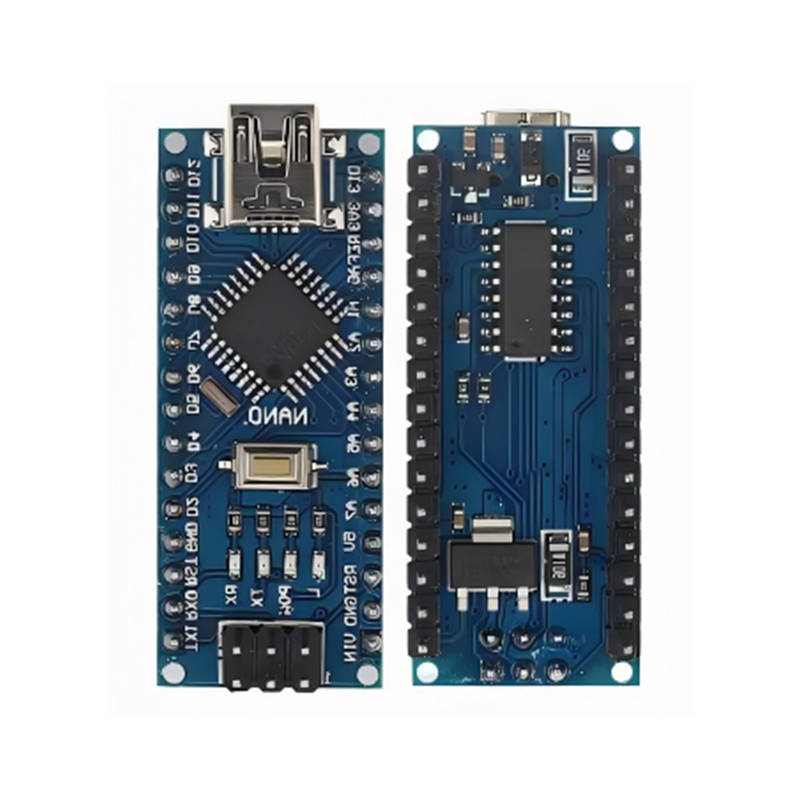
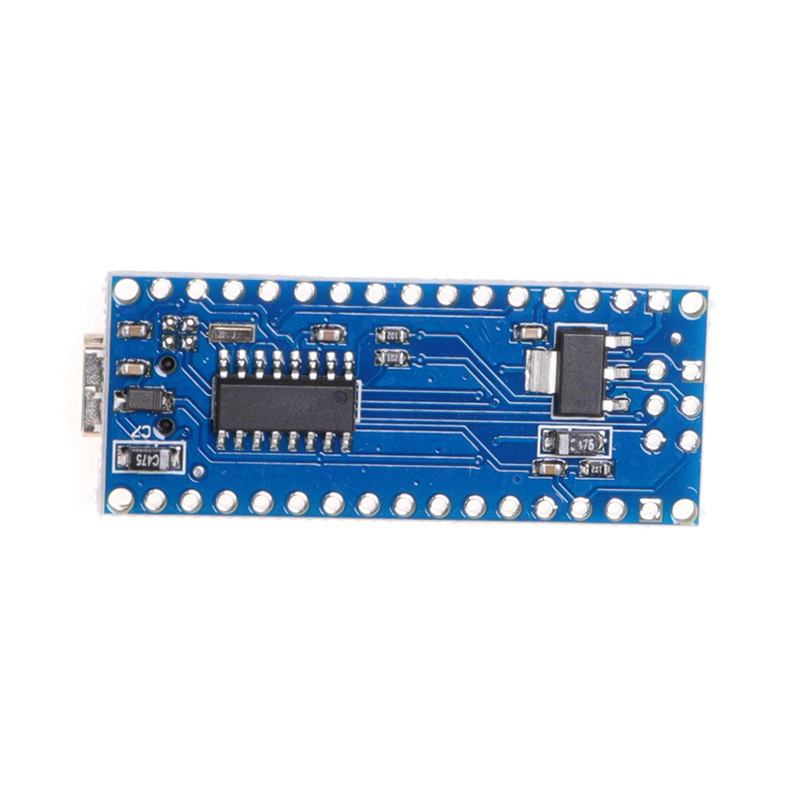
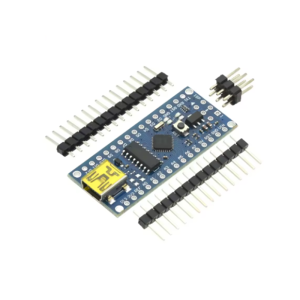
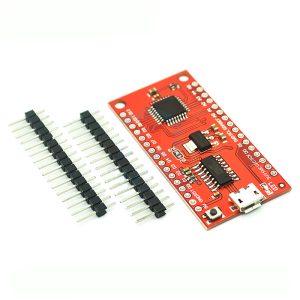
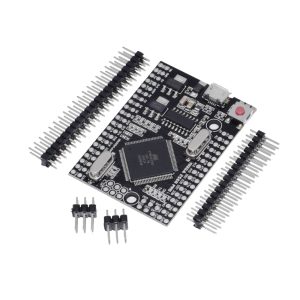
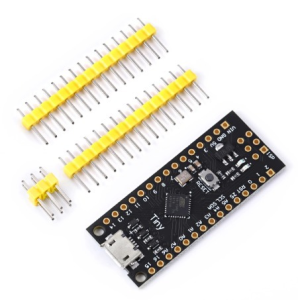
The
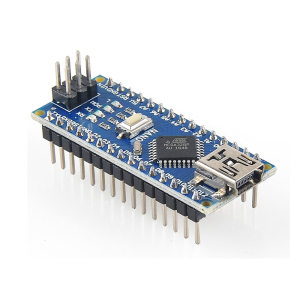
Nano V3.0 ATmega328PB+CH340G development board is a compact, Arduino-compatible microcontroller board featuring the more powerful
ATmega328PB chip, USB-to-Serial conversion via
CH340G, and pre-soldered (welded) pins for easy breadboard use , offering more I/O and faster processing than older Nano versions, suitable for hobbyists and projects needing more digital pins and features in a tiny form factor.
Key Features & Components:
- Microcontroller: ATmega328PB (an enhanced version of the classic 328P).
- USB-to-Serial Chip: CH340G, making it easy to connect and program via USB.
- Form Factor: Small, breadboard-friendly design.
- Pins: Includes digital I/O (D0-D14), analog inputs (A0-A5), PWM pins, and communication interfaces (Serial, SPI, I2C).
- Connectivity: Mini USB interface for power and programming.
- Power: Can be powered via USB or external power supply.
What “Welded PIN” Means:
- It signifies that the header pins (the metal connectors) are already soldered onto the board, so you don’t need to do it yourself.
Benefits:
- More Pins: The ATmega328PB offers more digital pins (14) and analog pins compared to some older variants.
- Enhanced Performance: The PB version provides extra features and efficiency.
- Ready-to-Use: Pre-soldered pins make it immediately usable in projects without soldering.
Product Specifications
| Feature |
Detail |
| Microcontroller |
ATmega328PB |
| Operating Voltage |
5 V |
| Input Voltage (Recommended) |
7-12 V |
| Clock Speed |
16 MHz |
| Flash Memory |
32 KB (2 KB used by bootloader) |
| SRAM |
2 KB |
| EEPROM |
1 KB |
| Digital I/O Pins |
14 (6 provide PWM output) |
| Analog Input Pins |
8 (A0-A7) |
| USB-to-Serial Chip |
CH340G |
| USB Connector Type |
Mini-USB |
| Dimensions |
Approx. 45 mm x 19 mm |
Due to its small footprint and versatility, the Nano V3.0 is a popular choice for integrating into permanent installations and space-constrained projects.
- Robotics & Motion Control: Building small robots, line-following vehicles, robotic arms, or custom motion controllers that require precise control and responsiveness.
- Home Automation & IoT Devices: Creating smart lighting systems, automated plant watering systems, remote-controlled appliances (IR remotes), or security systems that monitor sensors.
- Sensor Data Logging & Environmental Monitoring: Interfacing with a wide variety of sensors (temperature, humidity, light, motion) to collect data and potentially log it to an SD card.
- Wearable Technology: Its compact size makes it suitable for integration into wearable devices or small, portable projects like GPS trackers or fitness monitors.
- DIY & Educational Projects: Ideal for beginners and hobbyists to learn programming and electronics fundamentals through simple projects like digital clocks, LED cubes, or basic alarm systems.
- Embedded Systems: Used as a central processing unit in more complex embedded systems due to its support for various communication protocols (UART, SPI, I²C).
Q: Do I need to install drivers for the CH340G chip?
The CH340G chip is generally compatible with modern operating systems (Windows 10/11, macOS, Linux) and drivers often install automatically when connected to your computer. If the board does not show up as a COM port, you may need to manually download and install the latest CH340 drivers from the manufacturer’s website or a reliable source
Q: How do I select the correct board in the Arduino IDE?
In the Arduino IDE software, navigate to Tools > Board and select Arduino Nano. Then, critically, navigate to Tools > Processor and select ATmega328P (sometimes labeled as “ATmega328P (Old Bootloader)” in clone board settings) for successful programming uploads.
Q: What is the difference between the ATmega328P and ATmega328PB?
The ATmega328PB is an updated variant of the ATmega328P. It is almost entirely backward compatible and generally works without issue using the standard ATmega328P settings in the Arduino IDE. The ‘PB’ variant offers minor enhancements like additional timers and communication interfaces, but for most standard Arduino projects, they are interchangeable.
Q: How can I power the Nano board?
The board offers flexible power options:
- Via the Mini-USB connection (5V regulated).
- Via the VIN pin (Pin 30) with an unregulated external power supply between 6V and 12V (up to 20V max limit).
- Via the +5V pin with a regulated 5V external power source.
The board automatically selects the power source with the highest voltage available.
Q: My computer recognizes the board, but I get an upload error. What should I do?
This is a common issue with clone boards.
- Verify the COM Port: Check your computer’s Device Manager (Windows) or System Information (macOS) to confirm the correct COM port is selected under Tools > Port in the Arduino IDE.
- Verify the Processor: Ensure you have selected the correct processor variant in the IDE settings (usually
ATmega328P or ATmega328P (Old Bootloader)).
- Try a Different Cable/Port: A faulty Mini-USB cable or a loose USB port is a frequent cause of connection problems.