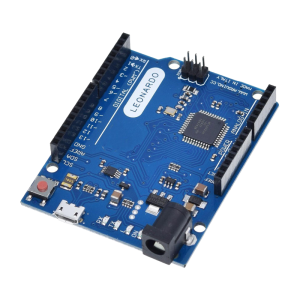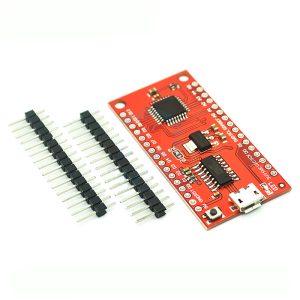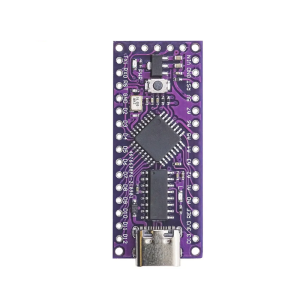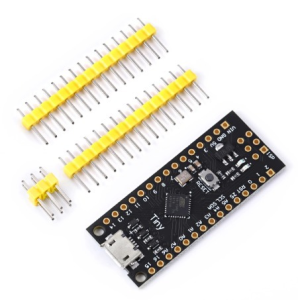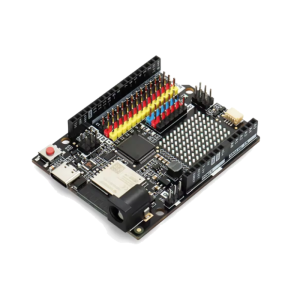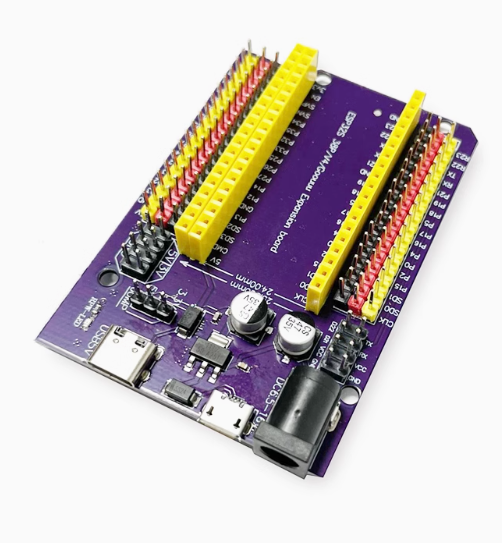
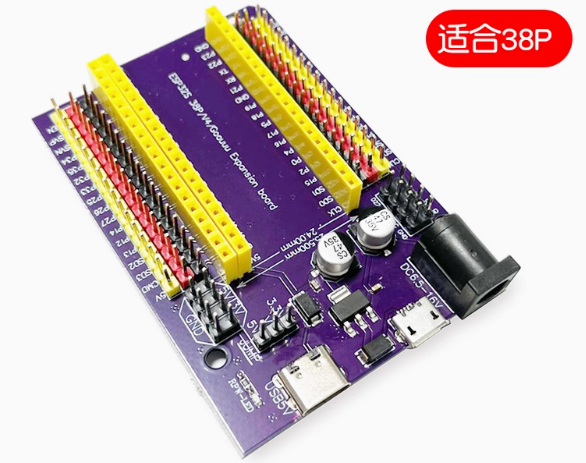
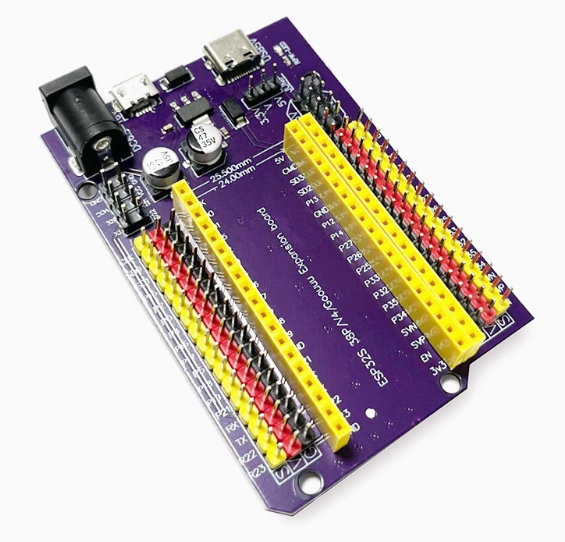
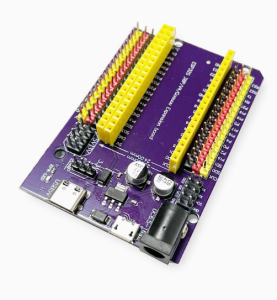
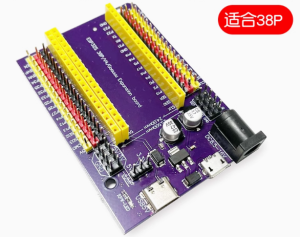
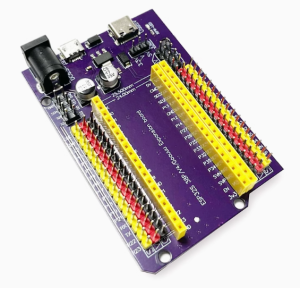
This professional-grade hardware kit pairs the high-performance ESP32S-DevKitC (ESP32-WROOM-32D) development board with a dedicated 38-Pin Expansion Shield. Optimized for 2025 IoT standards, this system is designed to provide industrial-grade stability, eliminating the connectivity issues and power fluctuations common with standard breadboard setups.
Product Description
The ESP32S-DevKitC with 38-Pin Expansion Board is an all-in-one solution for rapid prototyping and deployment. The core board features the ESP32-WROOM-32D module, known for its superior RF performance and improved Wi-Fi/Bluetooth signal stability over older iterations.
The accompanying Expansion Shield acts as a robust power and signal distribution hub. It breaks out the high-density 38-pin module into a “GVS” (Ground-Voltage-Signal) header format. This allows for direct, secure connections to sensors, actuators, and displays using standard jumper cables. With an onboard DC Barrel Jack and specialized voltage regulation, this kit can drive high-power peripherals—such as servos and relays—that would normally overwhelm a standard USB power source.
Key Features
- Enhanced RF Stability: The 32D module features an optimized PCB antenna for better signal penetration in complex wireless environments.
- Industrial Power Management: The expansion board accepts a wide DC input (6.5V–12V) and provides stable, high-current 3.3V and 5V rails.
- “GVS” Plug-and-Play Headers: Every GPIO pin is paired with dedicated Power and Ground pins, simplifying wiring and reducing the risk of short circuits.
- Dual-Core Processing: Powered by the Xtensa® 32-bit LX6 dual-core processor, capable of up to 240 MHz for multitasking.
- Hybrid Connectivity: Supports Wi-Fi (802.11 b/g/n) and Dual-Mode Bluetooth (Classic + BLE) simultaneously.
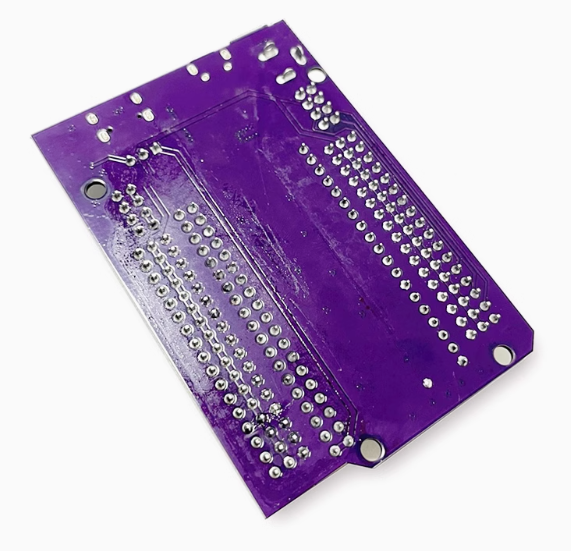
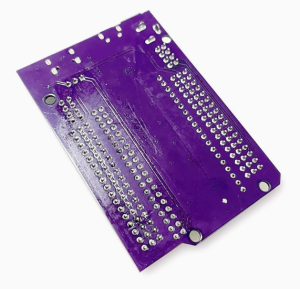
- Mounting Holes: The baseboard includes four 3.5mm mounting holes for permanent installation in industrial control boxes or 3D-printed enclosures.