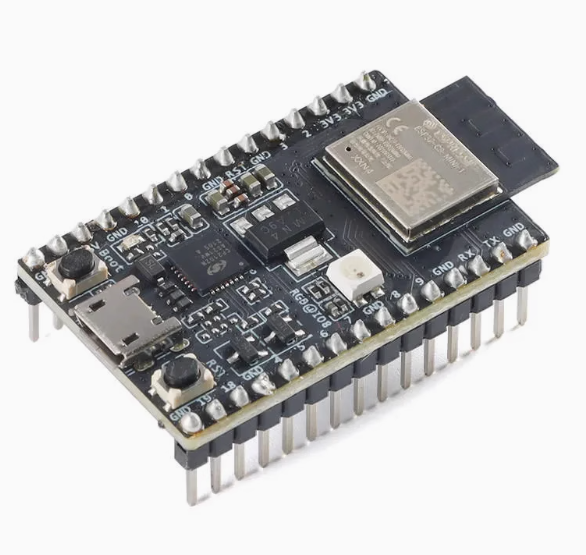
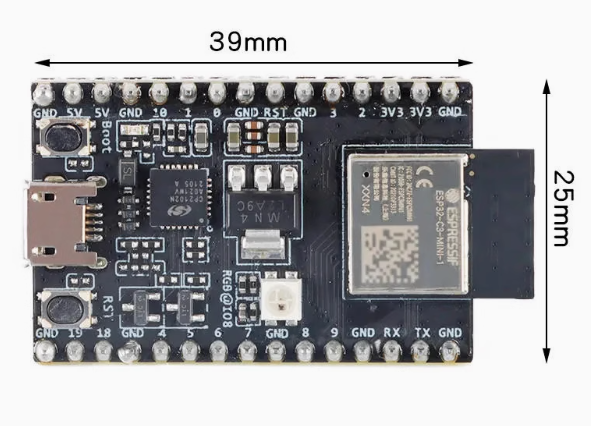
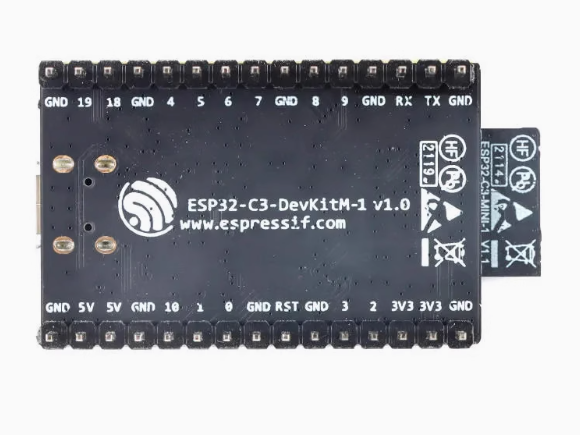
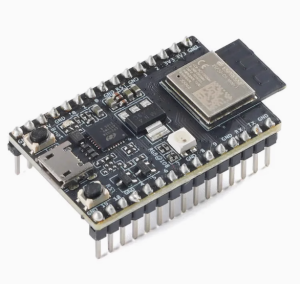
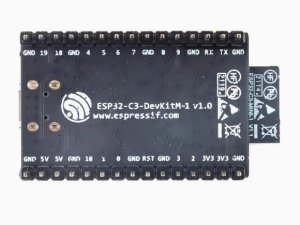
The ESP32-C3-DevKitM-1-N4 (often referred to as the N4X variant in industrial purchasing) is a compact, entry-level development board utilizing the ESP32-C3-MINI-1 module. Built on a 32-bit RISC-V architecture, it is designed for the 2026 IoT era, providing a highly secure and cost-effective solution for Wi-Fi and Bluetooth Low Energy (BLE 5.0) applications.
Long Description
The ESP32-C3-DevKitM-1 is the gold standard for secure, low-power connectivity. Powered by a single-core RISC-V processor running at 160MHz, it offers a modern alternative to the older Xtensa-based ESP32 models, focusing on energy efficiency and a smaller physical footprint. The “MINI” module design makes this board exceptionally breadboard-friendly, leaving ample space for peripheral wiring.
For business purchasers, the ESP32-C3 series is a strategic choice for high-volume commercial deployments. It features industrial-grade security with Secure Boot and Flash Encryption, ensuring that proprietary firmware remains protected. For individual makers, it provides an affordable entry point into the world of RISC-V, offering full compatibility with the Arduino IDE and MicroPython for smart home sensors, wearables, and automation projects.
Key Features
- Modern RISC-V Core: Features a 32-bit RISC-V single-core processor, balancing high performance with ultra-low power consumption.
- Dual Wireless Connectivity: Integrated 2.4 GHz Wi-Fi (802.11 b/g/n) and Bluetooth 5 (LE) with long-range support.
- Enhanced Security: Hardware cryptographic accelerators for AES-128/256, SHA, RSA, and HMAC, alongside Secure Boot and Flash Encryption.
- Compact “MINI” Design: Optimized pin layout for small-scale prototypes and embedding into compact commercial housings.
- Breadboard Friendly: All essential GPIO pins are broken out to 0.1″ pitch headers for easy experimentation.