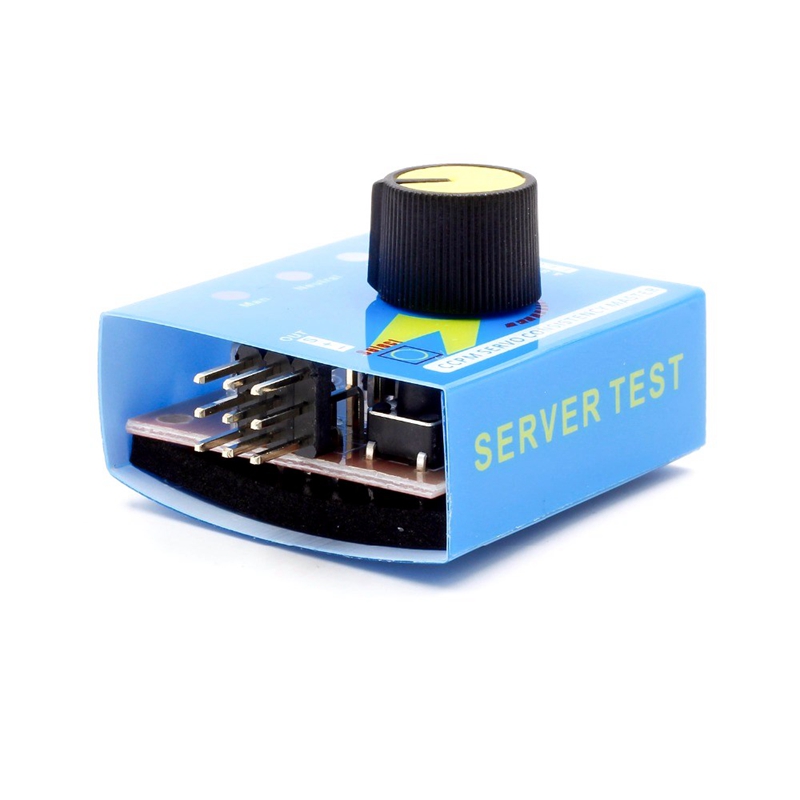
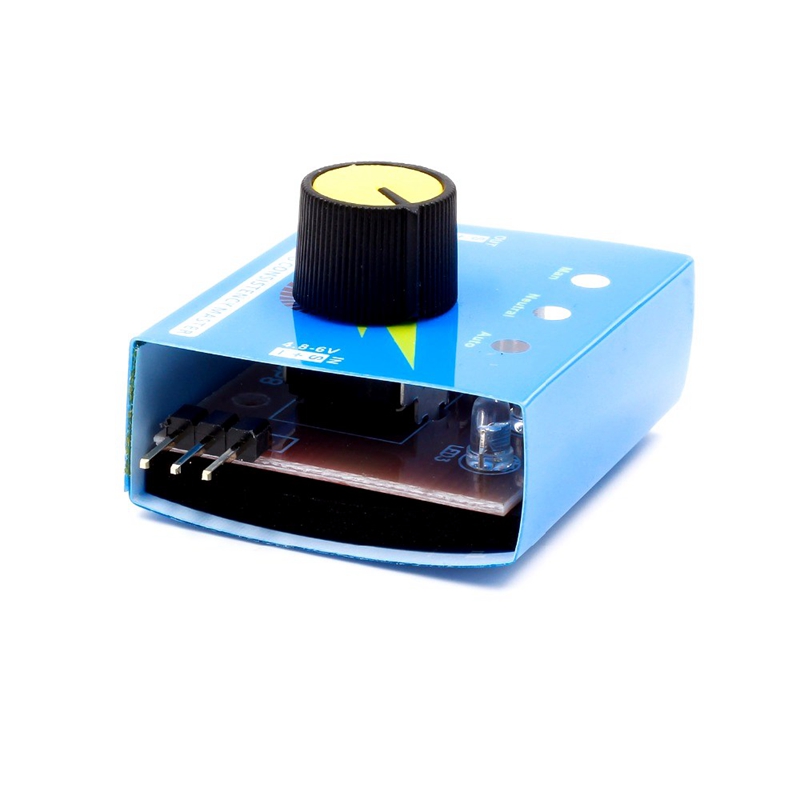
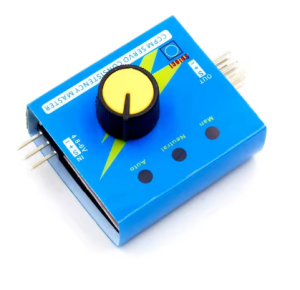
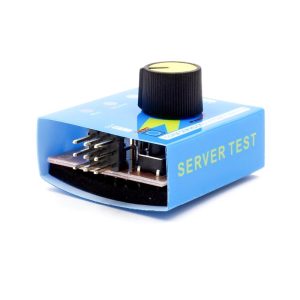
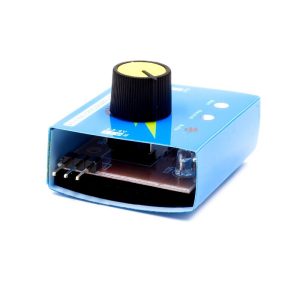
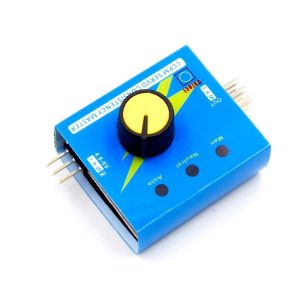
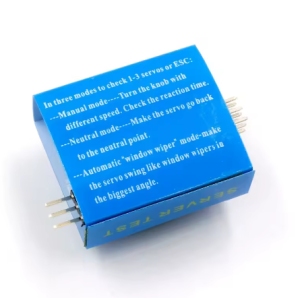
Servo Tester Gear CCPM Consistency Master Checker

SKU: FA2151
Operating Voltage

4.8V – 6.0V DC (Typical Receiver Battery)

Output Signal

1.5ms ± 0.5ms (Standard PWM)

Output Current

≤15mA (5.0mA per channel)

Channels

3 (Output) + 1 (Power Input)

Dimensions

Approx. 46 x 32 x 17mm

Weight

Approx. 8g – 31g (varies by casing)

Product Overview

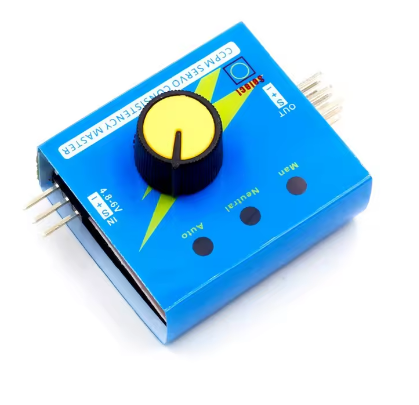
The Servo Tester Gear CCPM Consistency Master Checker is an essential, multi-functional diagnostic tool designed for anyone working with RC models, robotics, or any system utilizing servos and Electronic Speed Controllers (ESCs). This compact device acts as a standalone signal generator, allowing you to test, center, and calibrate your servo motors and ESCs without the need for a bulky transmitter and receiver.

Whether you are building an RC helicopter, programming a robotic arm, or troubleshooting a model airplane, this tool is invaluable for detecting faulty servos, checking their response times, and ensuring all channels are synchronized before they are installed in your final project. It is a true “manual receiver” that puts complete control of your servos at your fingertips via a simple knob.

Key Features

  • 3-in-1 Operational Modes:

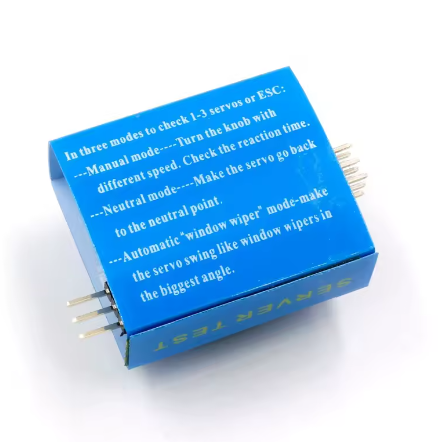
    • Manual Mode: Turn the knob to smoothly rotate the servo(s) in either direction. Ideal for checking reaction time and full range of motion.

    • Neutral Mode: Instantly returns the servo to its exact center (1.5ms pulse) position. Perfect for setting up control horns and linkages before installation.

    • Automatic “Window Wiper” Mode: The tester automatically sweeps the servo back and forth to its maximum angles. Great for endurance testing and checking for glitches or jitter.

  • 3-Channel Simultaneous Testing (CCPM Mode): Specifically designed to test the “Consistency” of up to three servos simultaneously. This is critical for CCPM (Cyclic/Collective Pitch Mixing) helicopters where perfectly synchronized servos are essential for flight stability.

  • Versatile Application:

    • Servo Testing: Standard 3-pin outputs for testing analog and digital servos.

    • ESC Testing: Can directly control Electronic Speed Controllers (brushless/brushed) to test motor performance without a receiver.

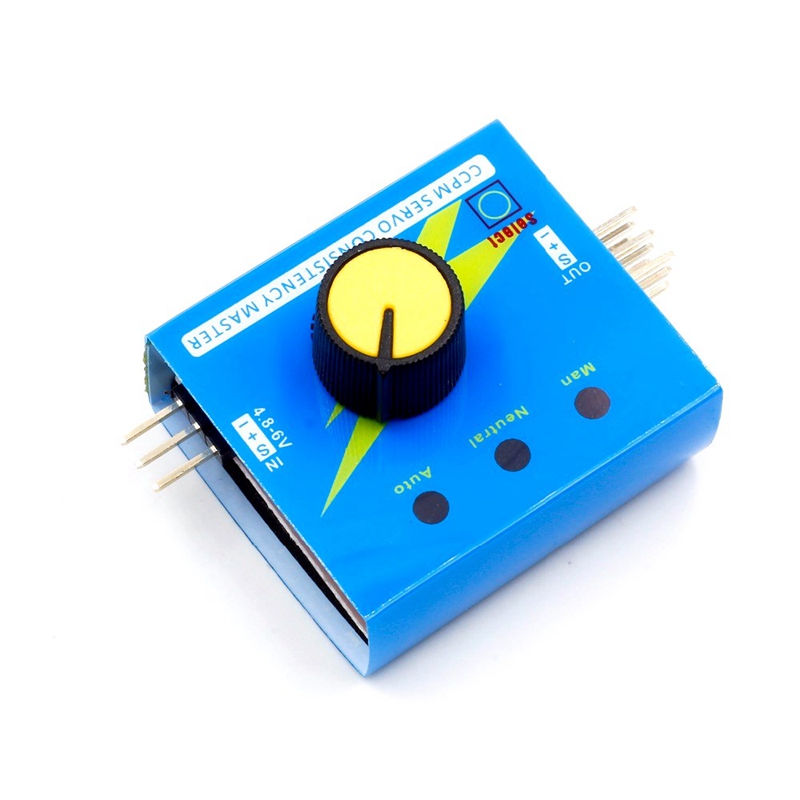
  • User-Friendly Interface: Features a large rotary knob for precise control, a push-button switch to cycle through the 3 operating modes, and 3 LED indicators (typically Manual/Neutral/Auto) to clearly show which mode is active.

  • Compact & Portable: Small form factor (approx. 46x32mm) and lightweight, making it easy to toss in your flight box or tool kit for on-the-go diagnostics.

Technical Specifications

Parameter Operating Value
Operating Voltage 4.8V – 6.0V DC (Typical Receiver Battery)
Output Signal 1.5ms ± 0.5ms (Standard PWM)
Output Current ≤15mA (5.0mA per channel)
Channels 3 (Output) + 1 (Power Input)
Dimensions Approx. 46 x 32 x 17mm
Weight Approx. 8g – 31g (varies by casing)

Pinout & Connection Guide

The board is clearly labeled for “plug-and-play” operation:

Input Side (Power Source)

  • IN+ (VCC): Connect to positive terminal of a 4.8V-6.0V battery.

  • IN- (GND): Connect to negative terminal (ground).

  • S (Signal): (Often labeled “INS”) – Not typically used unless receiving external PPM signal; usually left empty.

Output Side (Load Connection)

  • 3x Output Banks: Standard 3-pin servo connectors labeled “S” (Signal), “+”, and “-“. Simply plug your servos or ESCs directly into these ports.

Usage Guide

1. Connect Power

  • ⚠️ Critical: Ensure you connect the battery correctly. The middle pin is Positive (+), the pin closest to the edge is Negative (-). Reversing polarity will destroy the IC.

2. Connect Your Device

  • Servo: Plug the servo’s 3-pin connector into any of the 3 output channels.

  • ESC: Connect the ESC’s 3-pin connector to the output; ensure the motor is connected to the ESC.

3. Select Mode

  • Power On: The blue power light illuminates. The first LED (Manual) usually lights by default.

  • Press the Button: Cycles through Modes (Manual → Neutral → Auto → Manual).

Q: What does "CCPM" stand for?

CCPM stands for Cyclic/Collective Pitch Mixing. This device ensures multiple servos work in perfect harmony, which is a requirement for RC helicopters.

Q: Can I use this to test any servo?

Yes. It works with standard analog servos, digital servos, and high-voltage (HV) servos (as long as the battery voltage matches the servo’s rating).

Q: Why does my servo jitter in Auto Mode?

If the servo is trying to move beyond its physical limit, it will vibrate. If it jitters randomly, the servo may be faulty.

Q: How do I find the center (Neutral) of my servo?

Switch to Neutral Mode. The servo will lock to the 1.5ms center position. This is how you set your servo horn at 90 degrees.

Q: Can I run a motor directly with this?

This device provides a signal only. To run a motor, you must connect the tester to an ESC, and then connect the ESC to the motor.

Q: What is the maximum current draw?

The signal output is very low current (~15mA). The power passes through the board to power the servos; the board does not regulate the power current.

Q: Can I test high-voltage (2S LiPo) servos?

Yes, but you must power the tester with a 2S LiPo battery (7.4V). Many testers are rated for higher voltages (look for “HV” models).

Q: I don't see a ground symbol on the board. Where is it?

 Look for the “-“ sign or the pin farthest from the “+”.

Q: Why won't my brushless motor start?

Many ESCs require a low throttle signal to arm. Turn the knob fully counter-clockwise (Zero throttle) before powering up.

Q: Is this good for professional robotics labs?

Yes. It is excellent for benchtop testing of servos before integration and for “burn-in” testing of mechanical limits.