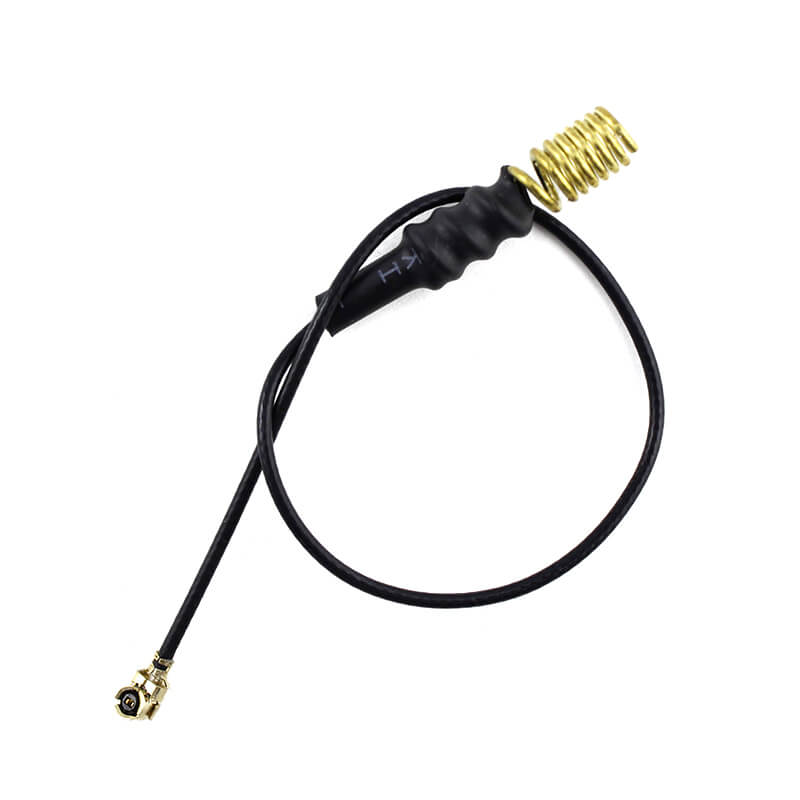
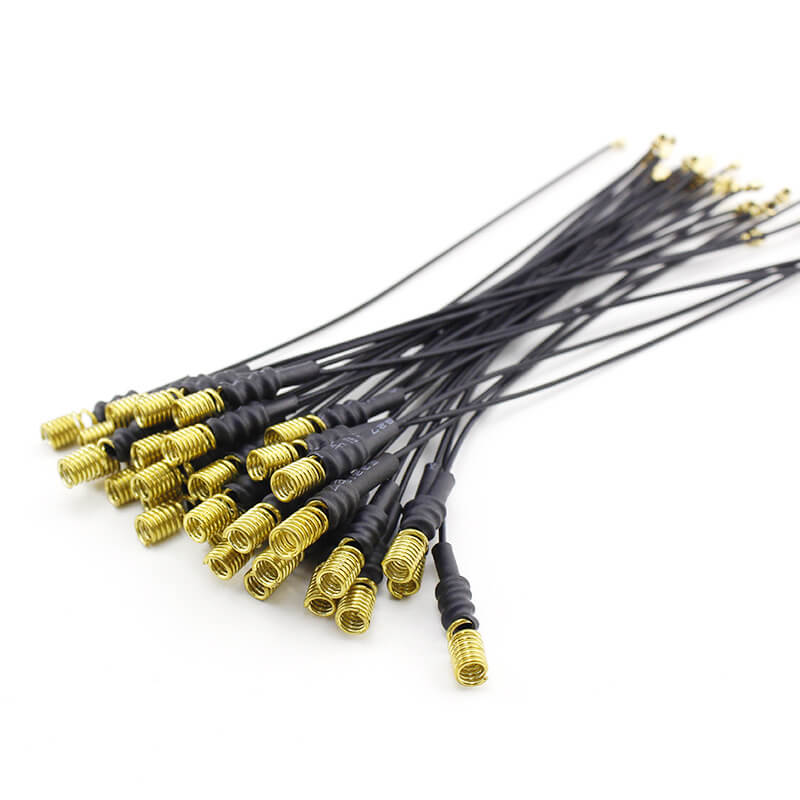
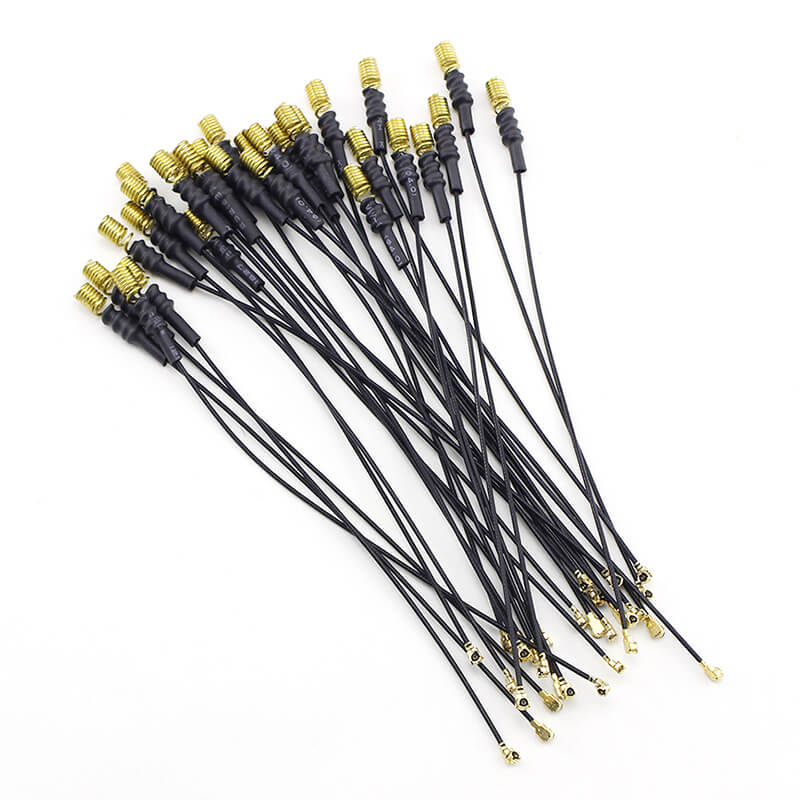
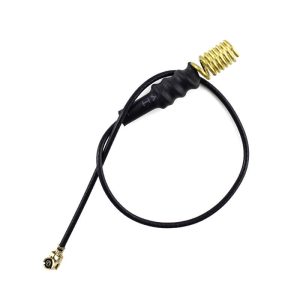
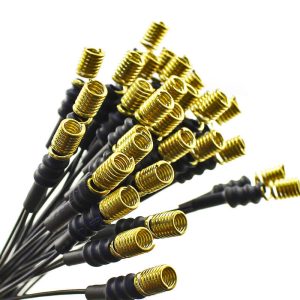
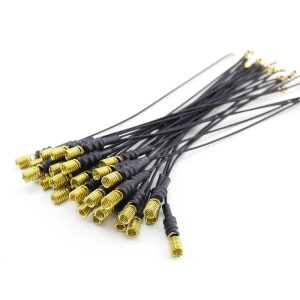
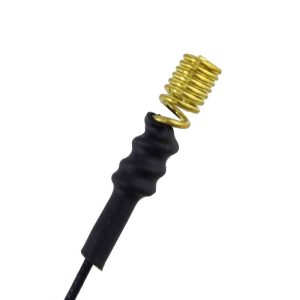
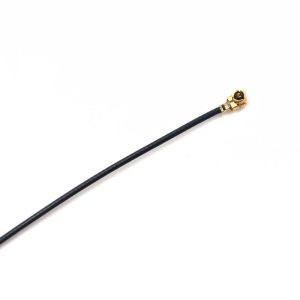
433MHz spring antenna 3dBi wireless module digital antenna IPEX U.FL interface

SKU: FA1066
Frequency Range

433MHz (±5MHz)

Gain

3.0 dBi

VSWR

≤ 1.5

Input Impedance

50 Ω

Polarization

Linear / Vertical

Connector Type

IPEX (U.FL)

Cable Type

RF1.13 or RG178 (Typical)

Antenna Material

Phosphor Copper

Operating Temp

-40°C to +85°C

The 433MHz Spring Antenna with IPEX (U.FL) Interface remains a vital component for compact IoT devices, offering a reliable, space-saving solution for long-range wireless communication. This antenna is specifically designed for integration into small-form-factor devices where internal space is at a premium.
Long Product Description
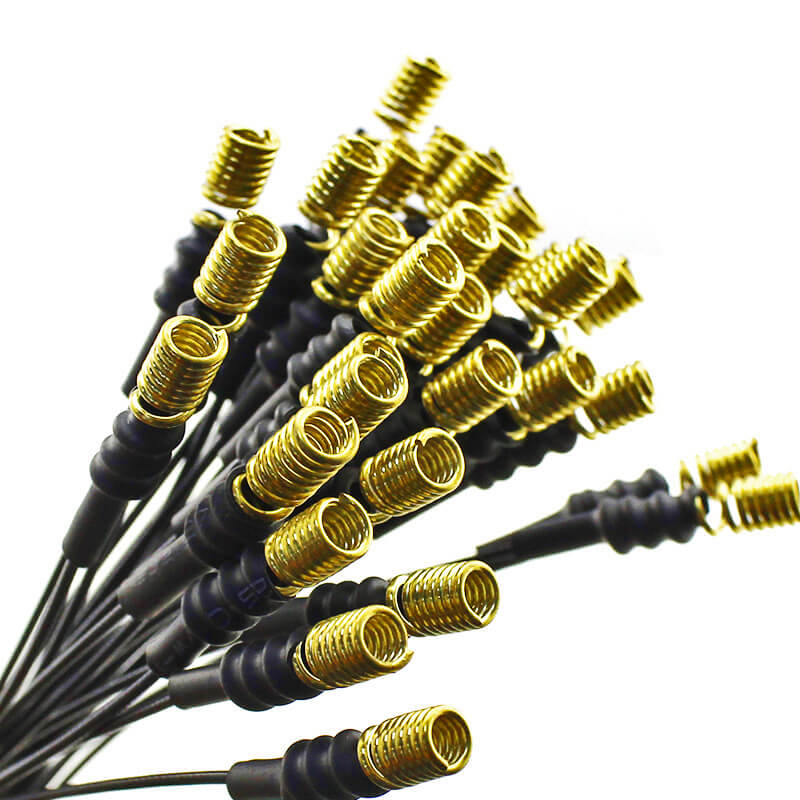
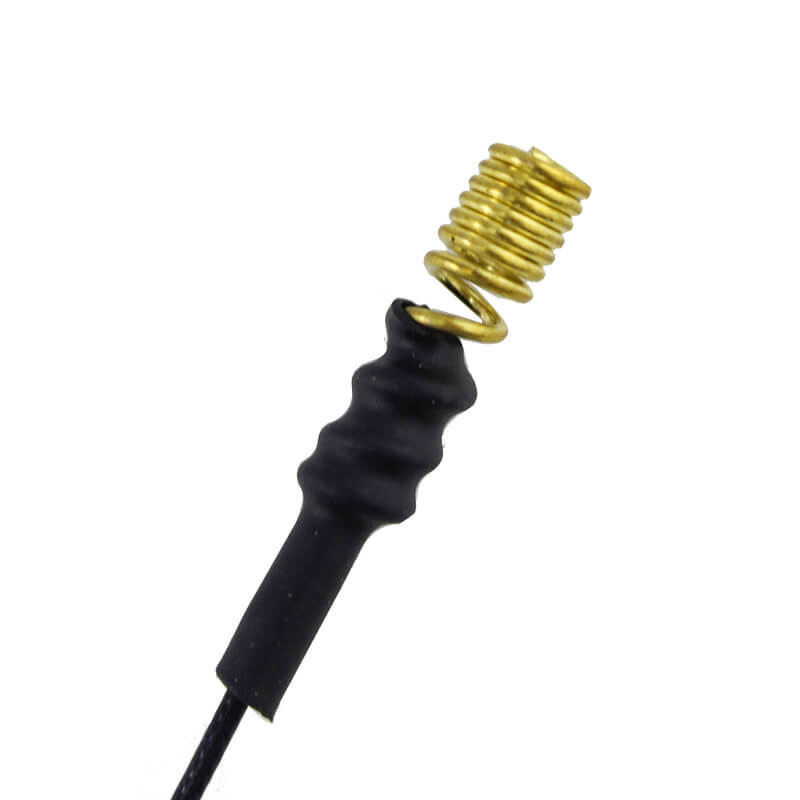
The 433MHz 3dBi Spring Antenna is a high-performance, omnidirectional RF solution engineered for sub-GHz wireless modules. Unlike traditional external “duck” antennas, this spring-coil (helical) design is optimized for internal mounting within plastic or composite enclosures. It features a high-quality copper helical coil that provides excellent resonant characteristics at the 433MHz frequency, commonly used for garage door openers, smart meters, and industrial remote controls.
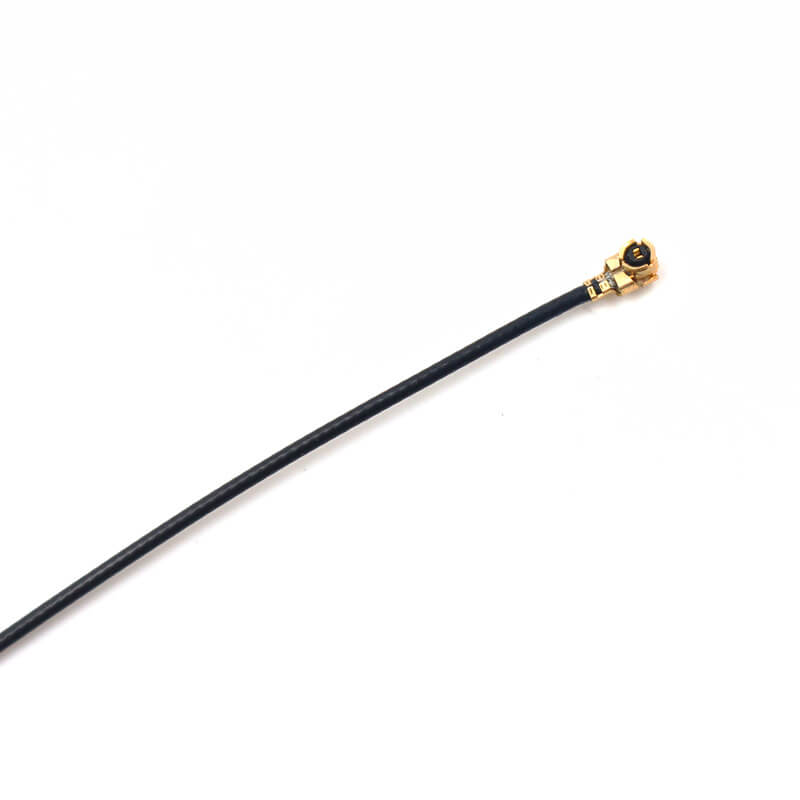
The integrated IPEX (U.FL) connector and ultra-flexible coaxial cable eliminate the need for difficult manual soldering, allowing for “plug-and-play” connectivity to modern PCB radio modules. The 3dBi gain provides a stable signal boost for low-power wide-area network (LPWAN) applications, ensuring reliable data transmission even in environments with minor obstructions.
Key Features
  • Compact Helical Design: The spring-style coil offers high efficiency while maintaining a tiny footprint, ideal for handheld or wearable electronics.
  • Plug-and-Play IPEX Interface: Equipped with a standard Generation 1 U.FL (IPEX) connector for secure, solder-free attachment to wireless modules.
  • Optimized for 433MHz: Specifically tuned for the 433MHz ISM band, ensuring low Signal-to-Noise ratios and high transmission reliability.
  • High-Quality Copper Construction: The radiating element is made of high-conductivity copper for superior RF performance compared to steel-core alternatives.
  • Flexible Deployment: The included pigtail cable allows the antenna to be positioned away from battery interference or metal components within the device housing.
Usage Instructions
  1. Connection: Carefully align the IPEX connector over the male U.FL port on your wireless module (e.g., HC-12, CC1101, or LoRa modules). Press down firmly until you hear/feel a click.
  2. Orientation: For maximum range, mount the spring coil vertically.
  3. Clearance: Keep the spring at least 1cm away from metal surfaces, batteries, and large capacitors to prevent signal detuning or interference.
  4. Enclosure: This antenna is designed to be housed inside a plastic or non-conductive box. Do not use inside a metal enclosure as it will act as a Faraday cage and block the signal.
Q: Can I use this antenna for 915MHz or 2.4GHz Wi-Fi?

No. This antenna is physically tuned for the 433MHz wavelength. Using it for other frequencies will result in a very high VSWR, which could overheat and damage your wireless transmitter.

Q: Is the IPEX connector compatible with all ESP32 boards?

It is compatible with any board that features a U.FL (IPEX Gen 1) connector. Some newer, ultra-miniature boards use IPEX4 (MHF4); please verify your board’s port size before purchasing.

Q: Why is my range shorter than expected?

Range is heavily influenced by surroundings. Ensure the spring is not touched by or near metal. Also, ensure the transmitter is set to the correct frequency (433MHz) and that the antenna is mounted vertically for best results

Q: Is this suitable for industrial business purchasing?

Yes. These antennas are standard components in industrial telemetry and remote sensing. For high-volume business orders, Alibaba and AliExpress offer tiered pricing for manufacturing lots of 500+ units.

Q: Can I cut the cable to make it shorter?
It is not recommended. RF cables are precision-terminated. Cutting and re-soldering the IPEX connector without specialized equipment will likely cause significant signal loss.