Description
Product Overview
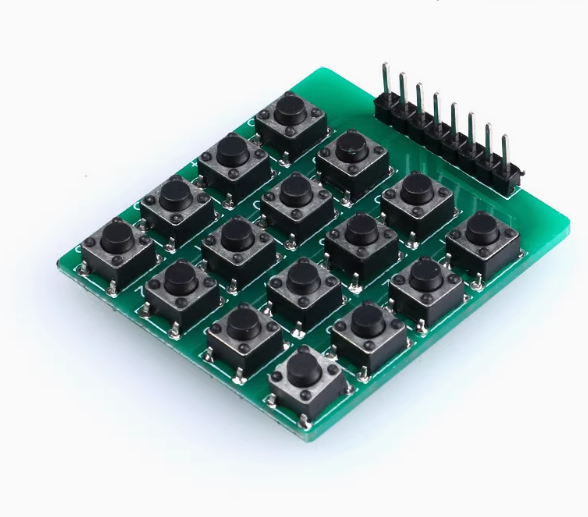
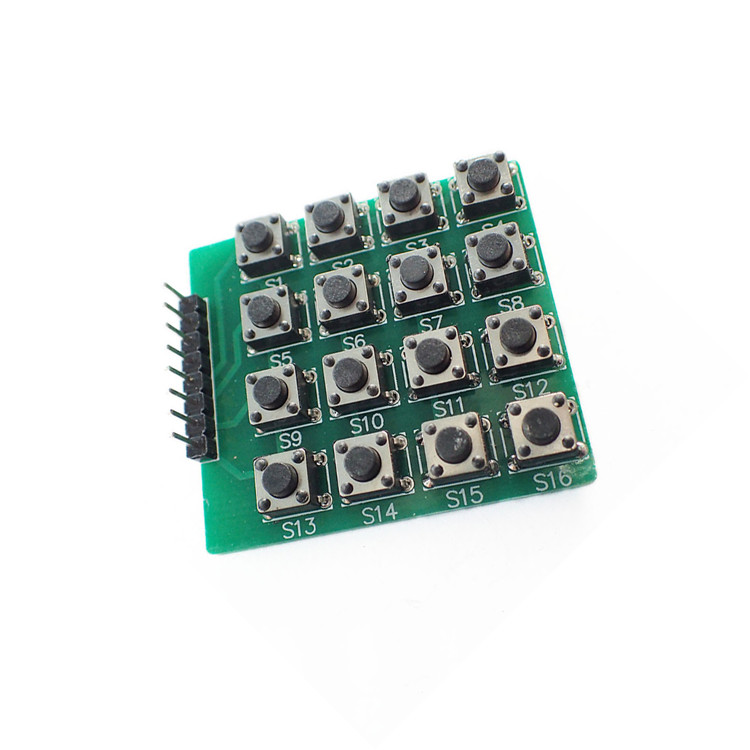
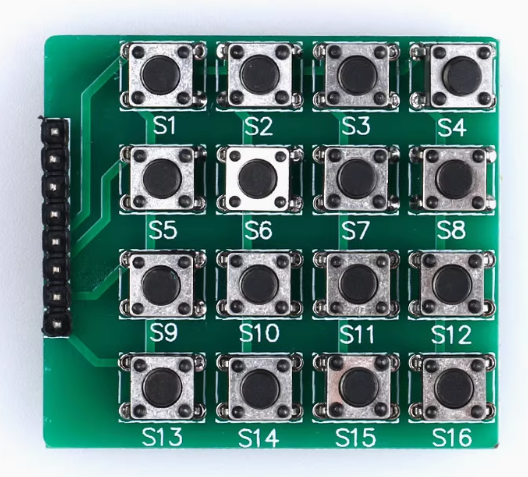
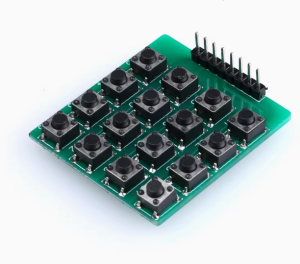
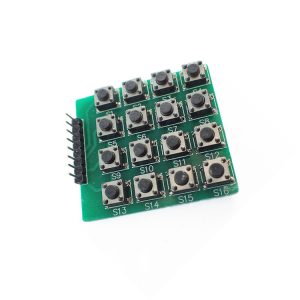
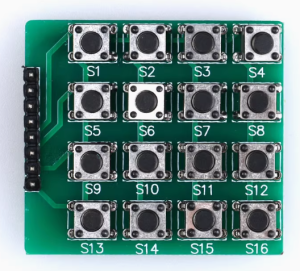
The 4×4 Matrix Membrane Keypad is a compact and durable input device featuring 16 tactile buttons arranged in a 4×4 grid. It is specifically designed to serve as a user-friendly interface for microcontroller-based projects, offering a simple and efficient way to input data, navigate menus, or control various functions in your embedded systems . The membrane construction is thin, lightweight, and flexible, making it easy to mount on enclosures, panels, or other surfaces .
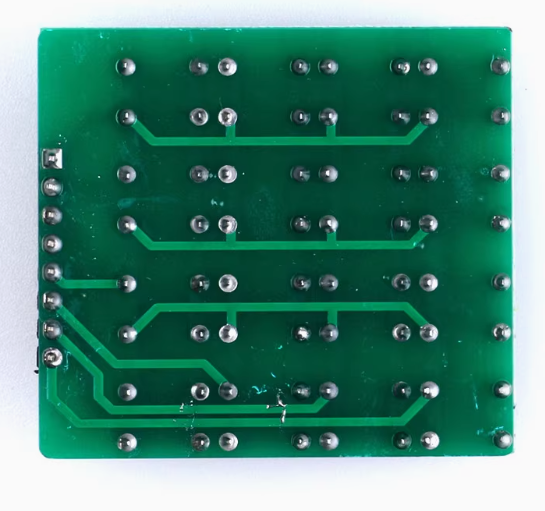
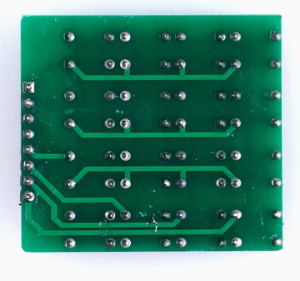
The heart of the keypad’s operation is its matrix configuration. The 16 buttons are connected to common row and column lines, creating a circuit matrix. When a button is pressed, it closes a connection between a specific row and column. This matrix structure requires only 8 general-purpose input/output (GPIO) pins on your microcontroller to read all 16 keys (4 pins for rows and 4 pins for columns), significantly conserving your controller’s valuable I/O resources . The default printed labels include the digits 0-9, letters A-D, and the * and # symbols .
Whether you are building a PIN code entry system for a security project, creating a menu-driven interface for an automation system, designing a custom calculator, or needing a robust control panel for your robotics project, this 4×4 matrix keypad module provides a reliable and easy-to-integrate solution for direct human-to-machine interaction.
Key Features
-
16-Button Matrix Layout: A 4×4 grid of tactile buttons providing 16 distinct inputs, including numbers 0-9, letters A, B, C, D, and symbols *, # .
-
Efficient 8‑Pin Interface: Uses only 8 pins (4 rows, 4 columns) to scan all 16 buttons, saving precious GPIO resources on your microcontroller .
-
Flexible & Durable Membrane Construction: The thin, lightweight design (approximately 1mm thick) can be mounted on uneven surfaces, and has self-adhesive backing for easy installation .
-
Wide Microcontroller Compatibility: Easily interfaces with popular platforms like Arduino, ESP32, ESP8266, Raspberry Pi, and STM32 using standard GPIO pins .
-
Extensive Software Support: Fully compatible with the popular “Keypad.h” library for Arduino, which greatly simplifies key detection and event handling .
-
Easy Mounting with Self-Adhesive Backing: The self-adhesive layer allows for quick and secure mounting on most enclosure surfaces without additional hardware .
-
Long-Lasting Durability: Rated for up to 1 million key presses and features a contact bounce time of less than 5 ms, ensuring reliable performance over long-term use .
-
Clear Tactile Feedback: Each key press provides a distinct tactile feel, confirming the input action .
Technical Specifications
| Parameter | Operating Value |
|---|---|
| Button Arrangement | 4 x 4 Matrix (16 Keys) |
| Default Keypad Legend | 0–9, A–D, *, # |
| Number of Interface Pins | 8 (4 Row Pins, 4 Column Pins) |
| Connector Type | 8-pin, 0.1″ (2.54mm) pitch |
| Dimensions (Keypad) | 70 x 77 x 0.8 mm |
| Cable Length (including connector) | Approx. 85mm |
| Weight | Approx. 8g |
| Operating Lifespan | Up to 1,000,000 key presses |
| Operating Temperature | -20°C to +40°C |
| Contact Bounce (Typical) | ≤ 5ms |
| Insulation Resistance | 100MΩ at 100V |
| Dielectric Strength | 250V RMS, 60Hz for 1 minute |
| Maximum Voltage/Current | 35V DC, 100 mA |
Reviews
There are no reviews yet.