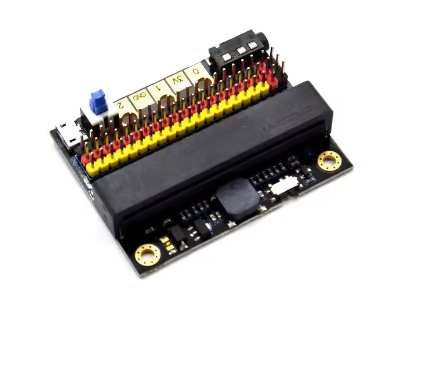
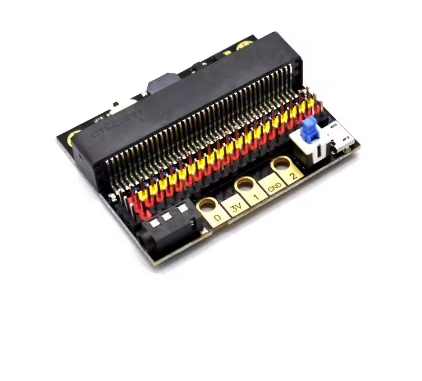
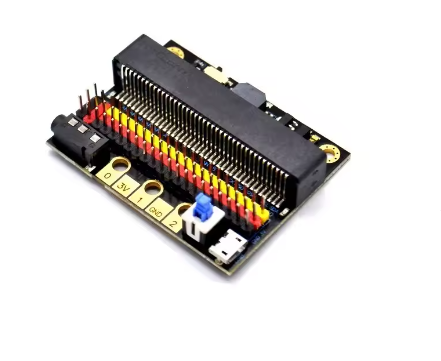
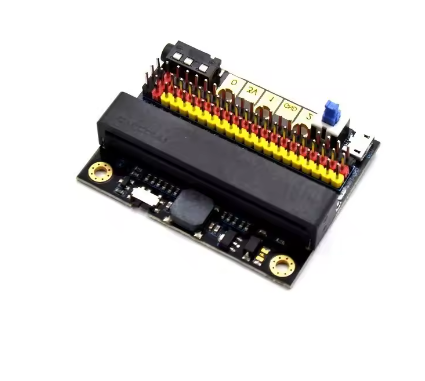
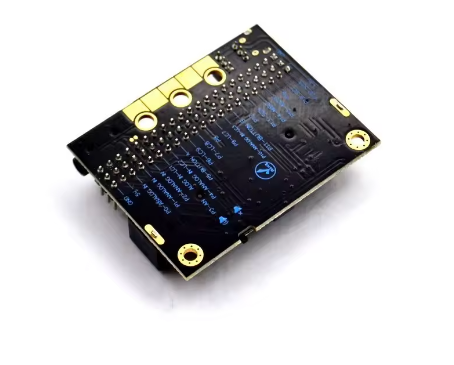
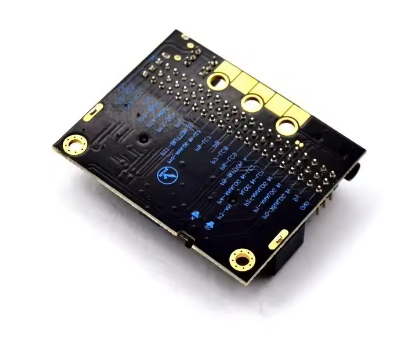
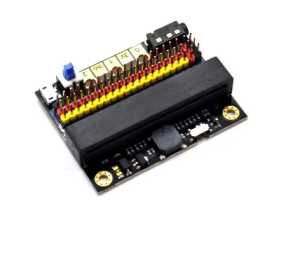
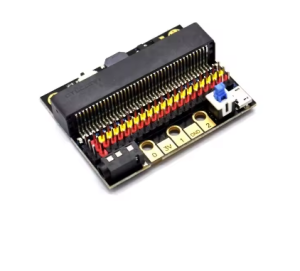
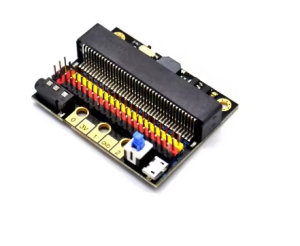
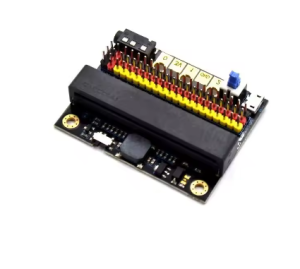
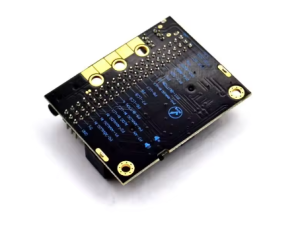
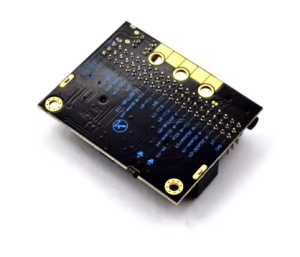
The BBC micro:bit Expansion Board V2.0 is an advanced I/O breakout system designed to bridge the gap between the micro:bit and complex electronic circuits. Released as an upgrade to the V1.0, the 2026 edition of this board features improved power stability and specialized headers for sensors and servos.
Long Product Description
The BBC micro:bit Expansion Board V2.0 is the definitive tool for users looking to build sophisticated robotics, IoT gateways, and environmental monitoring stations. While the micro:bit itself is an excellent entry-point, the V2.0 Expansion Board transforms it into a full-scale development platform. It features a horizontal edge connector slot that securely houses the micro:bit, breaking out every pin (P0–P20) into a “G-V-S” (Ground-Voltage-Signal) format.
This board is specifically engineered to handle the high-current demands of 2026-era peripherals. It includes a reinforced power management circuit that can simultaneously power multiple 5V servos and 3.3V sensors without taxing the micro:bit’s internal regulator. With its integrated DC power jack and dedicated toggle switch, it provides a professional-grade power solution for both classroom education and industrial prototyping.
Key Features
- G-V-S Header Arrangement: Each I/O pin is grouped with a dedicated Voltage and Ground pin, allowing for direct “plug-and-play” connection of 3-wire sensors and servos.
- Enhanced Power Management: Equipped with an onboard voltage regulator capable of converting 6V–12V DC input into stable 3.3V and 5V rails.
- Independent Power Switch: Features a physical toggle switch to cut power to the entire system without unplugging cables, preserving battery and hardware life.
- Dual Voltage Support: Dedicated jumpers or rails allow users to select between 3.3V and 5V for specific pin groups, essential for interfacing with older 5V logic sensors.
- Integrated Passive Components: Includes an onboard buzzer and power indicator LEDs for immediate feedback during debugging.
- Robust Mounting Points: Four M3-sized mounting holes for secure integration into custom enclosures or 3D-printed chassis