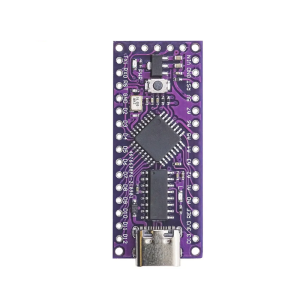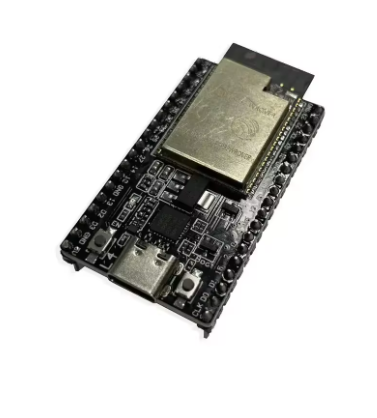
ESP32 DevKitC development board with WROVER-N4R8 CP2102 Chip Type-C interface

SKU: FA1053-0-1-9
Module

ESP32-WROVER-E (N4R8)

Processor

Dual-core Xtensa® 32-bit LX6

Flash / PSRAM

4MB Flash / 8MB PSRAM

USB Interface

Type-C

USB-to-Serial

CP2102

Input Voltage

5V via USB / 5V to 12V via Vin pin

Operating Voltage

3.3V

Connectivity

Wi-Fi (802.11 b/g/n) + Bluetooth 4.2 / BLE

Peripherals

GPIO, ADC, DAC, SPI, I2C, I2S, UART, PWM, Capacitive Touch

This comprehensive product guide is designed for both individual makers and B2B procurement teams. It details the ESP32-DevKitC specifically configured with the WROVER-N4R8 module, featuring the modern Type-C interface and the stable CP2102 USB-to-UART bridge.

Product Description
The ESP32-DevKitC WROVER-N4R8 is a high-performance, compact development board engineered for the next generation of IoT applications. At its core is the powerful ESP32-WROVER-E module, featuring a dual-core processor, integrated Wi-Fi, and dual-mode Bluetooth.
This specific variant is upgraded with 8MB of PSRAM and 4MB of Flash memory, making it the ideal choice for memory-intensive tasks such as voice processing, AI facial recognition, and large-scale data buffering. The transition to a Type-C interface ensures compatibility with modern hardware and improved power delivery, while the industry-standard CP2102 chip provides rock-solid driver stability across Windows, macOS, and Linux.
Key Features
  • Massive Memory (N4R8): Equipped with 4MB Flash and 8MB External PSRAM to handle complex firmware and data-heavy applications.
  • Modern Connectivity: The Type-C USB port offers a more durable connection and supports higher current throughput for power-hungry peripherals.
  • Dual-Core Processing: Powered by the Xtensa® Dual-Core 32-bit LX6 microprocessor, capable of up to 240 MHz.
  • Reliable Logic: The Silicon Labs CP2102 chip ensures seamless serial communication and high-speed firmware flashing without driver “drop-outs.”
  • Breadboard Friendly: Slim pin-out design leaves one row of holes free on each side of a standard breadboard for easy prototyping.
Usage Scenarios
  • Single Users/Hobbyists: Perfect for smart home DIY (Home Assistant integration), retro gaming emulators, or learning MicroPython and Arduino programming.
  • Business/Industrial: Used for rapid prototyping of industrial gateways, edge computing nodes, environmental monitoring sensors, and voice-controlled interfaces.
  • Education: An excellent tool for university-level embedded systems and IoT engineering courses.
Q: Do I need to install drivers for the CP2102 chip?

Most modern operating systems (Windows 10/11 and macOS) will automatically recognize the CP2102. If not, you can download the official drivers from the Silicon Labs website.

Q: Is this board compatible with the Arduino IDE?

Yes. You simply need to install the ESP32 board manager in Arduino and select “ESP32 Dev Module” or “ESP32 Wrover Module” from the board menu.

Q: How do I access the 8MB PSRAM in my code?

In your development environment (Arduino or ESP-IDF), you must enable “PSRAM” in the configuration menu. Once enabled, you can use specialized heap allocation functions to utilize the extra memory.

Q: What is the difference between the N4R8 and standard WROOM modules?

The standard WROOM module lacks PSRAM. The “N4R8” (WROVER) includes 8MB of Pseudo-Static RAM, which is essential for projects involving displays, cameras, or complex web servers.

Q: Does this board support 5V logic?

No. While the board is powered by 5V, the ESP32 chip operates at 3.3V logic. Connecting 5V sensors directly to the GPIO pins may damage the board.

Q: Can I use this for battery-powered projects?

Yes. The board features low-power deep sleep modes (approx. 10µA). For business users designing products, the DevKitC serves as the perfect evaluation platform before transitioning to the raw module for a custom PCB.