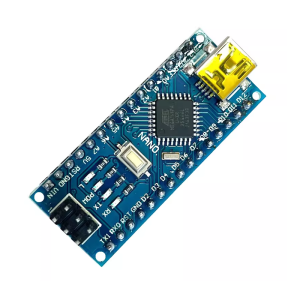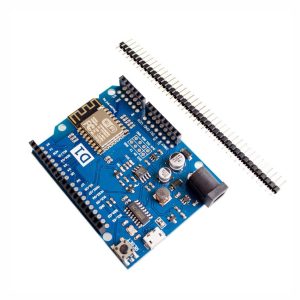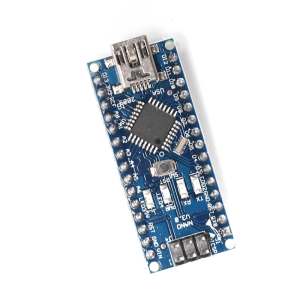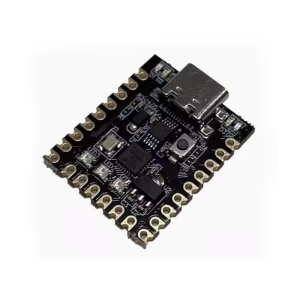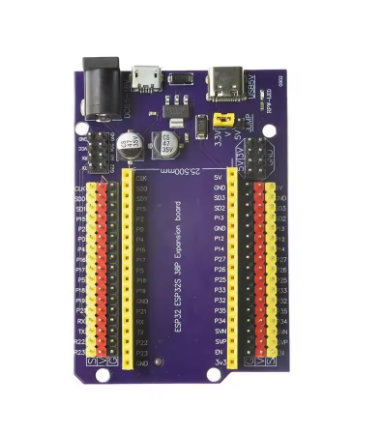
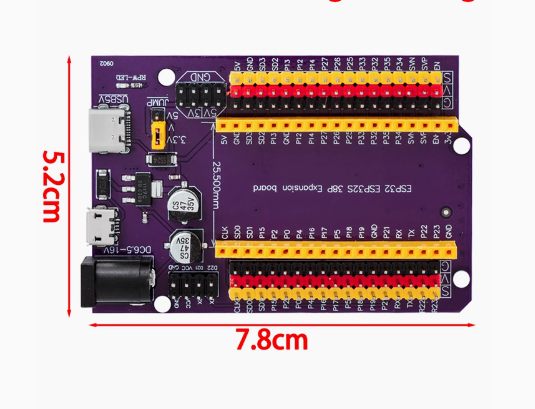
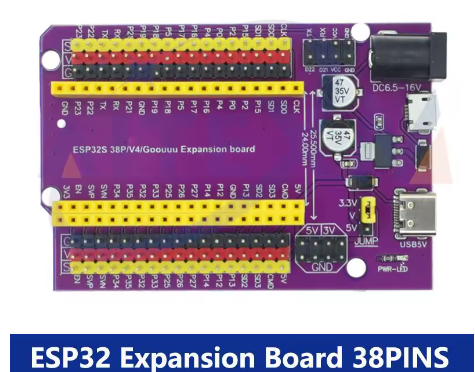
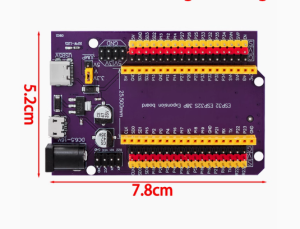
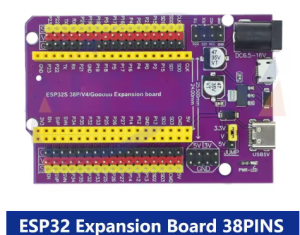
This ESP32S-DevKitC Development Board & 38-Pin Expansion System is a professional-grade IoT prototyping kit. Designed for the 2025 technology landscape, it combines the high-performance ESP32-WROOM-32S module with a dedicated expansion shield, providing a stable, industrial-ready alternative to fragile breadboard setups.
Product Description
The ESP32S-DevKitC (38-Pin) is a dual-core, high-speed wireless platform built for scalability. While standard ESP32 boards often struggle with power stability when connected to multiple sensors, this kit includes a specialized Expansion Board (Shield) that serves as a centralized power and signal hub.
The expansion board breaks out all 38 pins of the ESP32S into “GVS” (Ground-Voltage-Signal) headers. This allows for “one-plug” connectivity for sensors, servos, and displays. With an onboard DC Barrel Jack supporting up to 12V input, the system can drive high-power peripherals that would normally cause a standard USB-powered board to crash or “brown-out.” This makes it the ideal choice for business-to-business (B2B) rapid prototyping and advanced DIY automation.
Key Features
- Dual-Core LX6 Microprocessor: Runs up to 240MHz, allowing one core to handle wireless connectivity (Wi-Fi/BT) while the other handles complex application logic.
- Industrial Power Regulation: The expansion board features high-efficiency onboard regulators that convert 6.5V–12V DC input into clean 5V and 3.3V rails.
- Plug-and-Play GVS Headers: Every GPIO is paired with a dedicated 5V/3.3V and GND pin, drastically reducing wiring complexity and errors.
- Hybrid Wireless Connectivity: Supports 2.4GHz Wi-Fi (802.11 b/g/n) and Dual-Mode Bluetooth (Classic + BLE) simultaneously.
- Breadboard Eliminator: The shield includes 4x 3mm mounting holes for secure installation in industrial control panels or custom enclosures.
- High Pin Density: The 38-pin configuration offers the maximum possible I/O breakout for the ESP32-WROOM-32S module.