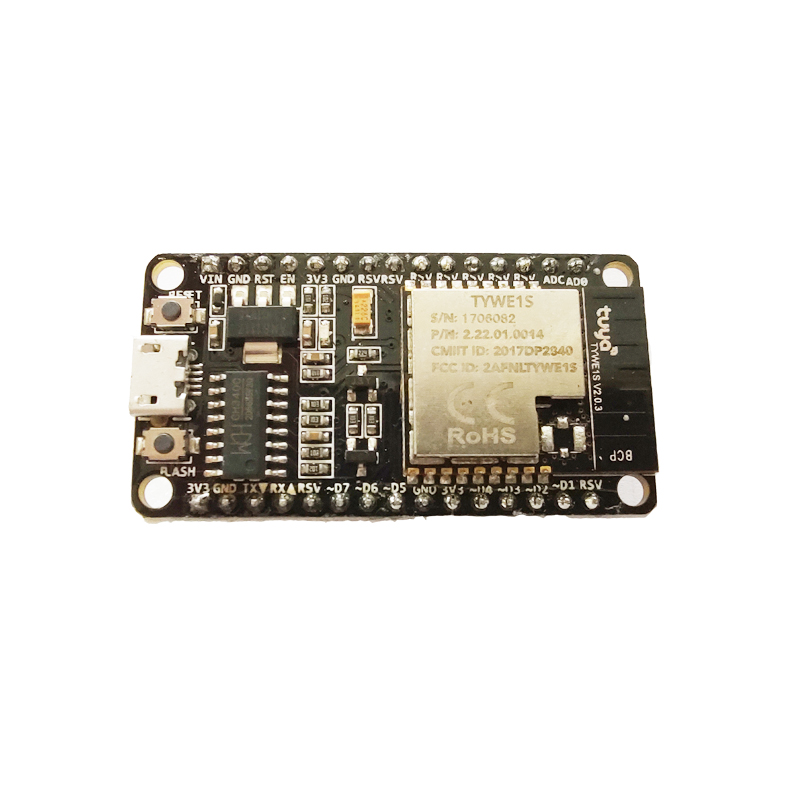
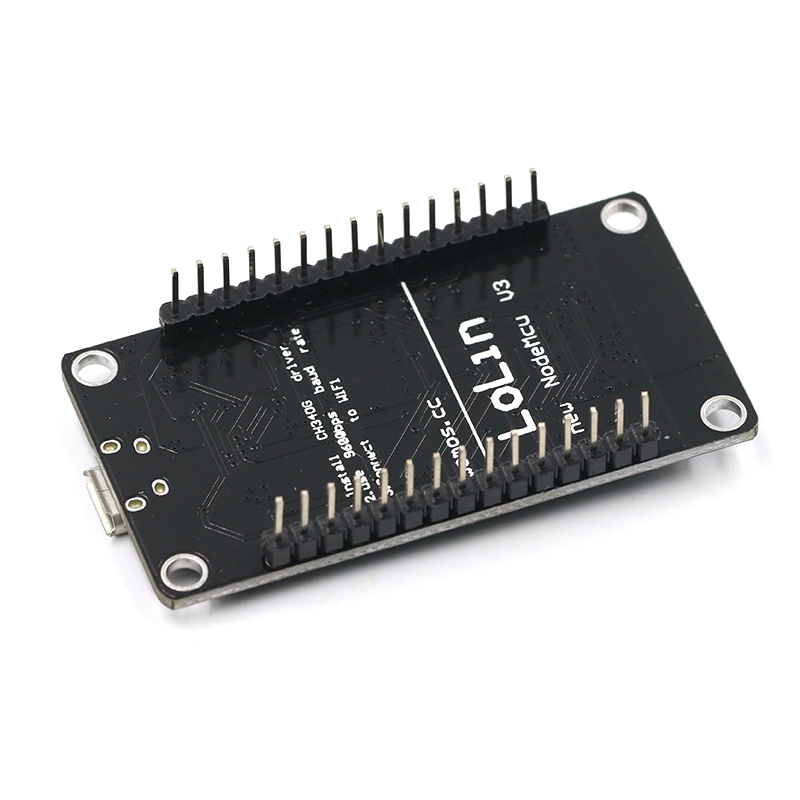
ESP8266 Serial WIFI Module NodeMcu Lua WIFI V3 CH340 4M (External antenna)

SKU: FA2062-1
Microcontroller

ESP8266 (ESP-07S or equivalent high-capacity module)

USB Interface

CH340 (Industrial Grade)

Antenna Interface

IPEX (U.FL) Connector (Requires external antenna)

Operating Voltage

3.3V (Onboard LDO Regulator)

Input Voltage

5V (via Micro-USB) or 4V-9V (via Vin Pin)

Flash Memory

4 MB (32 Mbits)

Clock Speed

80MHz / 160MHz

Network Support

2.4GHz Wi-Fi (WPA/WPA2 Security)

I/O Logic Level

3.3V (Not 5V Tolerant)

Dimensions

~58mm x 31mm (V3 Lolin Layout)

Product Description
The NodeMCU V3 (4MB External Antenna Edition) is a premium IoT development platform engineered for applications that demand both large-scale firmware storage and superior wireless range. While standard boards are limited by integrated PCB antennas, this specialized version features an onboard IPEX (U.FL) connector, allowing users to attach high-gain external antennas to penetrate walls or bridge long distances.
Powered by the ESP8266 SoC and upgraded with 4MB (32Mbits) of Flash memory, this board can handle complex web servers, large SSL certificates, and extensive data logging tasks. The “V3” (Lolin-style) architecture utilizes the reliable CH340 USB-to-UART bridge, ensuring a stable “plug-and-play” experience for programming via the Arduino IDE, MicroPython, or Lua. This is the definitive hardware choice for industrial gateways, outdoor sensor arrays, and smart-home hubs located in signal-restricted areas.
Key Features
  • Maximum Wireless Flexibility: Integrated IPEX (U.FL) port allows for the connection of external dipole or patch antennas to maximize signal gain and stability.
  • Expanded 4MB Flash Memory: Four times the storage of standard modules, providing ample space for OTA (Over-the-Air) updates and complex filesystem storage.
  • High-Stability CH340 Chipset: Industry-standard USB-to-Serial conversion with broad driver compatibility across Windows 10/11, macOS, and Linux.
  • Full TCP/IP Stack Support: Native support for 802.11 b/g/n protocols; functions perfectly as a Station, SoftAP, or a mixed-mode repeater.
  • Robust Peripheral Interface: Features 10 GPIOs, PWM, I2C, 1-Wire, SPI, and a 10-bit Analog-to-Digital Converter (ADC).
  • Breadboard Compatible: The V3 Lolin form factor provides a wider, stable base for prototyping and direct integration into custom PCB projects.
Usage & Applications
  • Industrial IoT Gateways: Acting as a central hub for long-range sensor networks in factories or agricultural fields.
  • Metal Enclosure Integration: Perfect for smart controllers mounted inside metal electrical boxes where an external antenna must be routed outside for signal.
  • Advanced Web Servers: Hosting rich, graphical web dashboards for real-time monitoring of home or office automation.
  • Remote Data Loggers: Storing large amounts of localized data to the 4MB Flash during Wi-Fi outages before syncing to the cloud.
  • Custom Routers & Repeaters: Building low-cost Wi-Fi range extenders or specialized network bridges.
Q: Does this board come with an antenna included?

This listing is for the NodeMCU V3 board only. To enable Wi-Fi connectivity, you must attach a 2.4GHz antenna with an IPEX/U.FL connector (sold separately).

Q: Why do I need 4MB of Flash instead of 1MB?

4MB is essential for modern IoT projects. It allows for “Over-the-Air” (OTA) firmware updates (where two copies of the code exist temporarily) and provides space for LittleFS/SPIFFS filesystems to store HTML, CSS, and sensor data files.

Q: Can I use this with the Arduino IDE?

Yes. Select “NodeMCU 1.0 (ESP-12E Module)” in the Arduino IDE Board Manager to utilize the full 4MB Flash and standard pin mapping.

Q: Is it safe to power the board with 5V?

You can safely provide 5V through the Micro-USB port or the Vin pin. However, the GPIO pins are strictly 3.3V logic. Connecting 5V sensors directly to GPIO pins will damage the board.

Q: What is the maximum range with an external antenna?

Range depends on your specific antenna gain and environmental obstacles. However, using a high-gain external antenna typically provides 2-3 times the range and much better signal penetration than a standard PCB antenna.