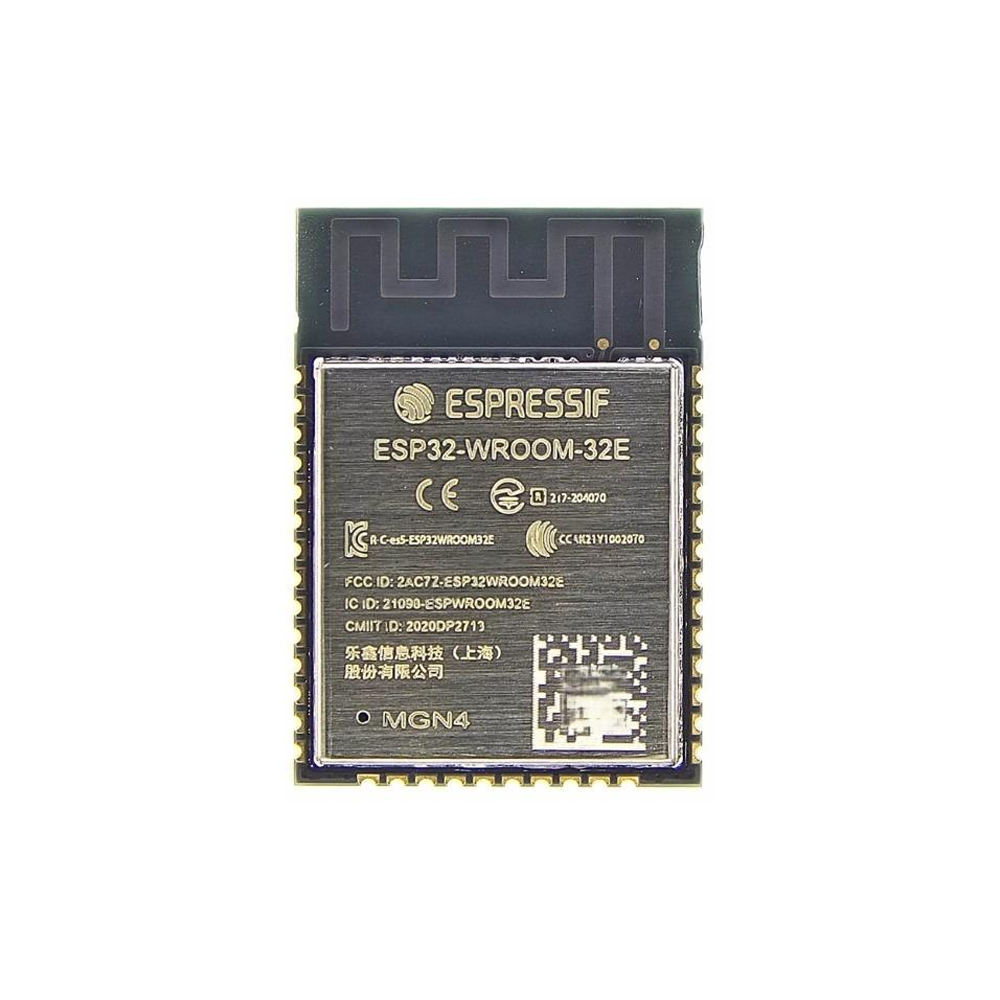
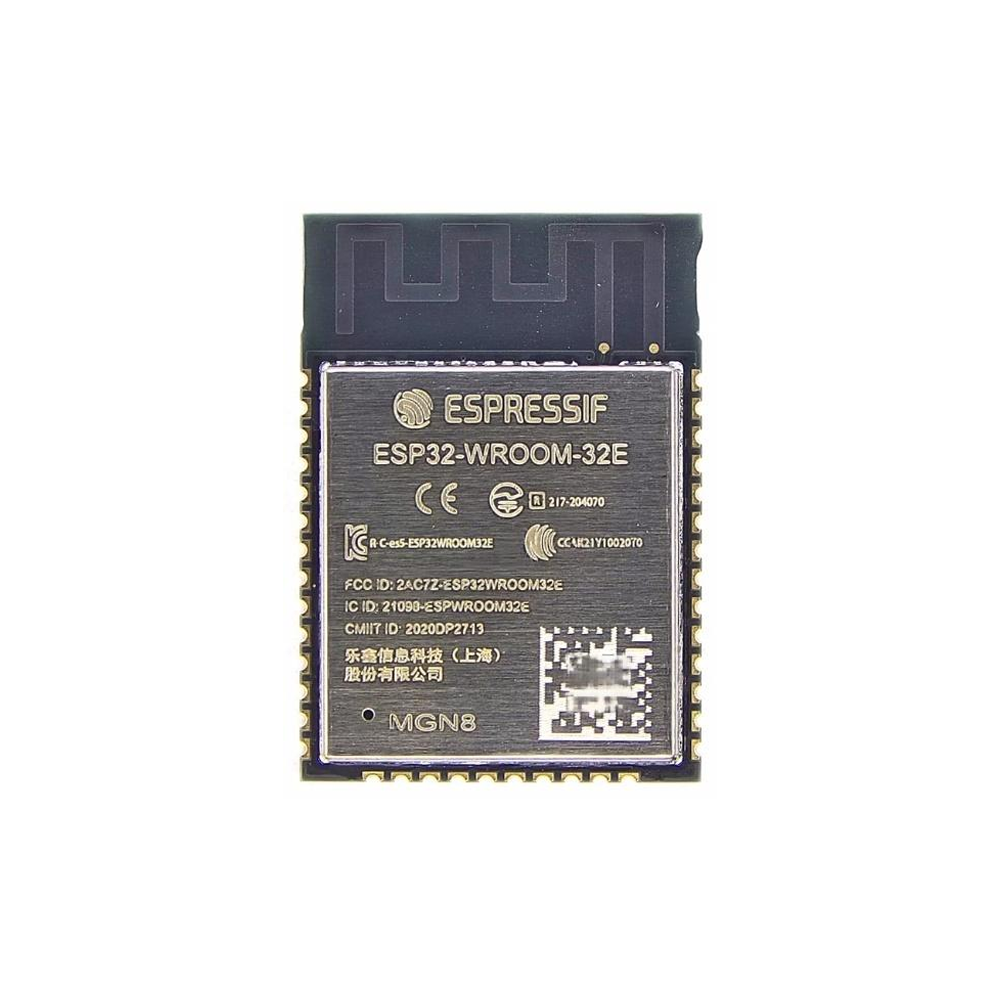
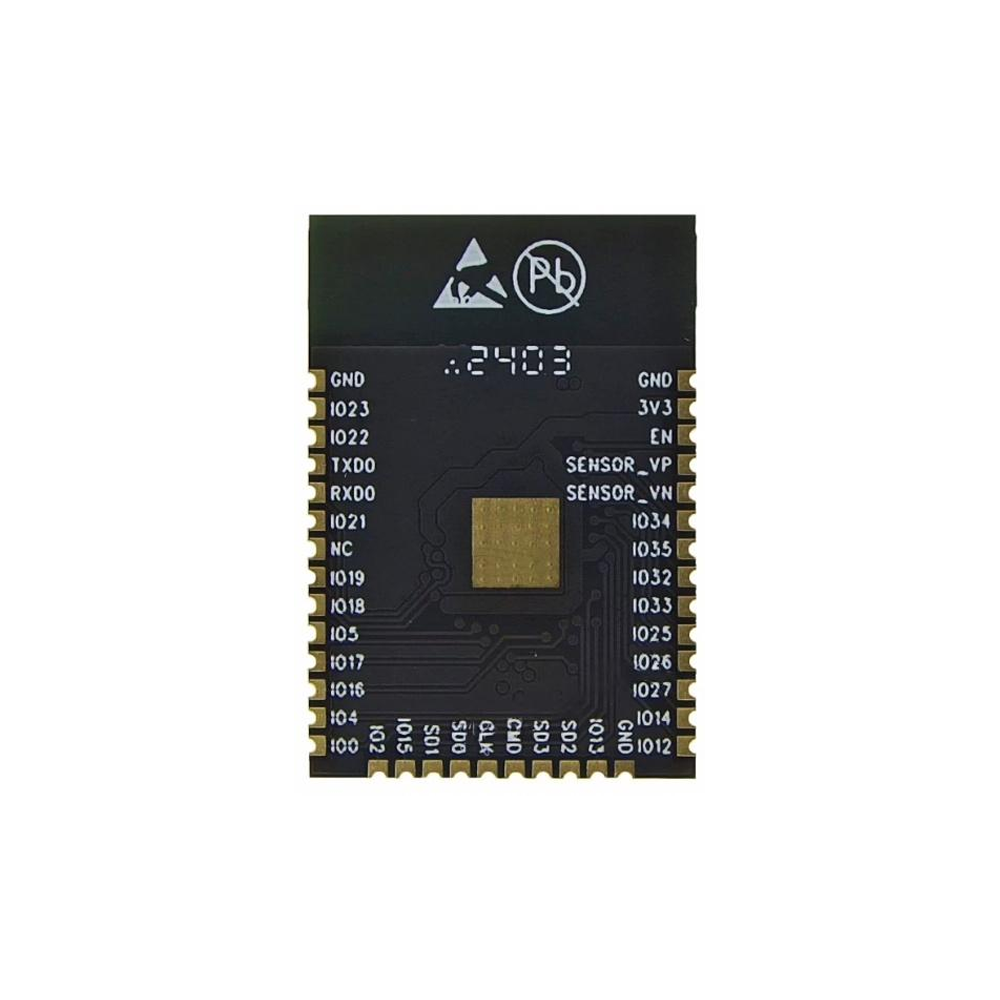
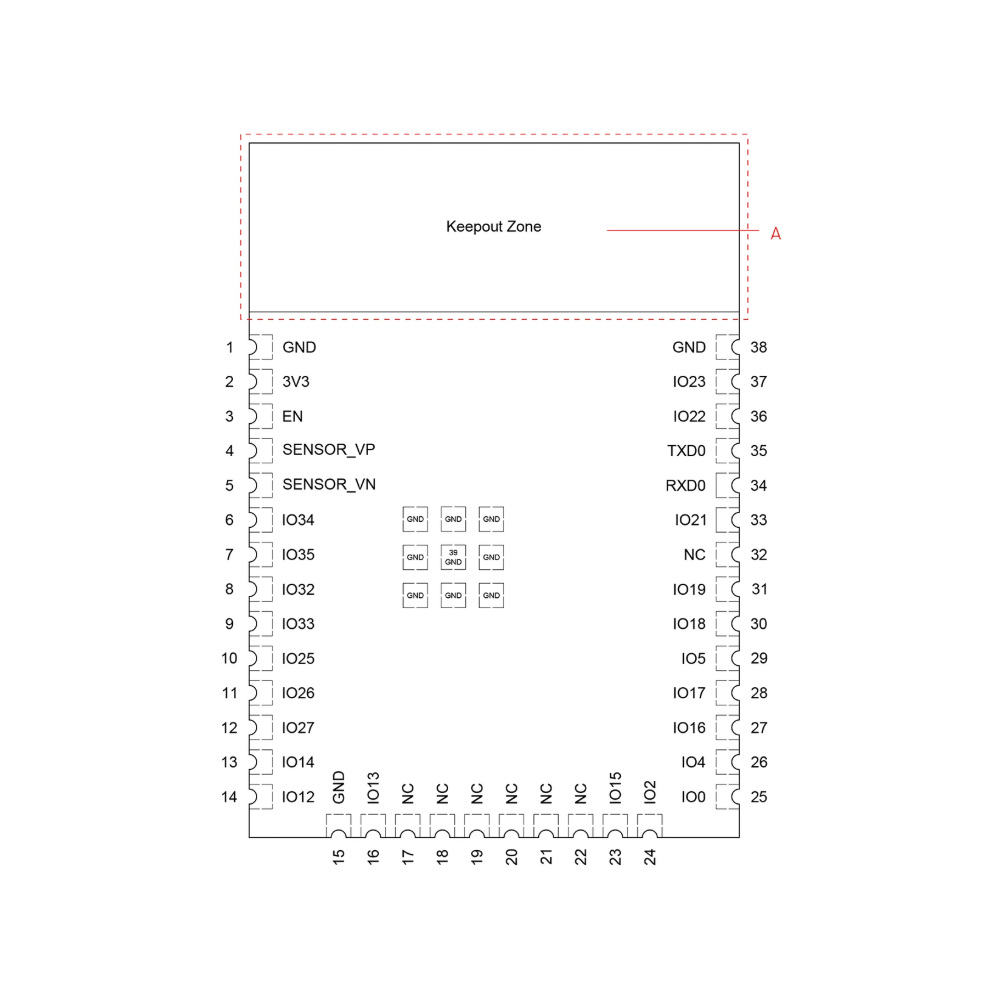
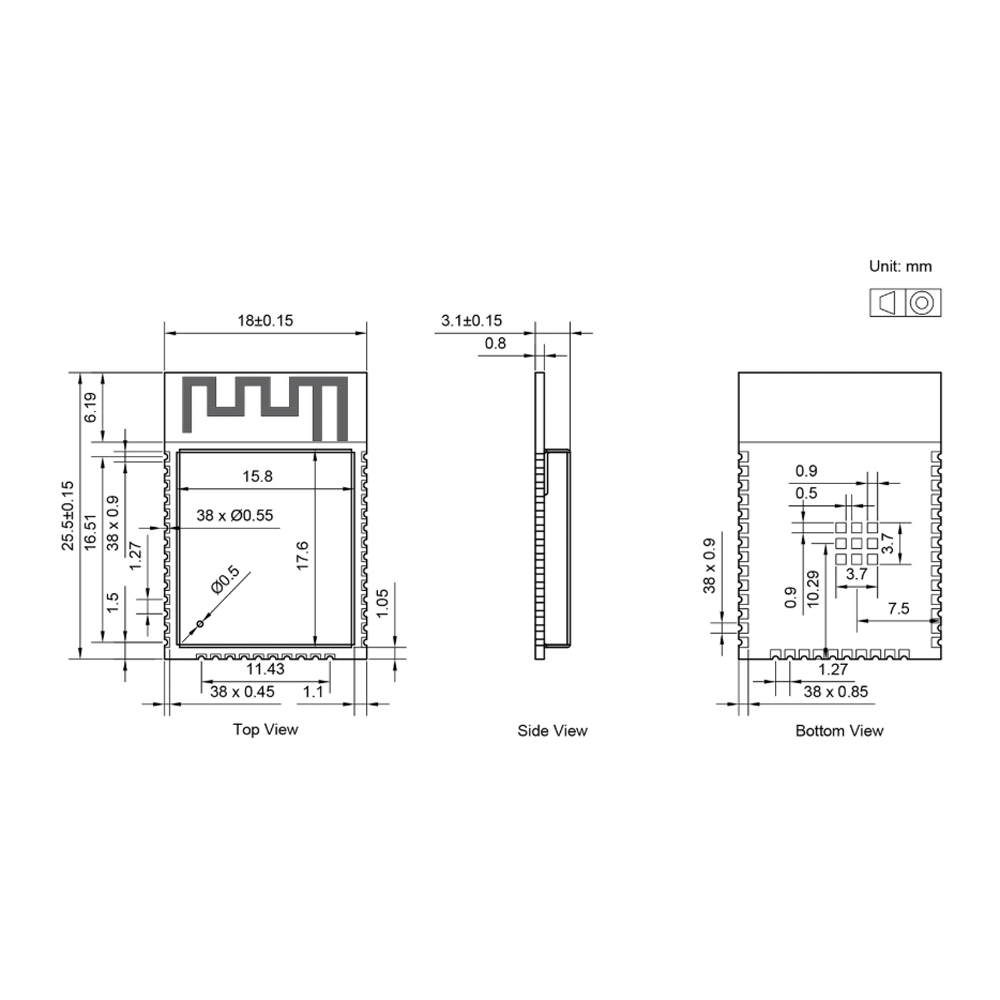
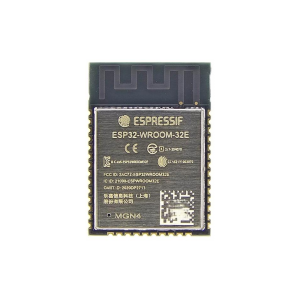
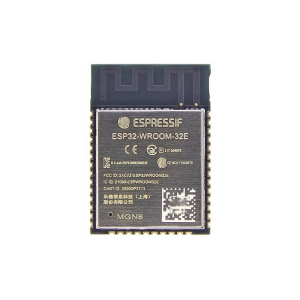
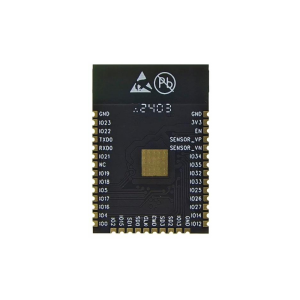
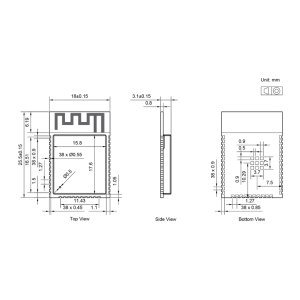
ESPRESSIF ESP32-WROOM-32E Module 16M=128mbit

SKU: FA1053-1-0-9-1
Microcontroller

ESP32-D0WD-V3, Xtensa dual-core 32-bit LX6

Clock Speed

80 – 240 MHz

Flash Memory

16 MB (128 Mbit) Quad SPI

Wireless

Wi-Fi 802.11 b/g/n (150 Mbps), Bluetooth v4.2 BR/EDR + BLE

Antenna

Onboard PCB antenna

Operating Voltage

3.0 – 3.6 V

Operating Temperature

-40°C to +85°C

Dimensions

18.0 × 25.5 × 3.1 mm

The ESP32-WROOM-32E is a general-purpose Wi-Fi + Bluetooth + Bluetooth LE MCU module from Espressif Systems, built around the ESP32-D0WD-V3 chip. This version features 16MB (128Mbit) of SPI flash — the maximum storage capacity available for the WROOM-32E series — paired with an onboard PCB antenna, making it a complete, ready-to-integrate solution for a wide range of IoT applications.

At the core of the module is a dual-core Xtensa 32-bit LX6 microprocessor running at up to 240 MHz. The two CPU cores can be individually controlled, and a low-power co-processor can monitor peripherals while the main cores are powered down — ideal for balancing performance and power consumption . The chip’s sleep current is below 5 µA, making it suitable for battery-powered wearable electronics and low-power sensor networks .

The module supports Wi-Fi 802.11 b/g/n with data rates up to 150 Mbps and Bluetooth v4.2 BR/EDR + BLE. Antenna output power reaches up to 20 dBm, ensuring maximum wireless range . The compact form factor (18.0 × 25.5 × 3.1 mm) and onboard PCB antenna make it easy to embed into space-constrained designs without external antenna components .

The ESP32-WROOM-32E integrates a rich set of peripheral interfaces including SD card, UART, SPI, SDIO, I2C, LED PWM, motor PWM, I2S, IR, pulse counter, GPIO, capacitive touch sensor, ADC, DAC, and TWAI® (compatible with ISO 11898-1, i.e., CAN Specification 2.0) . It operates from 3.0 to 3.6 V with an operating temperature range of -40°C to +85°C, and carries BQB Bluetooth certification, FCC/CE-RED/SRRC RF certification, and REACH/RoHS environmental certification .

The 16MB flash configuration is ideal for applications requiring extensive firmware images, large OTA update buffers, or substantial data storage for logging, configuration files, and multimedia content.

Product Status Note: The ESP32-WROOM-32E is the current recommended replacement for the NRND (Not Recommended for New Designs) ESP32-WROOM-32D series. It uses the updated ESP32-D0WD-V3 chip and continues to receive manufacturing support .

Development support is extensive, with official support for Espressif’s ESP-IDF and the Arduino IDE through the Arduino-ESP32 core. The module is suitable for both individual makers and businesses purchasing for product development, smart home devices, industrial automation, and general-purpose IoT applications .

Features

  • ESP32-D0WD-V3 dual-core processor — Xtensa 32-bit LX6, up to 240 MHz, with adjustable frequency

  • 16MB SPI Flash — Maximum storage capacity for the WROOM-32E series, ideal for complex firmware and data logging

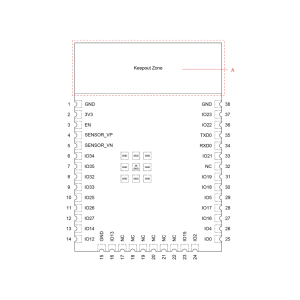
  • Onboard PCB antenna — Meandered Inverted-F Antenna for easy integration without external components

  • Integrated wireless — Wi-Fi 802.11 b/g/n (up to 150 Mbps) and Bluetooth v4.2 BR/EDR + BLE

  • Ultra-low sleep current — Below 5 µA for battery-powered applications

  • Rich peripheral set — SD card, UART, SPI, I2C, I2S, PWM, ADC, DAC, capacitive touch, TWAI® (CAN-compatible)

  • Up to 26 GPIOs — Including 5 strapping pins

  • Certified — BQB, FCC/CE-RED/SRRC, and REACH/RoHS certified for international markets

Technical Specifications 

# Parameter Specification
1 Microcontroller ESP32-D0WD-V3, Xtensa dual-core 32-bit LX6
2 Clock Speed 80 – 240 MHz
3 Flash Memory 16 MB (128 Mbit) Quad SPI
4 Wireless Wi-Fi 802.11 b/g/n (150 Mbps), Bluetooth v4.2 BR/EDR + BLE
5 Antenna Onboard PCB antenna
6 Operating Voltage 3.0 – 3.6 V
7 Operating Temperature -40°C to +85°C
8 Dimensions 18.0 × 25.5 × 3.1 mm

Usage

Getting Started

  1. Install the development environment — Install Arduino IDE with ESP32 board support, or set up ESP-IDF. Add the ESP32 board manager URL: https://espressif.github.io/arduino-esp32/package_esp32_index.json.

  2. Configure board parameters — In Arduino IDE, select “ESP32 Dev Module” or the appropriate ESP32 board definition.

  3. Connect the module — Use a USB-to-UART adapter (3.3V logic) connected to TX, RX, GND, and EN pins. The bare module requires an external 3.3V power supply.

  4. Upload your sketch — Select the correct port and board. If uploading fails, hold the BOOT button (GPIO0 to GND) during the “Connecting…” phase.

Typical Applications

  • Smart home devices — Connected appliances, lighting, and sensors

  • Industrial automation — Reliable wireless communication for equipment and monitoring systems

  • Low-power IoT sensor hubs — Battery-powered sensor networks with extended operational life

  • Audio devices — Voice encoding, music streaming, and MP3 decoding

  • Data-intensive IoT applications — 16MB flash supports extensive logging and OTA updates

Notes for Business Buyers

  • Current recommended version — The WROOM-32E is the actively recommended generation, replacing the NRND WROOM-32D series.

  • Proven platform — Large community and extensive documentation support.

  • Certified — BQB, FCC/CE-RED/SRRC, and REACH/RoHS certified, simplifying international market access.

  • Suitable for bulk purchasing — Ideal for smart home, industrial IoT, and product development applications.

Q: What is the ESP32-WROOM-32E module used for?

It is a general-purpose Wi-Fi and Bluetooth MCU module for IoT applications, including smart home, industrial automation, low-power sensor networks, and audio devices.

Q: How much flash memory does this version have?

This version includes 16 MB (128 Mbit) of SPI flash. The WROOM-32E series is also available with 4MB and 8MB flash options.

Q: What is the difference between ESP32-WROOM-32D and ESP32-WROOM-32E?

The WROOM-32E uses the updated ESP32-D0WD-V3 chip, while the older WROOM-32D uses the ESP32-D0WD. The -32E is the current recommended version for new designs.

Q: Is this module compatible with the Arduino IDE?

Yes. It is supported through the Arduino-ESP32 core. Select “ESP32 Dev Module” or the appropriate board definition.

Q: What is the operating voltage?

The module operates from 3.0 to 3.6 V, with 3.3 V being the typical supply.

Q: Does it support low-power modes?

Yes. The chip’s sleep current is below 5 µA, making it suitable for battery-powered wearable electronics and sensor nodes.

Q: What communication interfaces are available?

The module provides UART, SPI, I2C, I2S, SDIO, PWM, ADC, DAC, capacitive touch, and TWAI® (CAN-compatible).

Q: Is the ESP32-WROOM-32E recommended for new designs?

Yes. The WROOM-32E is the current recommended generation, replacing the NRND WROOM-32D series.

Q: What certifications does this module have?

It carries BQB Bluetooth certification, FCC/CE-RED/SRRC RF certification, and REACH/RoHS environmental certification.

Q: Can I purchase in bulk for a product development project?

Yes. The module is suitable for both individual users and business purchasing. For new designs, the WROOM-32E series is the actively recommended version.