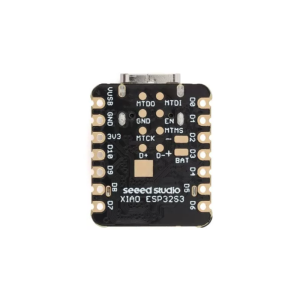
Seeed studio XIAO ESP32S3 ESP32-S3 ESP32 Development board

SKU: FA1053-1-2-1
Processor

ESP32-S3R8, Xtensa LX7 dual-core 32-bit, up to 240 MHz

Wireless

Complete 2.4 GHz Wi-Fi subsystem; Bluetooth 5.0 / Bluetooth Mesh

On-chip Memory

8MB PSRAM & 8MB Flash

Interfaces

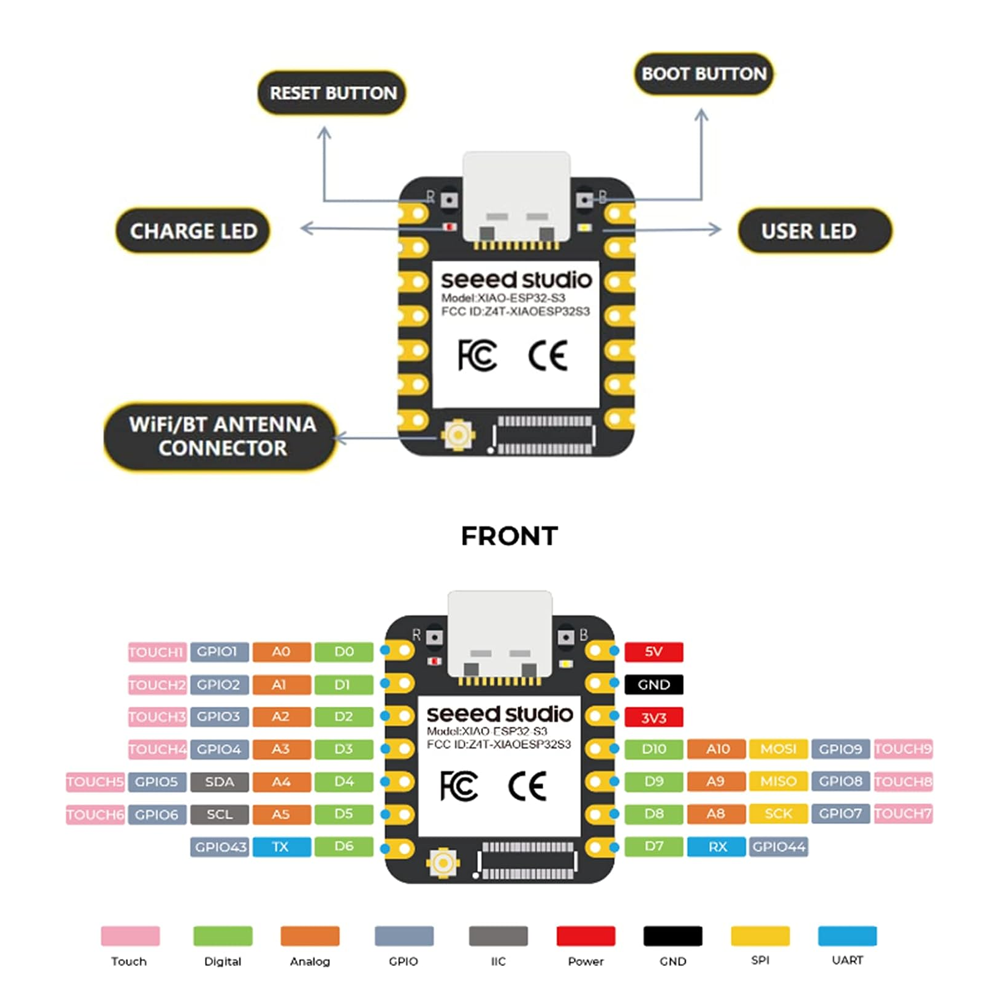
1× UART, 1× IIC, 1× SPI, 11× GPIO (PWM), 9× ADC

Input Voltage

Type-C: 5V; BAT: 3.7V

Deep Sleep Current

Approximately 14 µA

Charging Current

50 mA (fast charge) / 3.8 mA (trickle charge)

Dimensions

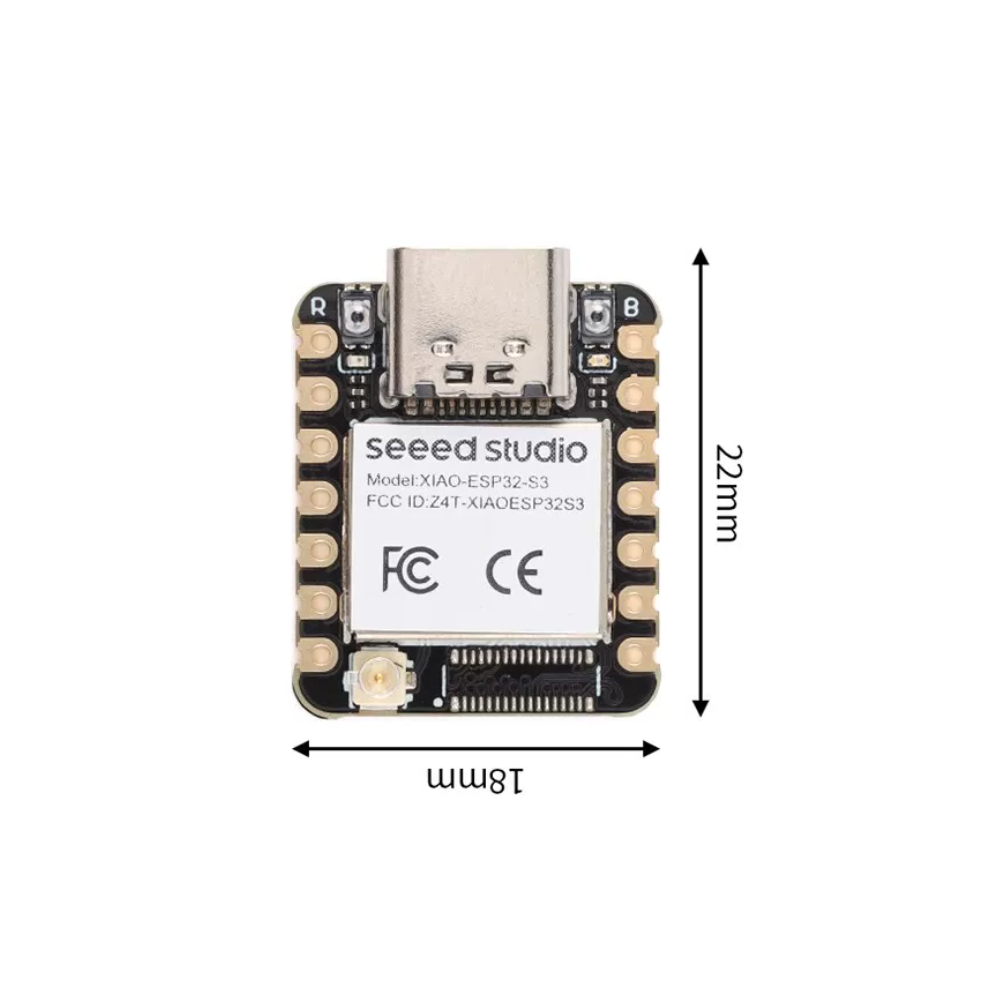
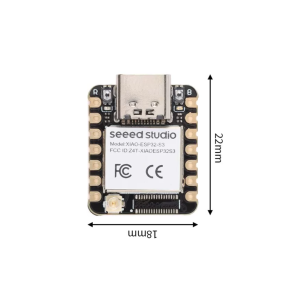
21 × 17.8 mm

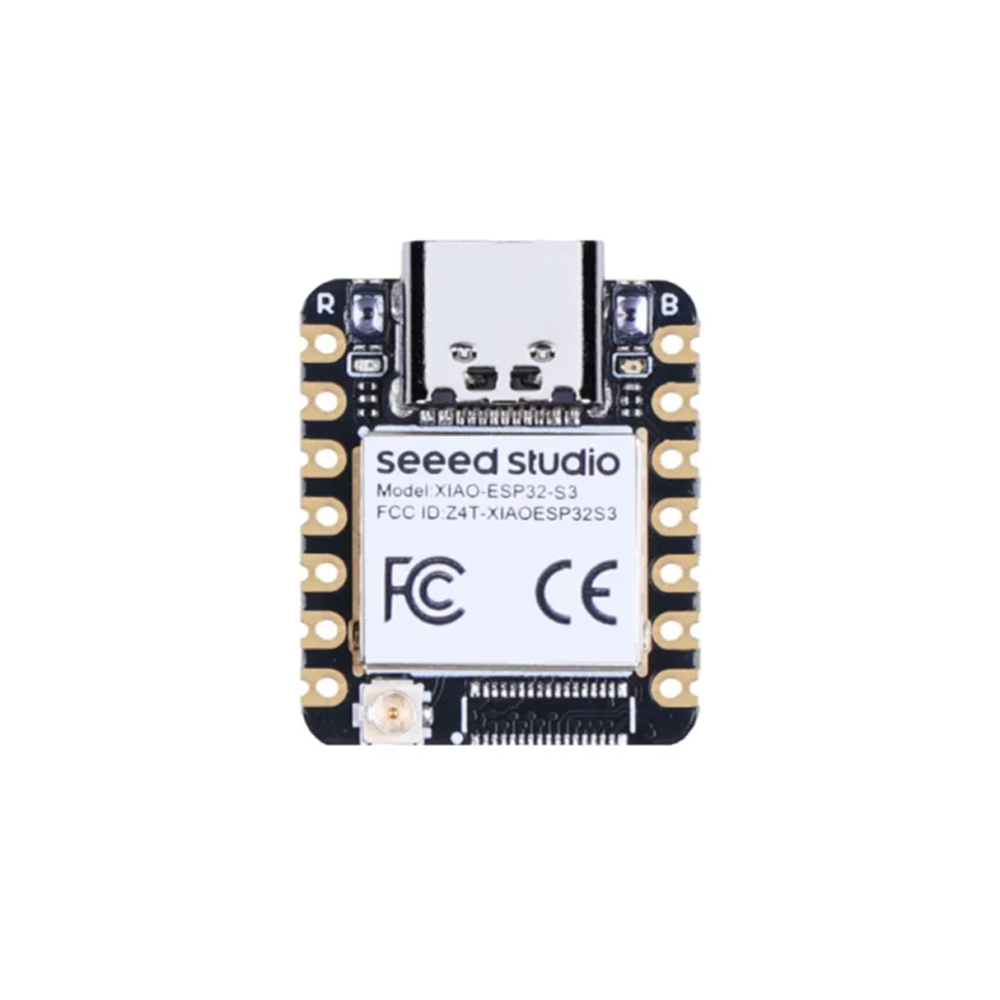
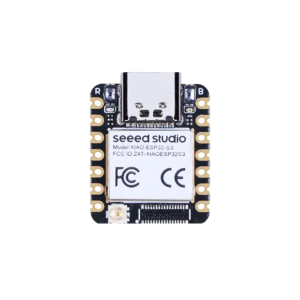
The Seeed Studio XIAO ESP32S3 is an ultra-compact, high-performance IoT development board that inherits the classic XIAO form factor. Measuring just 21 × 17.8 mm, it integrates the powerful ESP32-S3 dual-core Xtensa LX7 32-bit processor running at up to 240 MHz. It combines Wi-Fi and Bluetooth 5.0 wireless connectivity with 8MB PSRAM and 8MB Flash, providing ample computing and storage capacity for complex IoT applications.

For wireless performance, the XIAO ESP32S3 supports a complete 2.4 GHz Wi-Fi subsystem and Bluetooth 5.0 / Bluetooth Mesh. Paired with the included 2.4 GHz rod antenna connected to the onboard U.FL/IPEX antenna connector, it can achieve communication distances over 100 meters. This is critical for applications such as wearables, smart home devices, and robotics that require reliable wireless connectivity.

Power management is one of the board‘s core strengths. It includes an onboard lithium battery charge management chip, supports 3.7V LiPo battery power and charging, and offers four power consumption modes. In deep sleep mode, current consumption drops to an impressive 14 µA, making it ideal for battery-powered portable devices and remote sensor nodes. During charging, fast charge current is 50 mA and trickle charge is 3.8 mA, with onboard charge indicator LEDs clearly displaying charging status.

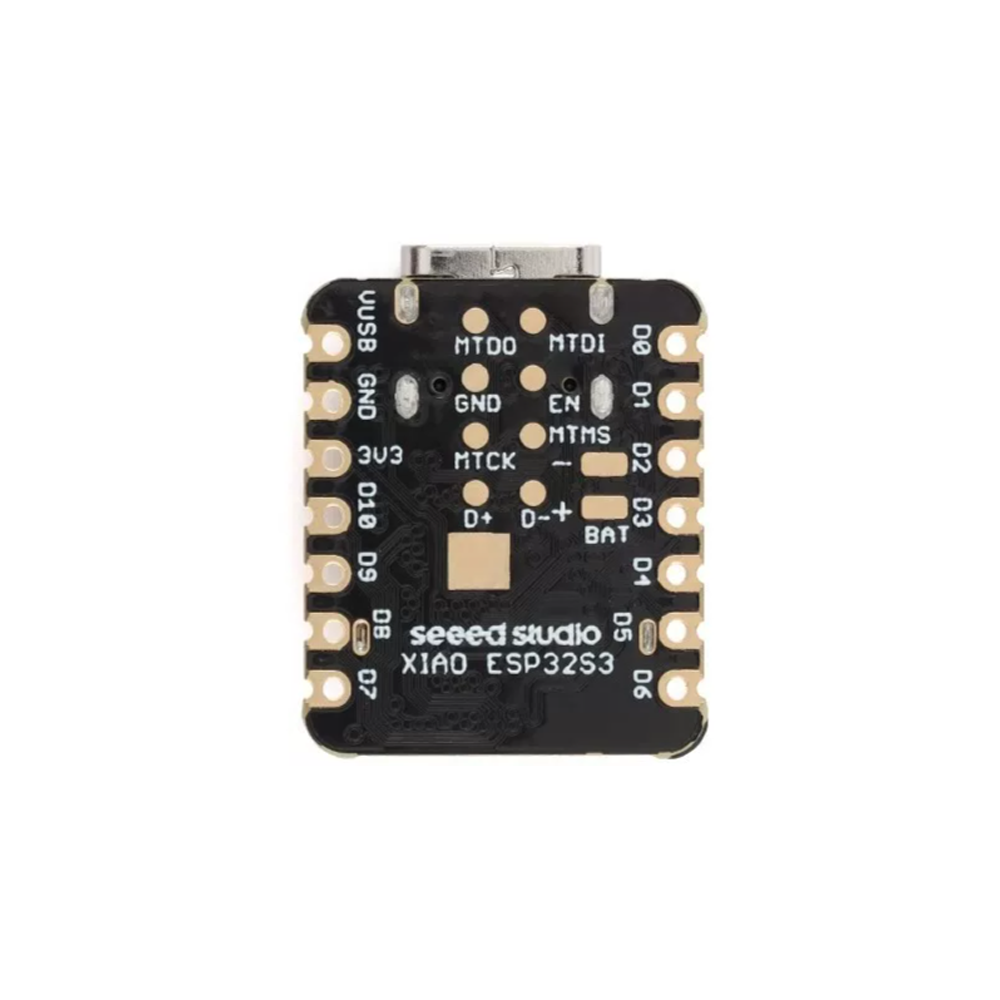
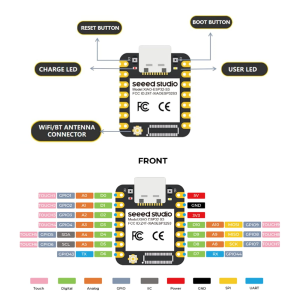
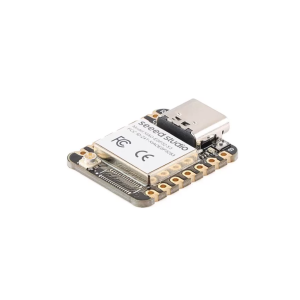
In terms of interfaces, the XIAO ESP32S3 offers rich expansion capabilities: 11 PWM GPIOs, 9 ADC channels, 1× UART, 1× IIC, 1× SPI, plus a user LED and a charge LED. The onboard BOOT button and RESET button make it easy to enter download mode or restart the program. Its SMD design has no components on the back, is breadboard-compatible, and can be directly integrated into mass-production PCBA via stamp holes — balancing prototyping convenience with manufacturing reliability.

The board is officially supported by Arduino IDE and MicroPython. After installing the ESP32 board package, simply select “XIAO_ESP32S3” to begin programming. Users can quickly verify their development environment with a simple Blink program (the onboard user LED corresponds to GPIO21).

Whether you are building smart wearables, IoT sensor nodes, or rapid prototypes, the Seeed Studio XIAO ESP32S3 delivers powerful performance in an extremely small package, making it an ideal choice for individual developers and businesses purchasing in bulk.


Features

  • Powerful MCU: ESP32-S3 32-bit dual-core Xtensa LX7 processor, up to 240 MHz, supports Arduino / MicroPython development

  • Excellent RF performance: Supports 2.4 GHz Wi-Fi and BLE 5.0 dual-mode communication; paired with U.FL antenna for 100+ meter range

  • Refined power design: Supports lithium battery charge management, offers 4 power modes, deep sleep current as low as 14 µA

  • Thumb-sized compact design: 21 × 17.8 mm, classic XIAO form factor, ideal for wearables and space-constrained projects

  • Production-friendly: Breadboard-compatible, SMD design with no back-side components, suitable for mass production

  • Rich interfaces: 11 GPIOs (PWM), 9 ADC, 1× UART, 1× IIC, 1× SPI

  • Large storage capacity: 8MB PSRAM + 8MB Flash

  • Convenient operation: Onboard BOOT and RESET buttons, user LED, and charge indicator LED


Technical Specifications 

# Parameter Specification
1 Processor ESP32-S3R8, Xtensa LX7 dual-core 32-bit, up to 240 MHz
2 Wireless Complete 2.4 GHz Wi-Fi subsystem; Bluetooth 5.0 / Bluetooth Mesh
3 On-chip Memory 8MB PSRAM & 8MB Flash
4 Interfaces 1× UART, 1× IIC, 1× SPI, 11× GPIO (PWM), 9× ADC
5 Input Voltage Type-C: 5V; BAT: 3.7V
6 Deep Sleep Current Approximately 14 µA
7 Charging Current 50 mA (fast charge) / 3.8 mA (trickle charge)
8 Dimensions 21 × 17.8 mm

Usage

Getting Started (Arduino IDE)

  1. Install Arduino IDE: Download and install the stable version of Arduino IDE for your operating system from the official website.

  2. Add ESP32 board package: Open File > Preferences and enter the following URL in “Additional Boards Manager URLs”: https://raw.githubusercontent.com/espressif/arduino-esp32/gh-pages/package_esp32_index.json

  3. Install board support: Open Tools > Board > Boards Manager, search for esp32, and install the latest version.

  4. Select board and port: In Tools > Board, select XIAO_ESP32S3, and choose the correct serial port.

  5. Install the antenna: Connect the included 2.4 GHz antenna to the onboard U.FL antenna connector for best signal.

  6. Upload your program: Open File > Examples > 01.Basics > Blink and upload. The onboard orange user LED (GPIO21) will start blinking.

Entering BootLoader Mode

If the board is not recognized or program upload fails, enter BootLoader mode:

  1. Press and hold the BOOT button.

  2. Connect the board to your computer via a data cable.

  3. Release the BOOT button after connection.

Battery Usage

The XIAO ESP32S3 supports 3.7V LiPo battery power and charging. When connecting a battery, observe polarity: negative terminal near the USB port, positive terminal away from the USB port. When powered by battery, the 5V pin has no voltage output.

Typical Applications

  • Wearable devices: Fitness trackers, smart watches, portable electronics

  • IoT sensor nodes: Remote monitoring, data collection

  • Smart home: Connected switches, sensors, controllers

  • Robotics: Wireless control, sensor fusion

  • Rapid prototyping: Space-constrained proof-of-concept builds

  • Production integration: SMD design supports direct PCBA integration

Notes for Business Buyers

  • Production-ready: SMD design with no back-side components and standardized stamp holes simplifies commercial PCBA integration

  • Ultra-low power consumption: 14 µA deep sleep current, suitable for battery-powered products requiring long endurance

  • Mature ecosystem: Supports Arduino and MicroPython, with rich community resources

  • Suitable for bulk purchasing: Compact size and low cost make it practical for IoT product development and volume deployment

Q: What is the Seeed Studio XIAO ESP32S3 used for?

It is an ultra-compact IoT development board for wearables, sensor nodes, smart home devices, robotics, and space-constrained applications requiring Wi-Fi and Bluetooth connectivity.

Q: What makes the XIAO ESP32S3 different from other ESP32 boards?

Its thumb-sized 21 × 17.8 mm form factor and production-ready SMD design make it uniquely suited for wearables and commercial integration. It also supports 14 µA deep sleep ultra-low power and onboard lithium battery charging.

Q: Is it compatible with the Arduino IDE?

Yes. After installing the ESP32 board package, select “XIAO_ESP32S3” from the board list.

Q: What is the deep sleep current?

The deep sleep current is approximately 14 µA, making it ideal for battery-powered applications requiring long endurance.

Q: Does it support battery charging?

Yes. The board includes an onboard lithium battery charge management chip supporting 3.7V LiPo batteries. Fast charge current is 50 mA; trickle charge is 3.8 mA.

Q: How do I use an external antenna?

A 2.4 GHz rod antenna is included in the package. Connect it to the onboard U.FL/IPEX antenna connector to achieve communication distances over 100 meters.

Q: How do I enter BootLoader mode?

Press and hold the BOOT button, connect the USB data cable to your computer, then release the button.

Q: Which development environments are supported?

It supports Arduino IDE and MicroPython, with complete getting-started guides available on the official wiki.

Q: Which pin does the onboard user LED correspond to?

The onboard orange user LED corresponds to GPIO21. In the Blink example, the LED lights up when the pin is set low.

Q: Can I purchase in bulk for product development?

Yes. The XIAO ESP32S3‘s production-ready SMD design and standardized stamp holes make it highly suitable for commercial PCBA integration and volume deployment.