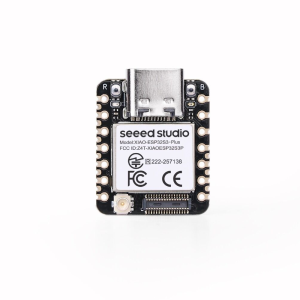
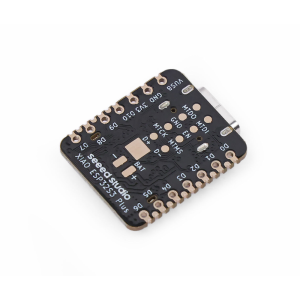
Seeed studio XIAO ESP32S3 Plus 16MB Development board than ESP32-S3 More 9pcs GPIO Connector

SKU: FA1053-1-2-2
Processor

ESP32-S3R8, Xtensa LX7 dual-core 32-bit, up to 240 MHz

Memory

8MB PSRAM + 16MB Flash

Wireless

2.4 GHz Wi-Fi + Bluetooth 5.0 / Bluetooth Mesh

GPIO Count

20 total (11 through-hole + 9 SMD castellation)

Interfaces

2× UART, 1× IIC, 1× IIS, 2× SPI, 18× PWM, 9× ADC

Deep Sleep Current

Approximately 14 µA

Charging Current

100 mA (fast charge)

Dimensions

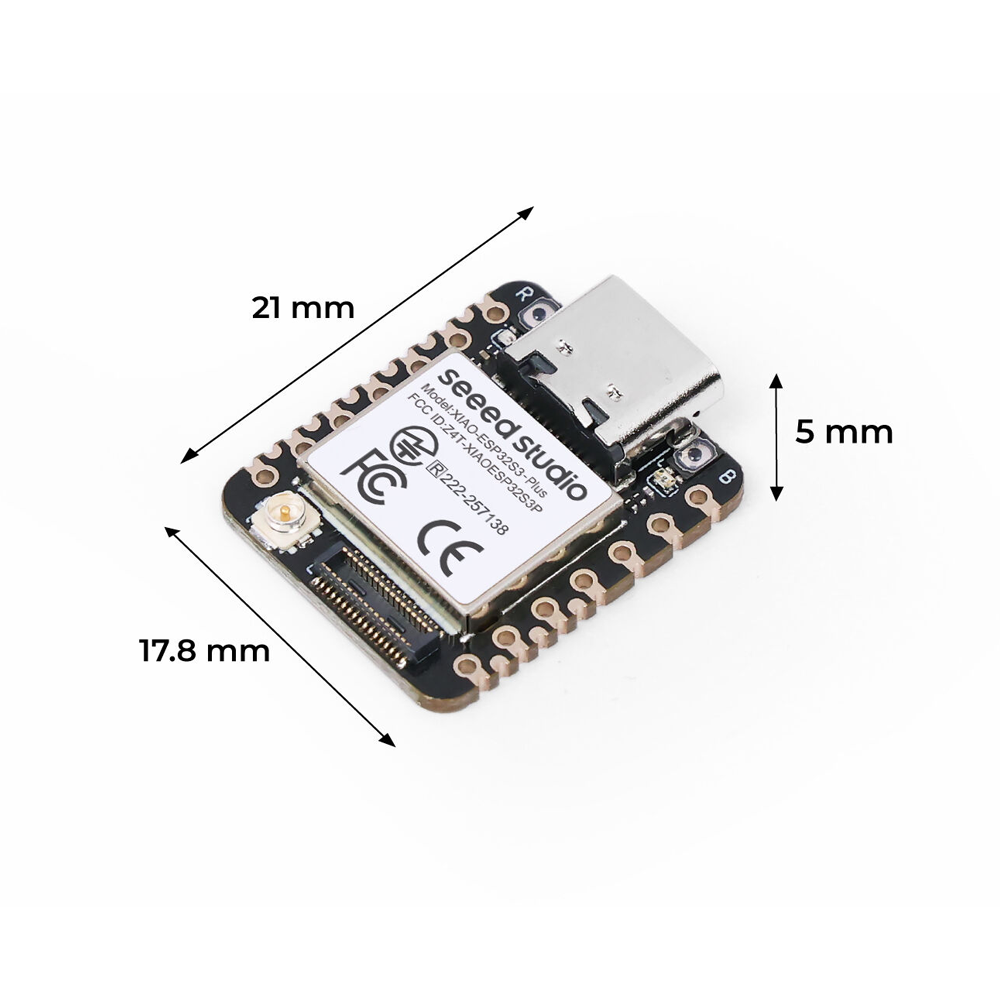
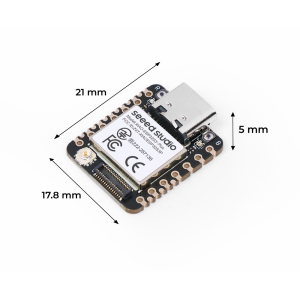
21 × 17.8 mm

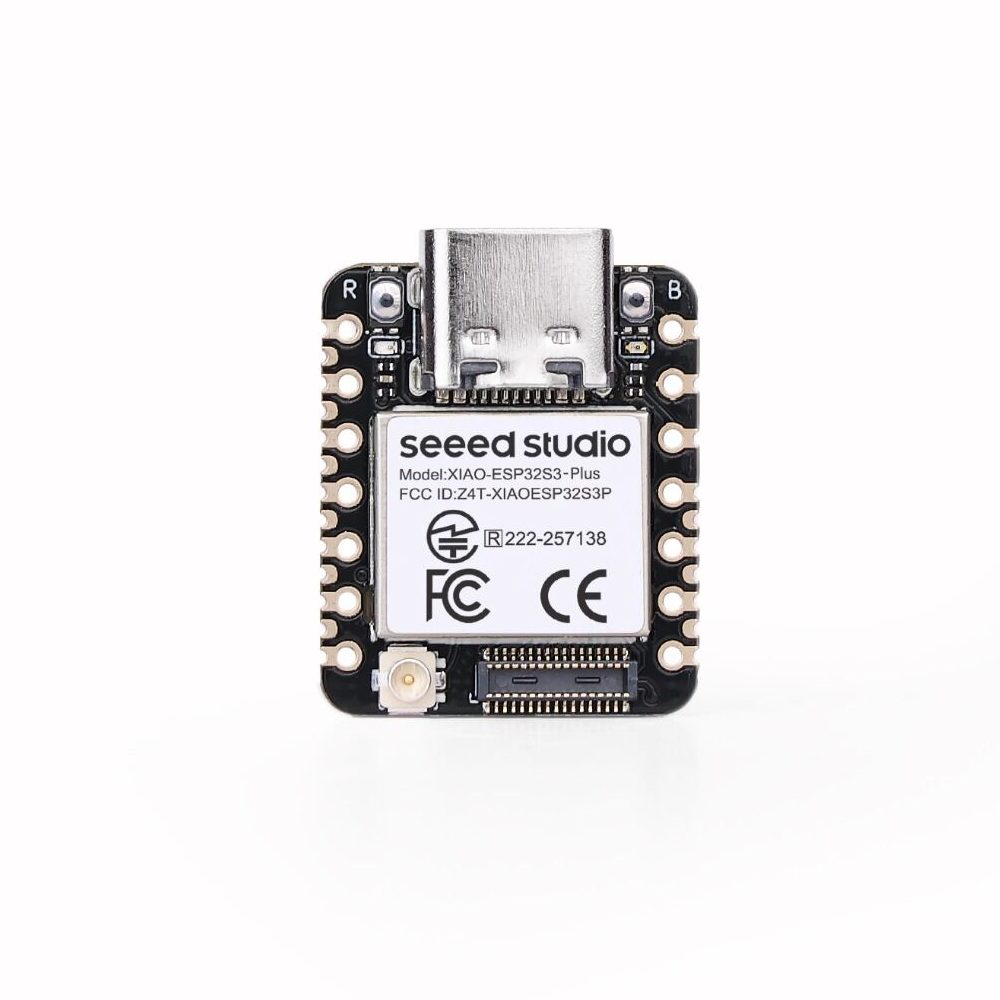
The Seeed Studio XIAO ESP32S3 Plus is the expanded version of the popular XIAO ESP32S3, designed for advanced IoT projects, smart home devices, and professional wireless products that require additional I/O connectivity. It maintains the signature XIAO thumb-sized form factor at just 21 × 17.8 mm, while adding 9 extra GPIO pads via SMD castellations for board-to-board soldering.

Powered by the ESP32-S3R8 dual-core Xtensa LX7 32-bit processor running at up to 240 MHz, this board delivers strong performance for demanding applications including AI acceleration, wireless communication, and edge computing. The Plus variant upgrades the onboard storage to 16MB Flash (up from 8MB on the standard XIAO ESP32S3), providing more room for complex firmware, OTA updates, and data logging.

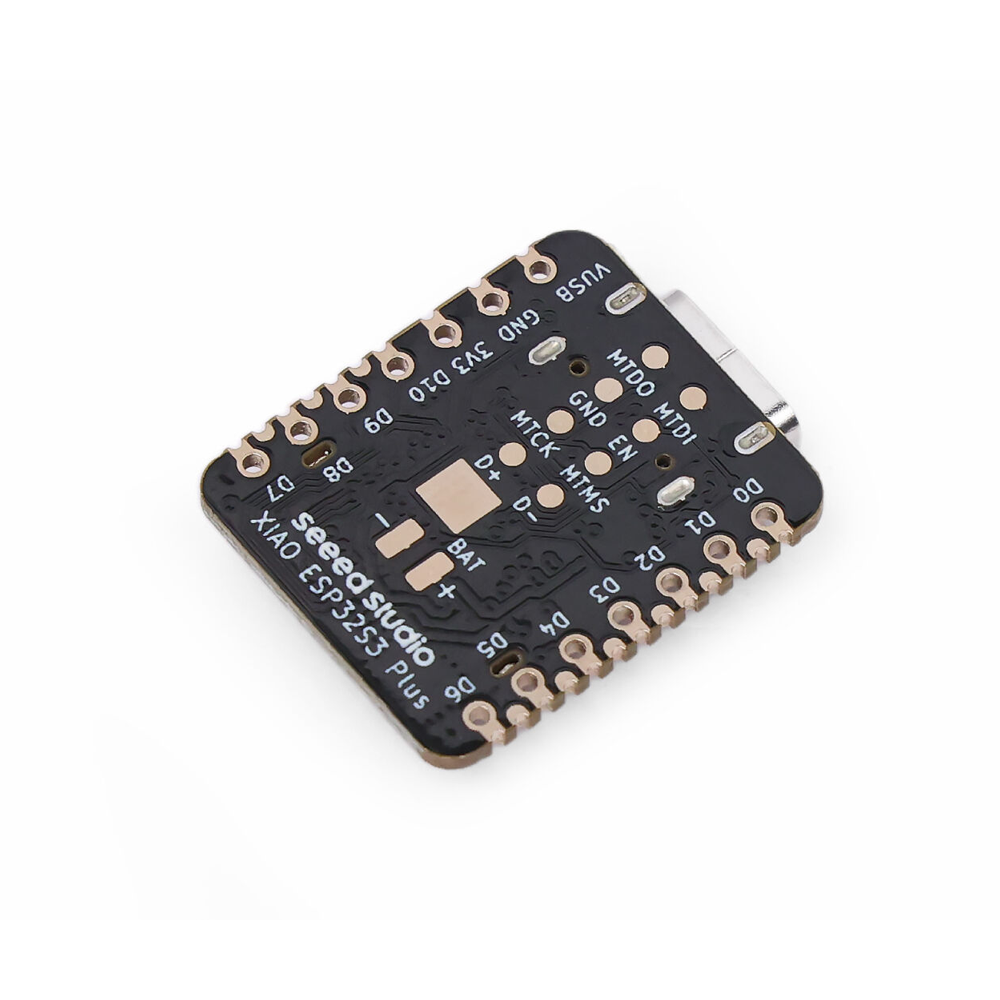
The redesigned back-side pad layout and standardized castellations make this board ideal for production-ready SMD integration. Unlike standard XIAO boards that use through-hole headers, the Plus variant offers 23 castellation pins (20 GPIOs + 3 power pins) for direct soldering onto carrier PCBs. This makes it a true System-on-Module (SoM) solution for wearables, space-constrained devices, and commercial products.

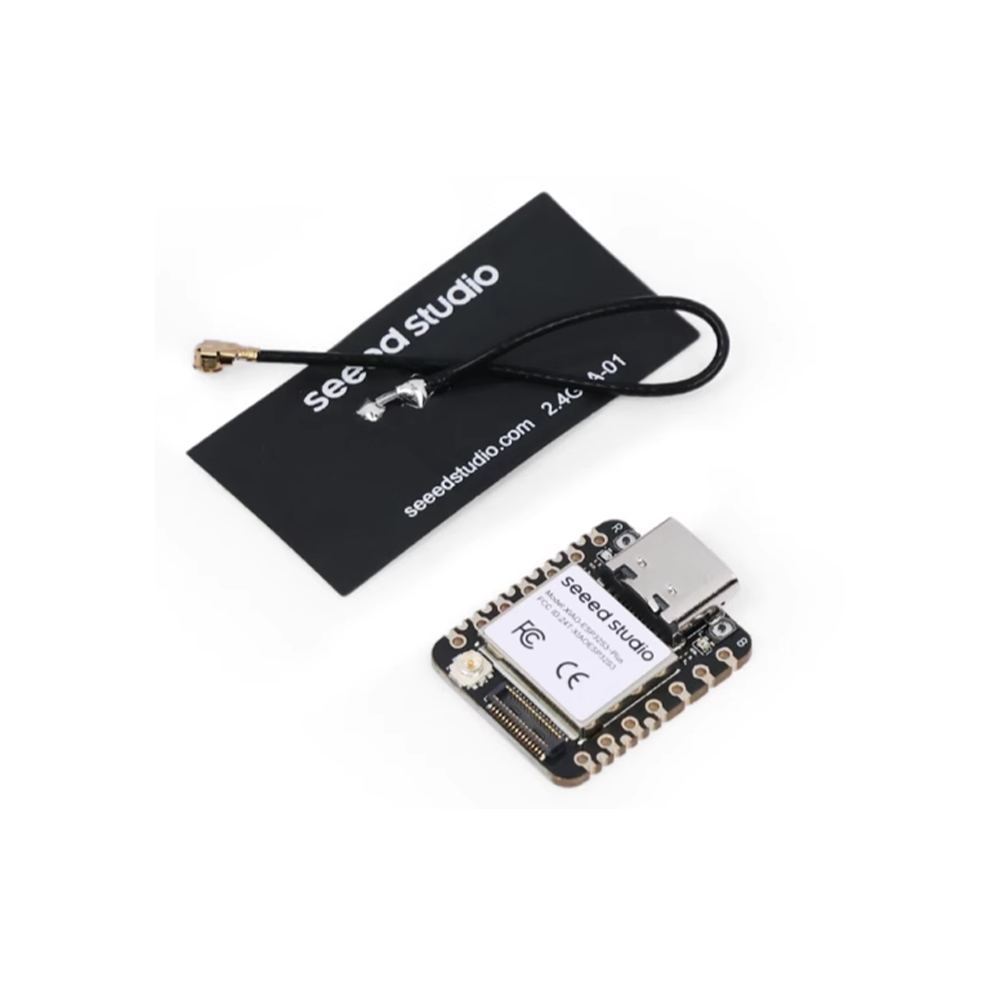
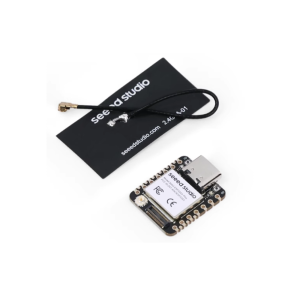
Wireless connectivity includes 2.4 GHz Wi-Fi and Bluetooth 5.0 / Bluetooth Mesh, with an included 2.4 GHz rod antenna for extended range. The board supports ultra-low power consumption with a deep sleep current of approximately 14 µA, making it ideal for battery-powered applications. Integrated lithium battery charging management simplifies battery-powered design.

The XIAO ESP32S3 Plus is fully compatible with Arduino, MicroPython, and ESP-IDF, and works with the entire XIAO accessory ecosystem including expansion boards, sensors, and communication modules. Whether you are building an advanced Bluetooth project, a wireless sensor network, or a production-ready wearable device, the XIAO ESP32S3 Plus provides the extra I/O and storage capacity needed for professional applications.


Features

  • ESP32-S3R8 dual-core processor — Xtensa LX7 32-bit at up to 240 MHz with vector instructions for AI acceleration

  • 16MB Flash storage — Doubled capacity vs. standard XIAO ESP32S3 for complex firmware and data logging

  • 9 extra GPIO castellation pads — Total of 20 GPIOs for expanded connectivity via SMD board-to-board soldering

  • Wi-Fi & Bluetooth 5.0 — Complete 2.4 GHz Wi-Fi subsystem with BLE 5.0 and Bluetooth Mesh support

  • Ultra-low power consumption — 14 µA deep sleep current with integrated lithium battery charging management

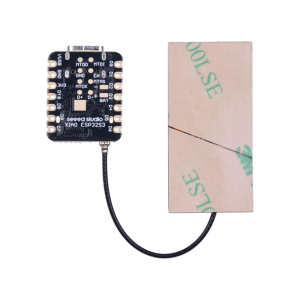
  • Production-ready SMD design — Redesigned castellations and back-side pads for professional PCBA integration

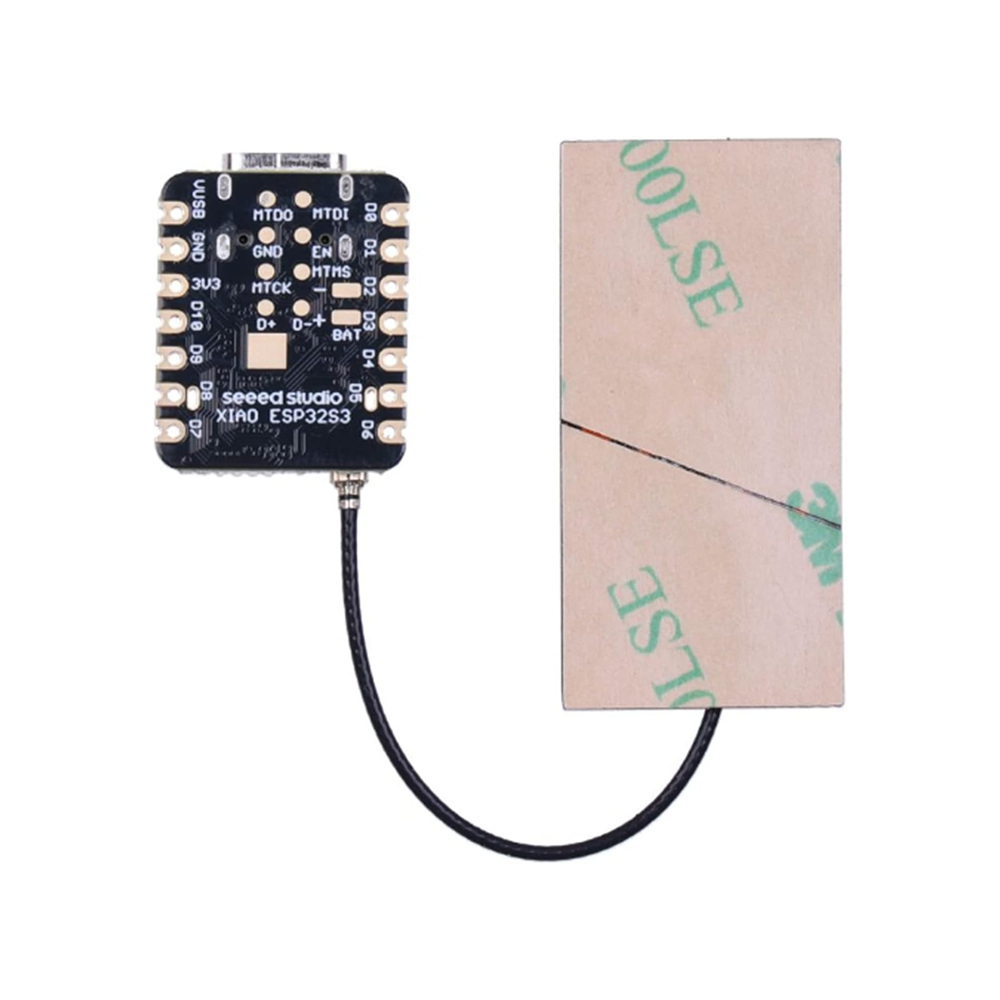
  • Standardized back layout — Aligned battery and debugger pads compatible with future XIAO expansion boards

  • Rich interfaces — 2× UART, 1× IIC, 1× IIS, 2× SPI, 18× GPIO (PWM), 9× ADC

  • Compact XIAO form factor — 21 × 17.8 mm with single-sided mounting for wearables

  • Broad development support — Arduino, MicroPython, and ESP-IDF compatible


Technical Specifications 

# Parameter Specification
1 Processor ESP32-S3R8, Xtensa LX7 dual-core 32-bit, up to 240 MHz
2 Memory 8MB PSRAM + 16MB Flash
3 Wireless 2.4 GHz Wi-Fi + Bluetooth 5.0 / Bluetooth Mesh
4 GPIO Count 20 total (11 through-hole + 9 SMD castellation)
5 Interfaces 2× UART, 1× IIC, 1× IIS, 2× SPI, 18× PWM, 9× ADC
6 Deep Sleep Current Approximately 14 µA
7 Charging Current 100 mA (fast charge)
8 Dimensions 21 × 17.8 mm

Usage

Getting Started (Arduino IDE)

  1. Install the ESP32 board package — Add the following URL in Arduino IDE Preferences: https://raw.githubusercontent.com/espressif/arduino-esp32/gh-pages/package_esp32_index.json

  2. Select the board — Choose XIAO_ESP32S3_PLUS from the board list.

  3. Connect the antenna — Attach the included 2.4 GHz rod antenna to the onboard U.FL connector for extended range.

  4. Upload your sketch — If uploading fails, hold the BOOT button, press and release RESET, then release BOOT to enter download mode.

Production Integration

The XIAO ESP32S3 Plus is designed for SMD board-to-board soldering. The 9 additional castellation pads (D11–D19) allow direct integration into carrier PCBs without headers. The standardized back-side layout includes aligned battery pads and debugger pads, ensuring compatibility with future XIAO expansion boards.

Typical Applications

  • Advanced IoT projects — Expanded I/O for multi-sensor systems and complex wireless devices

  • Smart home controllers — Wi-Fi connectivity with extra GPIOs for relays, sensors, and displays

  • Professional wireless devices — Production-ready SoM for commercial products

  • Wearables — Compact 21 × 17.8 mm form factor with ultra-low power consumption

  • Bluetooth-intensive projects — 9 extra GPIOs specifically designed for advanced BLE applications

  • Edge AI — Vector instructions accelerate neural network inference

Notes for Business Buyers

  • Production-ready SoM — SMD castellations and standardized back layout simplify commercial PCBA integration

  • Doubled Flash capacity — 16MB supports complex applications and OTA updates

  • Extra GPIOs for professional projects — 9 additional castellation pads address I/O limitations of standard XIAO boards

  • Suitable for bulk purchasing — Ideal for IoT product development and volume deployment

Q: What is the difference between XIAO ESP32S3 and XIAO ESP32S3 Plus?

The Plus variant adds 9 extra GPIO castellation pads (20 total GPIOs), upgrades to 16MB Flash (vs. 8MB), and features a redesigned back-side pad layout for professional SMD integration.

Q: What is the deep sleep current of the XIAO ESP32S3 Plus?

The deep sleep current is approximately 14 µA, suitable for battery-powered applications requiring extended operational life.

Q: Does this board come with pin headers?

No. The XIAO ESP32S3 Plus is designed for SMD board-to-board soldering and does not include pin headers. The 9 extra GPIOs are accessible via castellation pads.

Q: How do I access the extra 9 GPIOs?

The 9 additional GPIOs (D11–D19) are exposed as 1.27mm pitch SMD castellation pads on the board edges, designed for direct soldering onto carrier PCBs.

Q: Is the XIAO ESP32S3 Plus compatible with the Arduino IDE?

Yes. Select XIAO_ESP32S3_PLUS from the ESP32 board list in Arduino IDE.

Q: What is the flash memory capacity?

The XIAO ESP32S3 Plus features 16MB Flash storage, double the capacity of the standard XIAO ESP32S3.

Q: Does it support battery charging?

Yes. The board includes integrated lithium battery charging management with a fast charge current of 100 mA.

Q: What wireless connectivity does it support?

It supports 2.4 GHz Wi-Fi and Bluetooth 5.0 / Bluetooth Mesh, with an included 2.4 GHz rod antenna for extended range.

Q: Is MicroPython supported?

Yes. The board is compatible with Arduino, MicroPython, and ESP-IDF.

Q: Can I purchase in bulk for product development?

Yes. The XIAO ESP32S3 Plus is designed for production-ready SMD integration, making it suitable for commercial product development and volume deployment.