Description
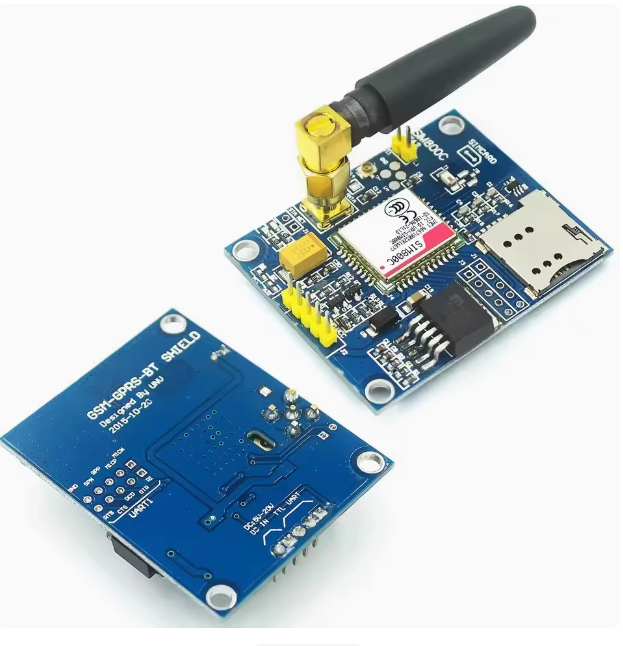
The SIM800C GSM Module represents the next generation of cellular connectivity for embedded systems. Engineered as a high-efficiency upgrade replacement for the SIM900A, the SIM800C offers a significantly smaller footprint, lower power consumption, and the added benefit of integrated Bluetooth 3.0 functionality.
This module is designed for developers and businesses requiring a versatile “all-in-one” wireless solution. It supports Quad-Band GSM/GPRS frequencies, ensuring reliable global performance for SMS messaging, voice calls, and GPRS data transmission. Whether you are upgrading an existing industrial monitoring system or designing a new IoT device that requires local Bluetooth control alongside long-range cellular data, the SIM800C provides a stable, professional-grade platform at a competitive price point.
Key Features
- Quad-Band Global Connectivity: Supports 850/900/1800/1900MHz, allowing for worldwide network compatibility.
- Integrated Bluetooth 3.0: Supports SPP (Serial Port Profile) and HID, enabling local wireless control and data exchange without extra modules.
- Superior Power Efficiency: Optimized for battery-operated devices with an ultra-low power “Sleep Mode.”
- Compact Upgrade: Fully compatible with the SIM900A command set while offering a more modern, space-saving hardware design.
- Industrial Data Protocols: Built-in TCP/IP, UDP, HTTP, and FTP protocols for seamless cloud and server integration.
- Flexible Interfacing: Onboard level-shifting circuitry allows for direct connection to 3.3V (STM32/ESP32) and 5V (Arduino) microcontrollers.