Description
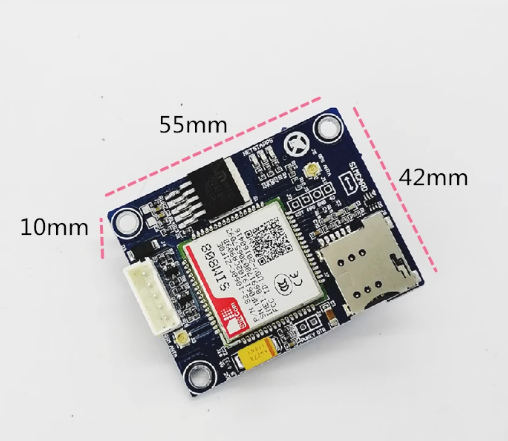
The SIM808 Development Board is a high-performance, all-in-one communication solution designed for the Internet of Things (IoT). This board integrates Quad-Band GSM/GPRS technology with a high-sensitivity GPS receiver into a single, compact package. Featuring the latest upgraded chip version, it offers superior stability and lower power consumption compared to previous iterations.
Engineered for seamless integration with STM32, Arduino, and 51-series microcontrollers, this board is the perfect core for vehicle tracking, remote environmental monitoring, and smart security systems. Whether you are a developer building a single prototype or a business purchaser sourcing components for fleet management hardware, the SIM808 provides the robust cellular and satellite connectivity required for modern “connected” projects.
Key Features
- Triple Functionality: Combines GSM (Voice), GPRS (Data), and GPS (Location) on a single board, reducing the physical footprint of your project.
- IoT Ready: Optimized for low-power M2M (Machine-to-Machine) applications and remote data transmission.
- New Chip Version: Features improved GPS acquisition sensitivity and more stable network handovers in weak signal areas.
- Multi-Platform Support: Fully compatible with STM32, Arduino, and Raspberry Pi via standard TTL serial communication.
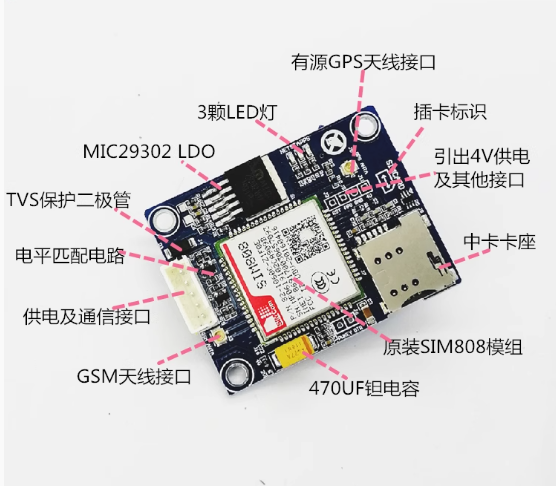
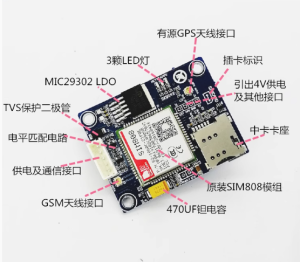
- Onboard Power Management: High-current LDO supports a wide input voltage range while handling the high-current peaks required during GSM transmission.
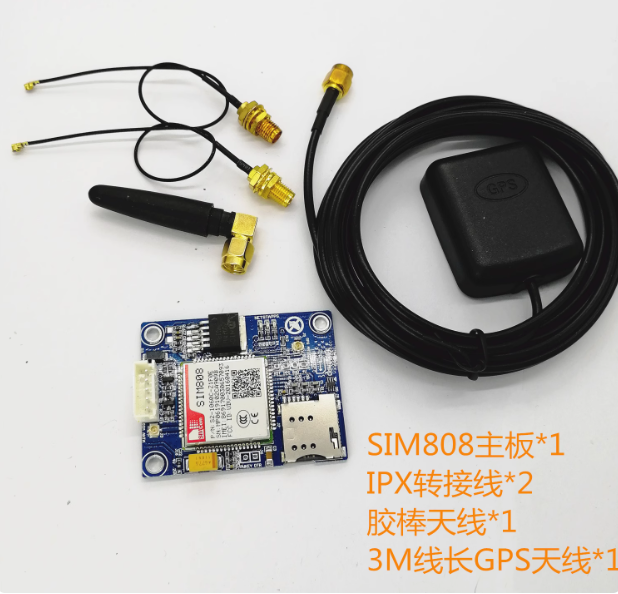
- Antenna Interfaces: Includes dedicated IPX or SMA connectors for both GSM and GPS antennas to ensure maximum signal gain.