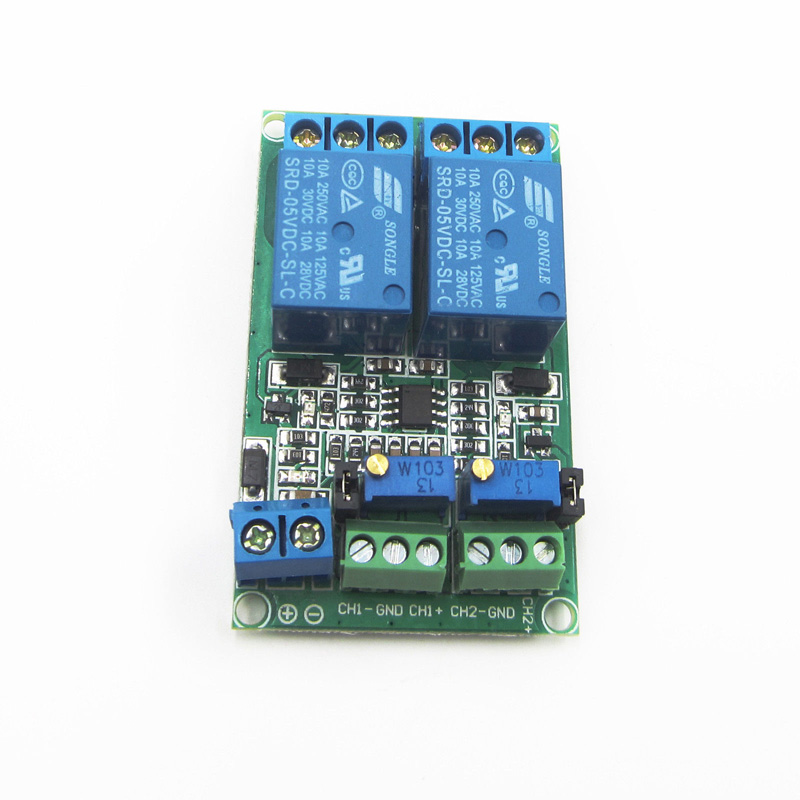
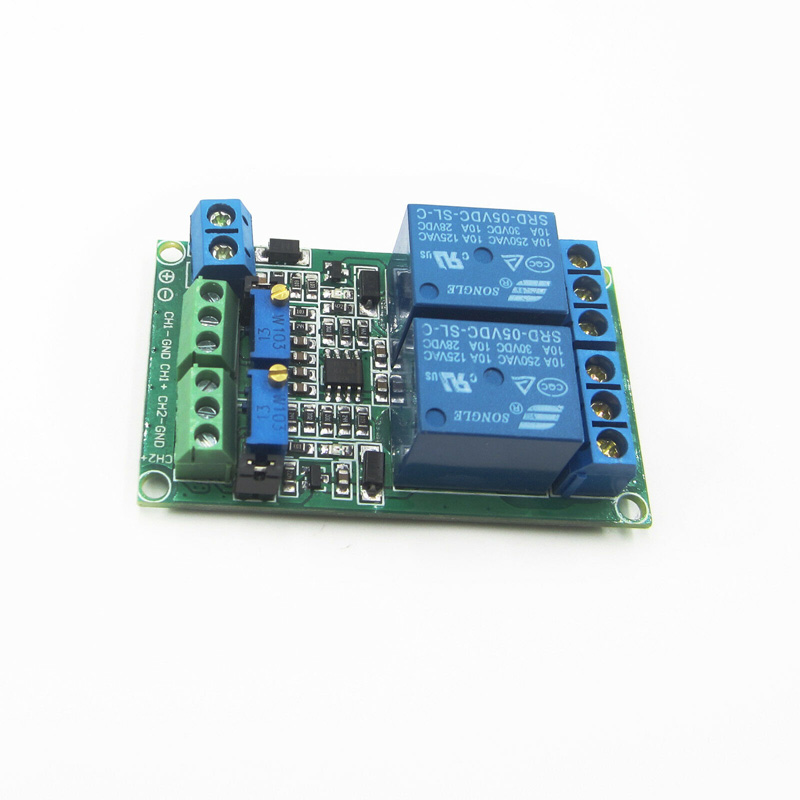
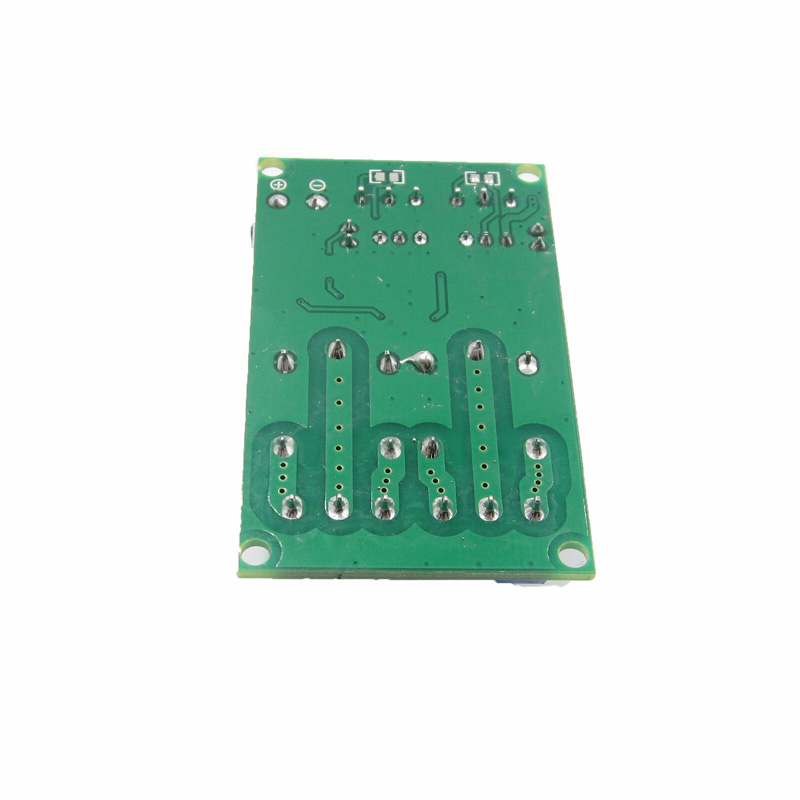
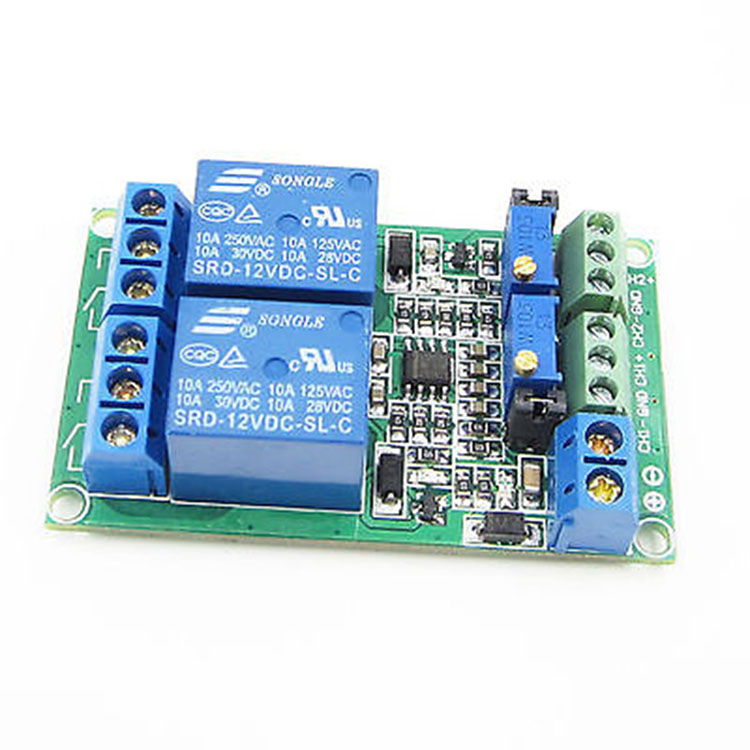
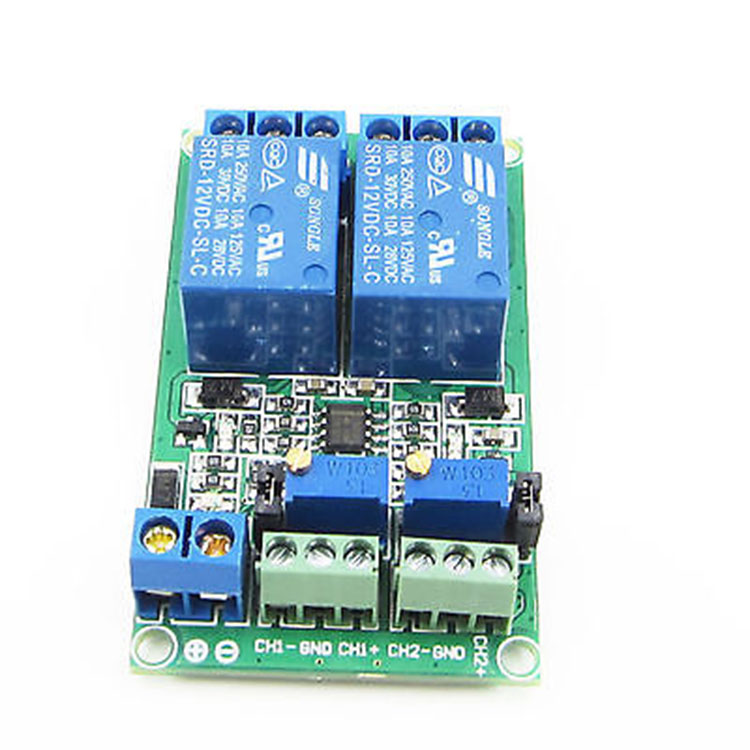
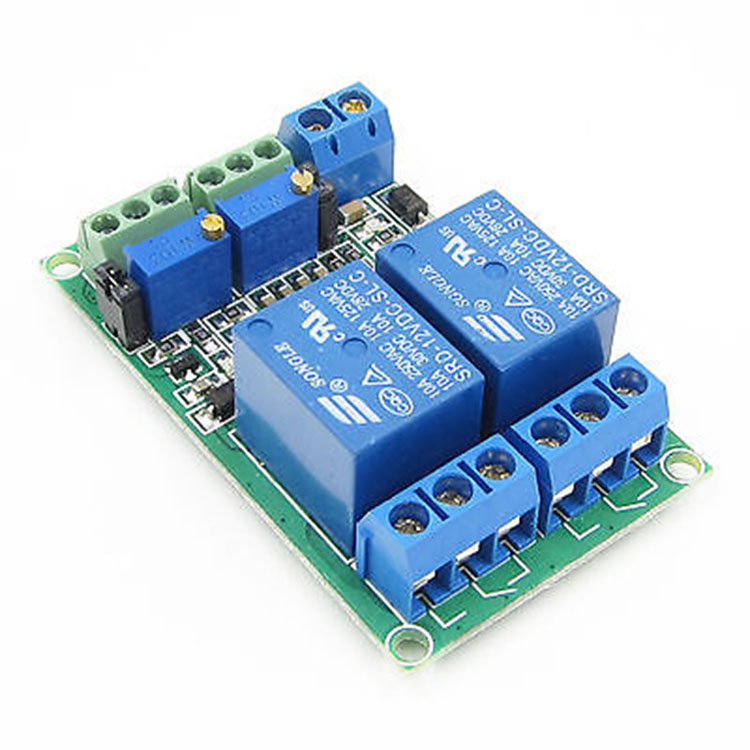
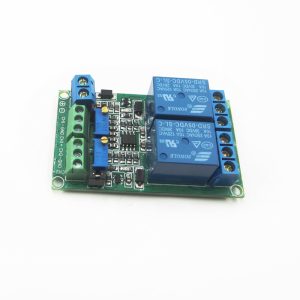
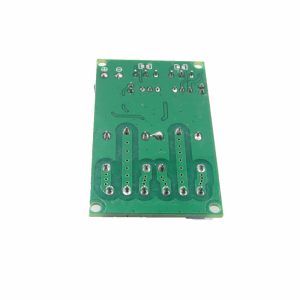
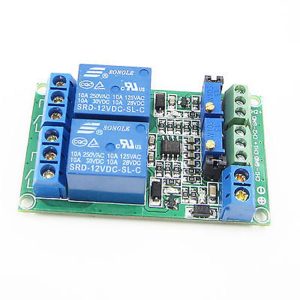
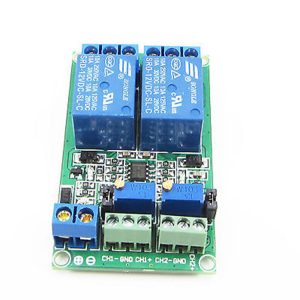
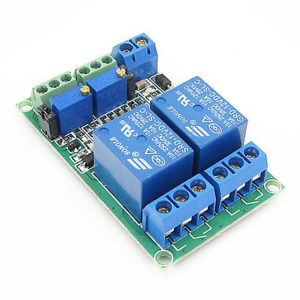
Dual-Channel LM393 Voltage Comparator Module – DC 5V 10A Max, Onboard IC for Precision Monitoring

SKU: FA2178
Comparator IC

LM393 (Texas Instruments) – Dual Differential Comparator

Supply Voltage

5V DC (recommended for module operation; IC supports 2V–36V)

Supply Current

0.8mA – 2.5mA (depends on supply voltage and output load)

Input Voltage Range

0V to VCC-1.5V (common-mode range)

Output Type

Open-Collector (requires external pull-up resistor)

Output Sink Current

6mA typical (direct from IC); 10A Max with external driver stage

Response Time

1.3µs typical

Input Bias Current

25nA typical

Input Offset Voltage

2mV typical

Description

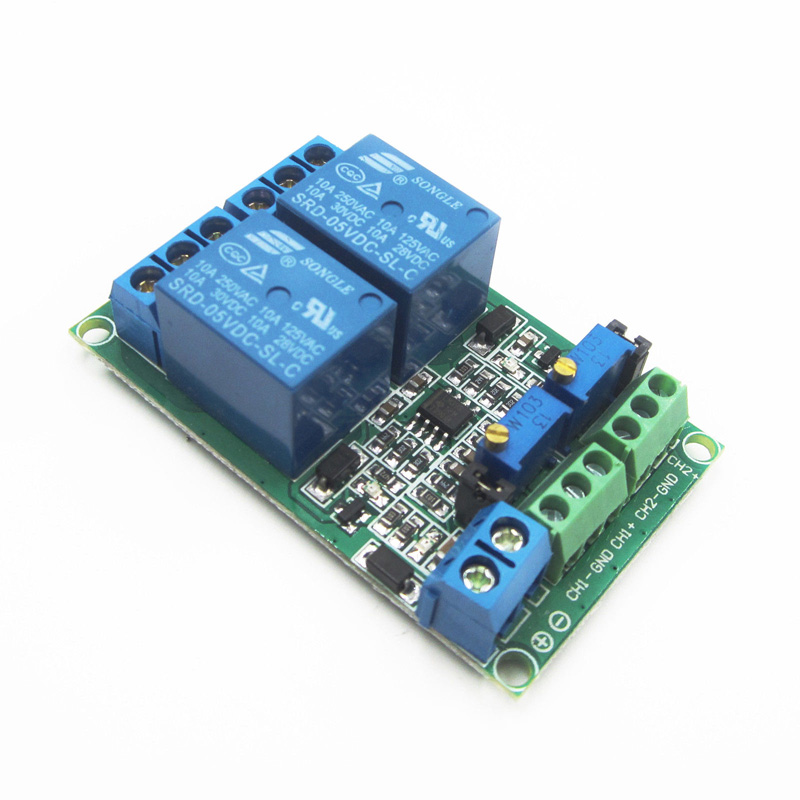
The Dual-Channel LM393 Voltage Comparator Module is a compact, high-performance analog signal processing board designed for precision voltage monitoring and threshold detection applications. At its heart lies the industry-standard LM393 dual differential comparator IC from Texas Instruments, a reliable and widely-used component in electronic design for over three decades .

This module integrates two independent voltage comparators on a single board, each capable of comparing two analog input voltages and outputting a digital signal indicating which input is higher. When the voltage at the non-inverting input (+) exceeds the voltage at the inverting input (-), the corresponding open-collector output turns on (pulls low). Conversely, when the inverting input is higher, the output turns off (high impedance) .

The LM393 IC features a wide supply voltage range of 2V to 36V (or up to 30V depending on grade), making it suitable for both 3.3V and 5V microcontroller systems as well as higher-voltage industrial applications . The module includes two precision potentiometers that allow users to set adjustable reference voltages for each comparator channel independently. This enables flexible threshold configuration without requiring external resistor networks.

The module also features two onboard indicator LEDs that provide real-time visual feedback of each comparator’s output status. When an output is active (pulled low), the corresponding LED illuminates, allowing for immediate visual verification without needing an oscilloscope.

The LM393’s outputs are open-collector, meaning they can drive loads up to 10A (with appropriate external transistors) and are compatible with TTL, MOS, and CMOS logic levels . The outputs can also be connected together to create wired-AND relationships, a useful feature for complex logic designs .

Whether you are building a battery low-voltage cutoff circuit, a light sensor trigger, a motor over-current protection system, a window comparator, or a simple analog-to-digital converter, this LM393 dual comparator module delivers precise, reliable threshold detection in an easy-to-use format.

Key Features

  • Dual Independent Comparators – Two separate comparator channels on a single board for simultaneous monitoring of two different signals

  • LM393 Comparator IC – Industry-standard dual differential comparator from Texas Instruments with proven reliability 

  • Wide Supply Voltage Range – Operates from 2V to 36V DC (module typically includes onboard 5V regulation for reference circuits) 

  • Adjustable Reference Voltage – Two precision potentiometers for setting independent threshold voltages on each channel

  • Onboard Status LEDs – Visual output indicators for each comparator channel; LED illuminates when output is active (low)

  • Open-Collector Outputs – Compatible with TTL, MOS, and CMOS logic; outputs can be paralleled for wired-AND configurations 

  • Input Common-Mode Range Includes Ground – Allows direct measurement of signals near 0V 

  • Low Power Consumption – Only 200µA typical supply current per comparator at 5V 

  • Fast Response Time – 1.3µs typical propagation delay for rapid threshold detection 

  • Low Input Bias Current – 25nA typical minimizes loading on signal sources 

  • Two 10A Relay Control Capability – Outputs can drive external transistors or relays; “10A Max” refers to external load capacity with proper driver stage

  • Compact Module Design – Small footprint with clearly labeled input/output screw terminals

Technical Specifications 

Specification Value
Comparator IC LM393 (Texas Instruments) – Dual Differential Comparator
Supply Voltage 5V DC (recommended for module operation; IC supports 2V–36V) 
Supply Current 0.8mA – 2.5mA (depends on supply voltage and output load) 
Input Voltage Range 0V to VCC-1.5V (common-mode range) 
Output Type Open-Collector (requires external pull-up resistor)
Output Sink Current 6mA typical (direct from IC); 10A Max with external driver stage
Response Time 1.3µs typical 
Input Bias Current 25nA typical 
Input Offset Voltage 2mV typical 
Operating Temperature 0°C to 70°C (commercial grade; industrial grades available)
Board Dimensions Approx. 40mm × 27mm (varies by manufacturer)
Mounting 4× 3mm mounting holes

Typical Usage

  • Battery Low-Voltage Cutoff – Monitor battery voltage and disconnect load when voltage drops below threshold; protect lithium-ion, LiFePO4, and lead-acid batteries from over-discharge

  • Light-Activated Switches – Connect photoresistor (LDR) to one input and potentiometer reference to the other; trigger lights or relays at dawn/dusk

  • Temperature Threshold Alarms – Use with thermistor or temperature sensor to activate fans or alarms when temperature exceeds set point

  • Motor Over-Current Protection – Monitor current sense resistor voltage; trigger shutdown when current exceeds safe limit

  • Window Comparator Circuits – Use both comparators to detect when a signal is within a specific voltage range (between lower and upper thresholds)

  • Pulse Generation and Oscillators – Configure as a square wave oscillator or pulse generator for timing applications

  • Analog-to-Digital Conversion – Use as the comparator in successive approximation ADC circuits

  • Over-Voltage Protection – Monitor power supply output and trigger crowbar protection when voltage exceeds safe level

  • Capacitive Proximity Sensors – Detect changes in capacitance by comparing against reference voltage

  • Zero-Crossing Detection – Detect AC mains zero crossings for phase control and dimming applications (with appropriate input conditioning)

Q: What does "10A Max" mean on this module?

The LM393 IC itself cannot directly switch 10A. The “10A Max” specification refers to the maximum load current that can be controlled when the comparator output is used to drive an external power transistor, MOSFET, or relay. The module provides output pins to connect such drivers. For direct LED or small relay loads (under 20mA), the comparator output can be used directly.

Q: How does a voltage comparator work?

A comparator compares two input voltages: the non-inverting input (+) and the inverting input (-). When the voltage at the (+) input is higher than the (-) input, the output transistor turns ON (pulls to ground). When the (+) input is lower than the (-) input, the output transistor turns OFF (high impedance) . This behavior makes comparators ideal for threshold detection and decision-making circuits.

Q: Why is my output LED not lighting up?

The LED indicates when the comparator output is active (low). Check the following:

  • Ensure the module is properly powered (5V recommended)

  • Verify that the input voltage difference is correct (when (+) > (-), output is low)

  • Check that the onboard potentiometer is properly adjusted to set the reference voltage

  • If using open-collector output with external pull-up, ensure pull-up resistor is connected

Q: What is the input voltage range for this comparator?

The LM393’s common-mode input voltage range is 0V to VCC-1.5V . This means that with a 5V supply, both inputs must be between 0V and 3.5V for proper operation. For measuring voltages above this range, use a voltage divider to scale the input signal down.

Q: Do I need an external pull-up resistor on the output?

Yes. The LM393 has an open-collector output, which means it can only sink current (pull low) but cannot source current. To get a logic HIGH output, you must connect a pull-up resistor (typically 1kΩ to 10kΩ) from the output to VCC . Most modules include onboard pull-up resistors, but check your specific board.

Q: Can I use this module with 3.3V microcontrollers like ESP32?

Yes. The LM393 operates from 2V to 36V, making it compatible with 3.3V systems . Power the module from 3.3V, and the outputs will swing to 3.3V (with pull-up resistors to 3.3V). This allows direct connection to ESP32, Raspberry Pi, and other 3.3V logic inputs.

Q: What is the difference between LM393, LM393B, and LM2903?

The LM393 is the standard commercial grade (0°C to 70°C). The LM393B is an improved version with lower offset voltage (0.37mV vs 2mV) and lower supply current (200µA vs 400µA) . The LM2903 is the industrial temperature grade (-40°C to 125°C) for harsh environments . All are pin-compatible.

Q: How do I set the threshold voltage using the potentiometer?

The potentiometer on each channel creates a voltage divider between VCC and GND. The reference voltage is applied to one comparator input (typically the inverting input). Turning the potentiometer adjusts the reference voltage from 0V to VCC. Use a multimeter to measure the reference voltage at the test point while adjusting.

Q: Can I use this module for over-current protection in a power supply?

Yes. Connect a current sense resistor in series with your load. Amplify the voltage across the sense resistor (if needed) and feed it to one comparator input. Set the reference voltage using the potentiometer to match the desired current trip point. When current exceeds the threshold, the comparator output will change state, which can trigger a shutdown circuit.

Q: Why is my comparator oscillating or chattering near the threshold?

When the input voltage is very close to the reference voltage, noise can cause the output to oscillate. To prevent this, add positive feedback (hysteresis) by connecting a resistor (typically 100kΩ to 1MΩ) from the output to the non-inverting input. This creates a small voltage window around the threshold, preventing oscillations .