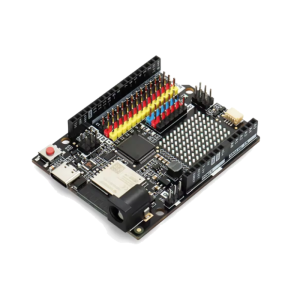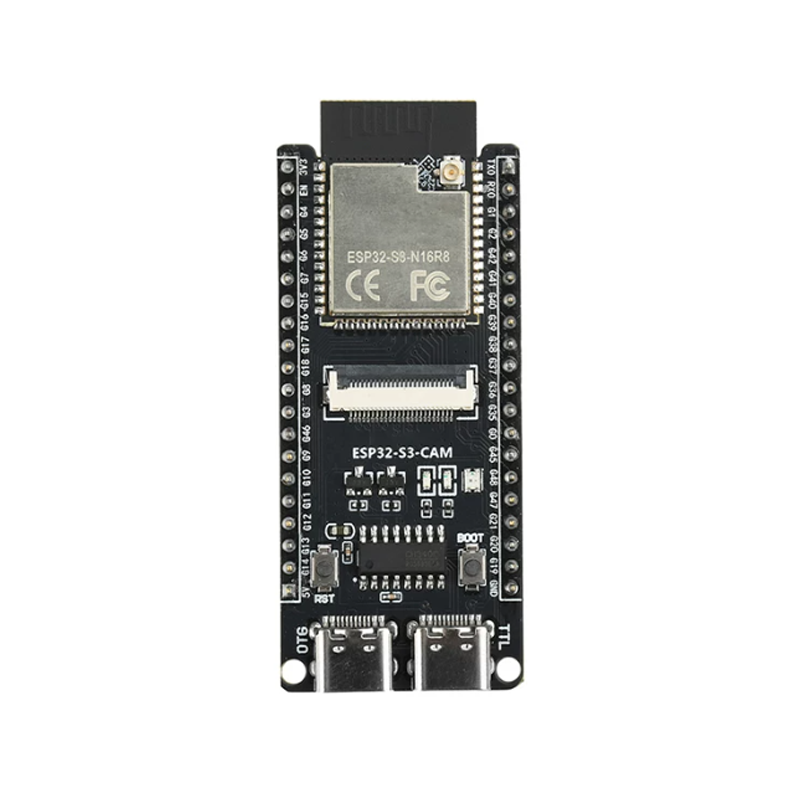
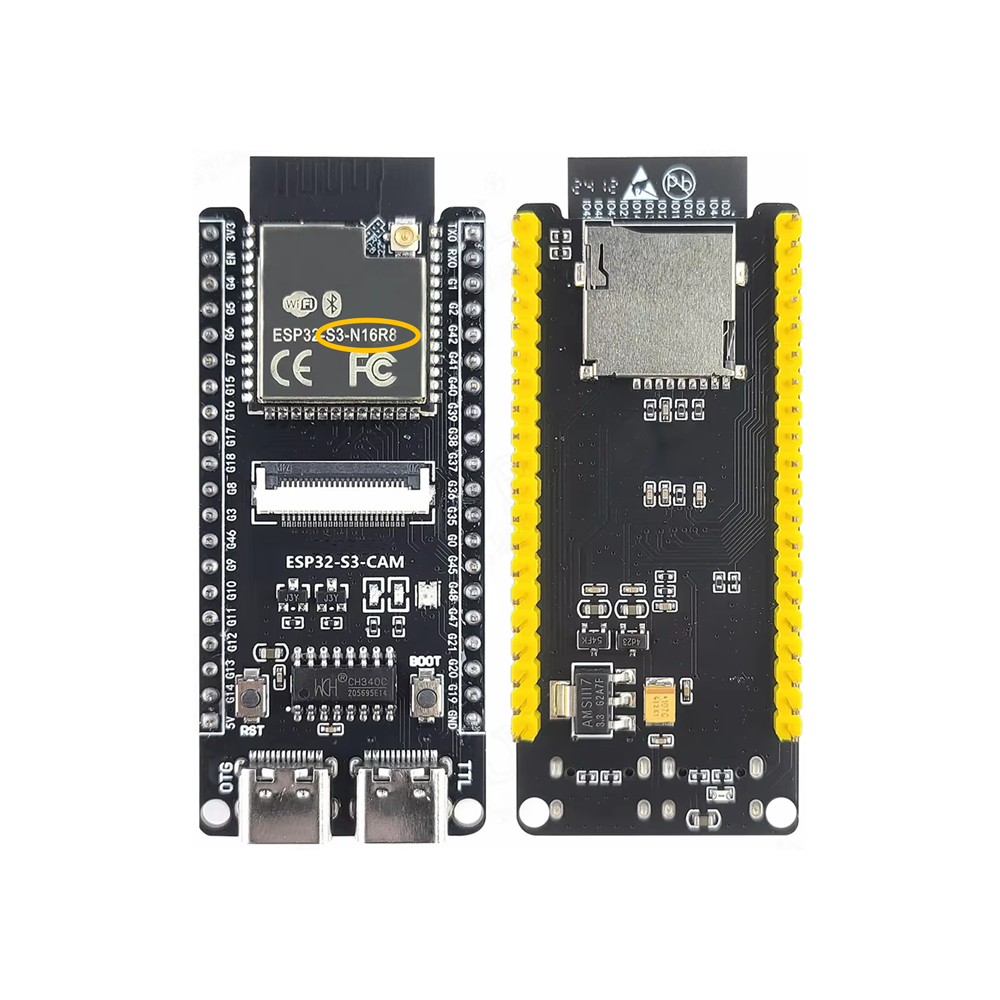
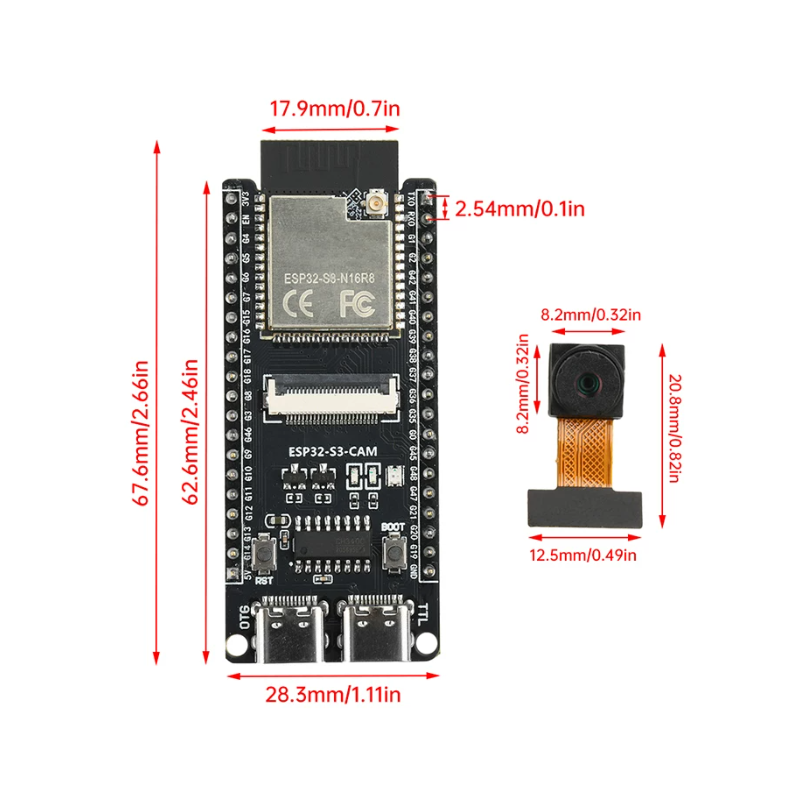
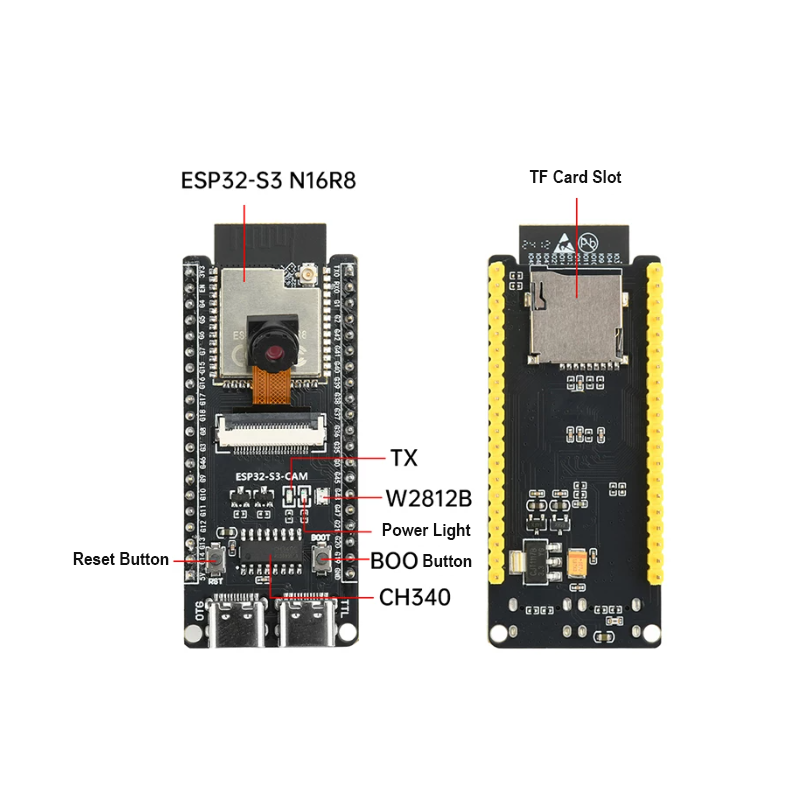
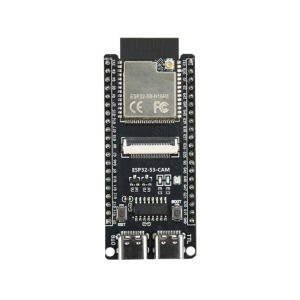
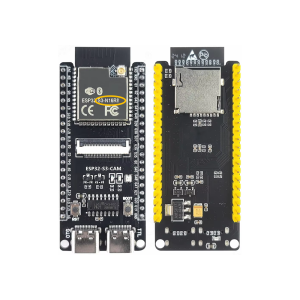
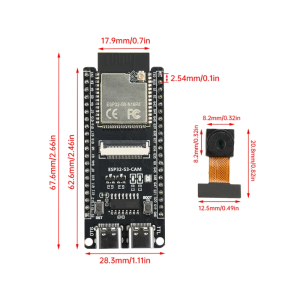
The ESP32-S3-CAM Development Board is a high-performance, camera-ready IoT platform built around the ESP32-S3-WROOM-1 N16R8 module. Designed for embedded vision, AIoT applications, and wireless monitoring projects, this board combines the processing power of the ESP32-S3 with a dedicated camera interface, dual USB-C connectivity, and flexible antenna options in a compact, breadboard-friendly form factor.
At its core is the ESP32-S3-WROOM-1 N16R8 module, featuring a dual-core Xtensa LX7 32-bit processor running at up to 240 MHz, with 16 MB Flash and 8 MB PSRAM . This generous memory configuration is essential for camera applications, allowing you to buffer high-resolution images, run complex AI models, or stream video without memory constraints. The module supports 2.4GHz WiFi (802.11 b/g/n) and Bluetooth 5 (LE + Mesh), providing versatile wireless options for connected devices .
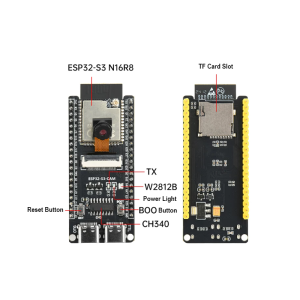
The board features dual Type-C interfaces for maximum development flexibility. One port is dedicated to UART programming and debugging via the onboard CH340C USB-to-serial chip, which requires a one-time driver installation on most systems . The second Type-C port connects directly to the ESP32-S3’s native USB (GPIO19/20), supporting USB OTG functionality — you can use it to emulate HID devices, access external storage, or debug via the ESP32-S3’s built-in USB Serial/JTAG interface . This separated design means you can program via UART while using native USB for other purposes, without cable swapping.
The 40-pin layout exposes a comprehensive set of GPIOs on standard 0.1-inch headers along both sides of the board, making it ideal for connecting sensors, displays, and peripherals . For wireless connectivity, the board includes both an onboard PCB antenna and an IPEX/U.FL antenna mount, allowing you to connect an external antenna for extended range in challenging RF environments . A dedicated 24-pin DVP camera interface supports popular camera modules including the OV2640 (2MP) and OV5640 (5MP), covering everything from basic image capture to high-resolution photography .
The ESP32-S3’s AI acceleration capabilities, including vector instructions, make this board well-suited for edge AI applications such as image recognition, voice wake-word detection, and object classification . Development is fully supported through Arduino IDE, ESP-IDF, and MicroPython, with extensive community libraries including the esp32-camera library for rapid camera project development .
Whether you are building a smart doorbell, a remote surveillance system, an AI vision prototype, or an IoT camera device, the ESP32-S3-CAM Development Board provides a powerful, well-supported platform that balances processing performance, memory capacity, and camera readiness.
Features
-
ESP32-S3-WROOM-1 N16R8 module — dual-core Xtensa LX7 @ 240 MHz with 16 MB Flash + 8 MB PSRAM .
-
Dual Type-C interfaces — one for UART programming (CH340C), one for native USB OTG .
-
CH340C USB-to-serial chip — stable, widely supported UART programming and serial communication .
-
40-pin GPIO breakout — comprehensive pin access on standard 0.1″ headers .
-
IPEX antenna mount — supports external antenna for extended wireless range .
-
24-pin DVP camera interface — compatible with OV2640, OV5640, and other DVP cameras .
-
AI acceleration — vector instructions for neural network inference and edge AI applications .
-
Wireless connectivity — WiFi 802.11 b/g/n + Bluetooth 5 (LE/Mesh) .
-
PSRAM for camera buffering — 8 MB PSRAM essential for high-resolution image processing .
-
Wide development support — Arduino IDE, ESP-IDF, and MicroPython compatible .
Technical Specifications
| # | Parameter | Specification |
|---|---|---|
| 1 | Module | ESP32-S3-WROOM-1 N16R8 |
| 2 | Processor | Dual-core Xtensa LX7, up to 240 MHz |
| 3 | Memory | 16 MB Flash + 8 MB PSRAM |
| 4 | Wireless | WiFi 802.11 b/g/n + Bluetooth 5 (LE/Mesh) |
| 5 | USB Interfaces | 2× Type-C (CH340C UART + native USB OTG) |
| 6 | Camera Interface | 24-pin DVP (OV2640/OV5640 compatible) |
| 7 | Antenna | Onboard PCB + IPEX/U.FL external mount |
| 8 | Pin Count | 40 pins (2×20 headers) |