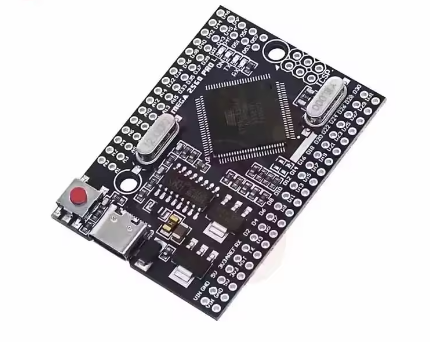
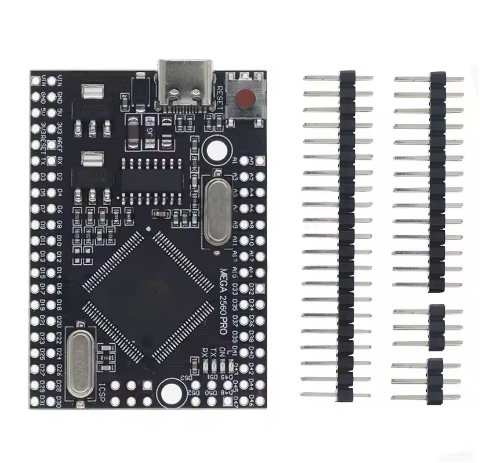
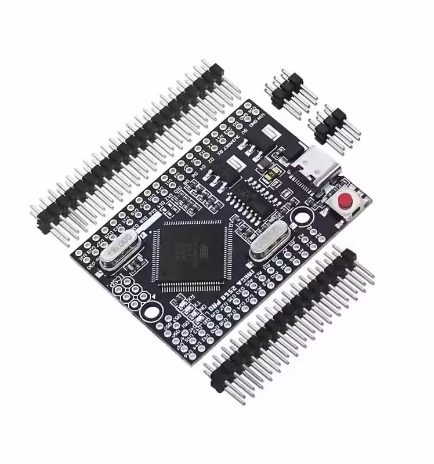
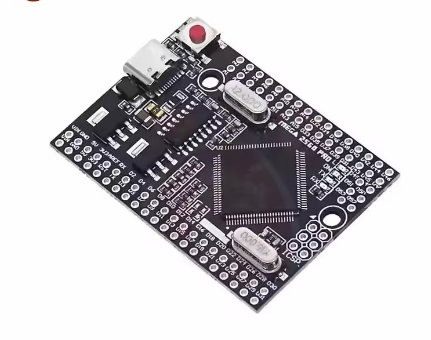
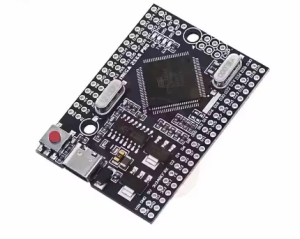
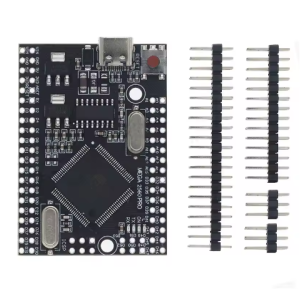
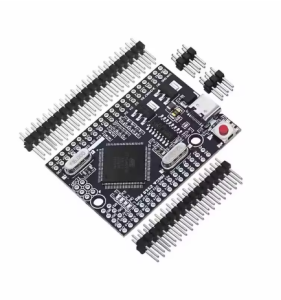
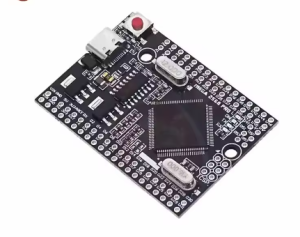
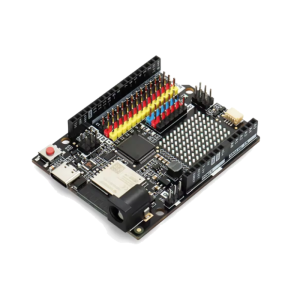
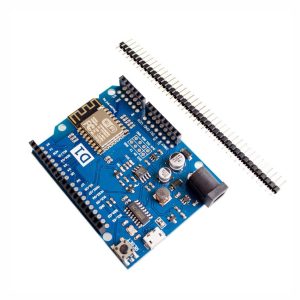
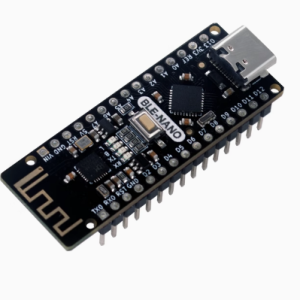
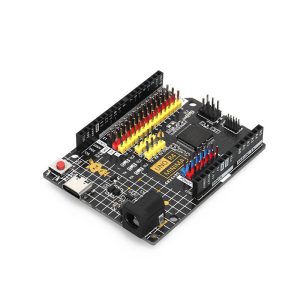
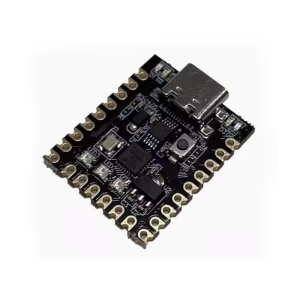
The Mega2560 Pro Development Board, featuring an ATmega2560-16AU MCU, CH340G USB-UART converter, and a Type-C interface, is a compact, embedded version of the standard Arduino Mega 2560 board. It is fully compatible with the Arduino IDE and offers all the functionality of the larger board in a smaller form factor (approximately 38x55mm).
Key Features
| Feature |
Specification |
| Microcontroller |
ATmega2560-16AU |
| Operating Voltage |
5V |
| Input Voltage (Recommended) |
6V to 9V DC via Vin pin (peak 18V limit, but higher than 9V is not recommended due to heat) |
| USB Interface |
Type-C connector |
| USB-UART Converter |
CH340G |
| Clock Speed |
16 MHz |
| Digital I/O Pins |
54 (15 of which provide PWM output) |
| Analog Input Pins |
16 |
| Flash Memory |
256 KB (8 KB used by bootloader) |
| SRAM |
8 KB |
| EEPROM |
4 KB |
| Dimensions |
38mm x 55mm |
This development board is designed for embedded and standalone projects where the full capabilities of the ATmega2560 microcontroller are needed, but space is a constraint.
- Embedded Systems: Its small footprint makes it an excellent choice for integrating into final projects or fitting onto welded prototype boards.
- Complex Projects: With 54 digital I/O pins and 16 analog inputs, it can handle projects with a large number of sensors, actuators, and complex logic, such as robotics, home automation, and IoT systems.
- Prototyping: It works seamlessly with the Arduino IDE, allowing for easy programming and prototyping using existing Arduino libraries and shields (with appropriate pin connections).
- Modern Connectivity: The Type-C USB port offers a reversible, more durable, and modern connection interface for programming and power.
- Power Flexibility: The board can be powered via the Type-C USB connector or an external power supply connected to the Vin pin (recommended 6-9V DC).
Q: Do I need to install special drivers for the CH340G chip?
The CH340G is a common USB-UART converter chip. While most modern operating systems (Windows, macOS, Linux) may automatically detect it, you might need to manually install the specific CH340 driver for stable data exchange, especially on older systems.
Q: Is the pinout the same as the standard Arduino Mega 2560?
The core pin functions (Digital I/O, Analog In, PWM, UART buses) are identical to the standard Mega 2560, but their physical locations on the compact board are different. You will need to refer to the specific pinout diagram for this Pro version when wiring your projects.
Q: Can I power the board with more than 9V via the Vin pin?
The onboard voltage regulator can handle a peak input voltage of up to 18V, but input voltages higher than the recommended 9V are not advised as they can lead to excessive heat and potentially damage the device.
Q: What kind of USB cable is required?
You will need a standard USB Type-A to USB Type-C cable to connect this development board to most computers.