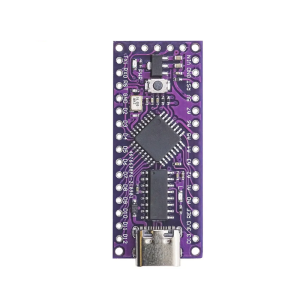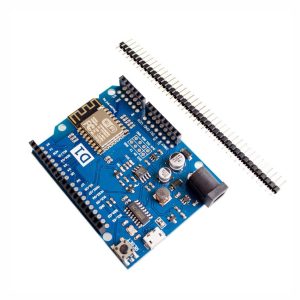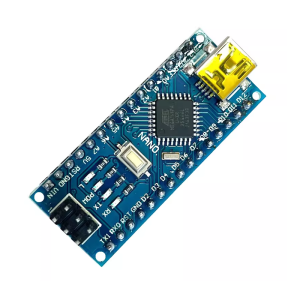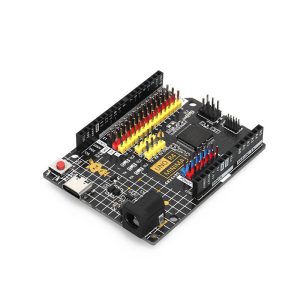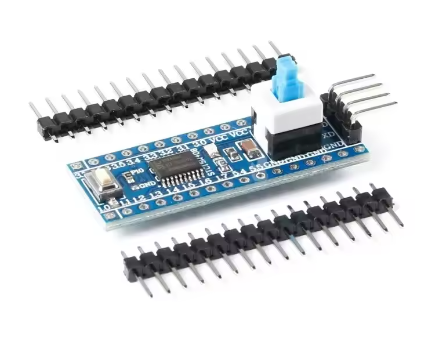
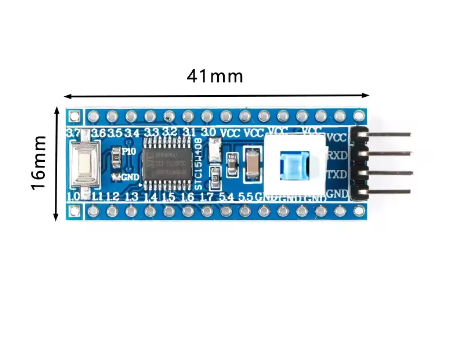
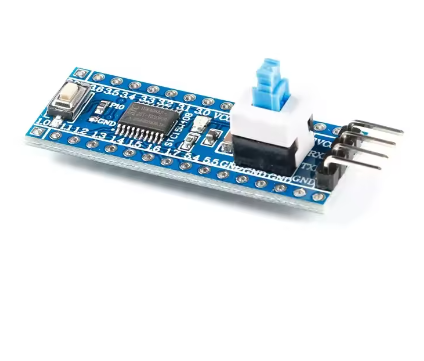
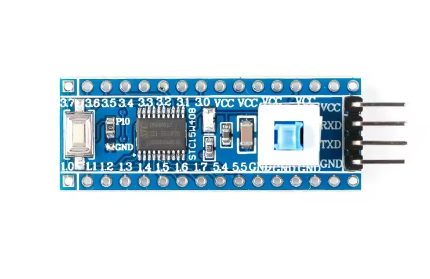
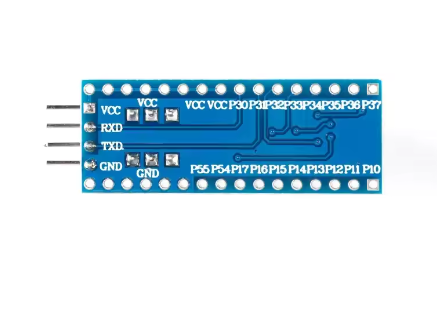
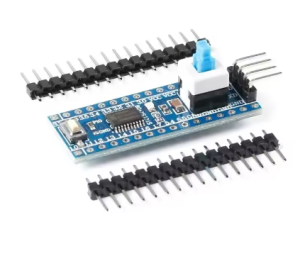
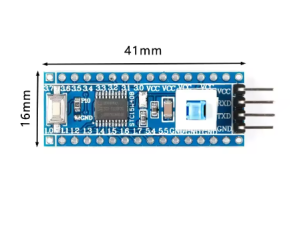
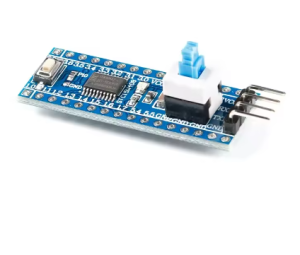
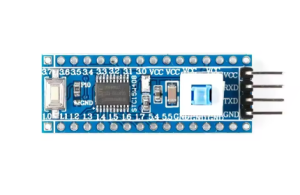
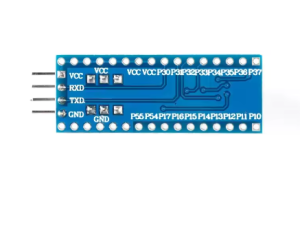
STC15W408AS core board system board 51 microcontroller development board learning board TTSOP20

SKU: FA1036
Microcontroller Unit (MCU)

STC15W408AS (Enhanced 8051 Architecture)

Core Speed

Internal Oscillator, up to 35 MHz (approx. 420 MHz equivalent to traditional 8051)

Operating Voltage

3.3V to 5.5V DC

Flash Memory

8KB In-System Programmable FLASH (ISP/IAP)

SRAM

512 Bytes

GPIO Pins

Up to 18 usable pins (TTSOP20 package breakout)

Communication Interfaces

1x Hardware UART (TTL Serial), SPI, I2C (software implementation)

Timers

3x 16-bit timers/counters

Programming Interface

ISP via UART (requires a USB-to-TTL converter like FTDI or CH340)

Dimensions

(Standard small core board form factor suitable for breadboards)

STC15W408AS Core Board System Board: High-Performance 51 Microcontroller Development
The STC15W408AS Core Board is a compact, robust development and learning platform built around the powerful STC15W408AS microcontroller. This chip is an enhanced 8-bit MCU based on the widely recognized 8051 instruction set architecture (MCS-51), but operates with significantly higher speed and efficiency—often running an instruction cycle in just one to three clock cycles, making it roughly 12 times faster than a traditional 8051 running at the same frequency. 
This board provides an excellent, cost-effective entry point for hobbyists, students, and engineers familiar with the 51 architecture who require modern features like in-system programming (ISP) via USB/TTL serial and extensive on-chip peripherals within a tiny TTSOP20 form factor breakout board. 

Key Features
  • Enhanced 8051 Core: Operates at high speed (up to 35MHz internal oscillator) with high-efficiency instruction cycles, drastically improving performance over standard 8051 MCUs.
  • Integrated Programming: Features In-System Programming (ISP) function, allowing easy code downloads via a standard TTL serial port (UART), eliminating the need for expensive external programmers.
  • Rich Peripherals: Includes multiple timers, UART communication interfaces, SPI, I2C support, and several GPIO pins exposed for easy interfacing.
  • Compact Form Factor: The core board is designed to fit a standard breadboard, with all relevant pins broken out for easy prototyping.
  • Low Power Consumption: Designed with multiple power-down modes and an internal high-reliability watchdog, suitable for battery-operated applications.
  • Versatile Power Input: Can be powered via the onboard USB interface or external DC supply pins. 

Technical Parameters (Specifications)
Parameter  Value
Microcontroller Unit (MCU) STC15W408AS (Enhanced 8051 Architecture)
Core Speed Internal Oscillator, up to 35 MHz (approx. 420 MHz equivalent to traditional 8051)
Operating Voltage 3.3V to 5.5V DC
Flash Memory 8KB In-System Programmable FLASH (ISP/IAP)
SRAM 512 Bytes
GPIO Pins Up to 18 usable pins (TTSOP20 package breakout)
Communication Interfaces 1x Hardware UART (TTL Serial), SPI, I2C (software implementation)
Timers 3x 16-bit timers/counters
Programming Interface ISP via UART (requires a USB-to-TTL converter like FTDI or CH340)
Dimensions (Standard small core board form factor suitable for breadboards)
Usage Instructions
This development board is primarily used with programming software provided by STC (e.g., STC-ISP software) and typically programmed using C language compilers like Keil C51. 
Getting Started:
  1. Software Setup: Download and install the STC-ISP programming software and a C51 compiler (like Keil uVision).
  2. Hardware Connection: Connect the core board to your PC using a USB-to-TTL Serial Adapter (RX to TX, TX to RX, GND to GND).
  3. Programming:
    • In the STC-ISP software, select the correct MCU model (STC15W408AS) and COM port.
    • Load your compiled .hex file.
    • Click “Download” in the software.
    • Power Cycle: The unique STC programming method usually requires you to unplug and re-plug the board’s power source (or press a reset button if available on your specific board version) after clicking download to initiate the flash sequence.
  4. Development: Use the broken-out GPIO pins to connect sensors, LEDs, relays, or communication modules on a breadboard. 
Q: What software do I use to program the STC15W408AS?

The standard development environment is Keil C51 for coding and compiling, and the official free STC-ISP utility tool for flashing the compiled .hex file onto the chip.

Q: Do I need a special programmer/burner device?

No, that’s a key advantage of STC chips. They use In-System Programming (ISP) via a simple serial port. You only need a cheap USB-to-TTL adapter board, not a dedicated high-voltage programmer.

Q: Is this compatible with the Arduino IDE?

The STC15 series is not natively compatible with the Arduino ecosystem. It requires traditional C programming within Keil C51 or similar 8051 compilers.

Q: I am a business buyer. Is this suitable for commercial production runs?

Yes, the STC-15 series chips are widely used in commercial embedded systems in Asia due to their high performance and cost-effectiveness. The core board is an ideal prototyping tool before moving to a custom PCB design.

Q: What is the power requirement?

The board can be powered by standard 5V via the USB port or a 3.3V-5.5V source on the VCC pin, making it highly flexible for various project power requirements.