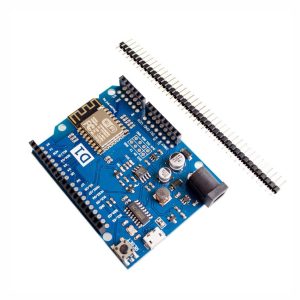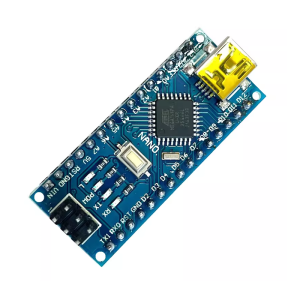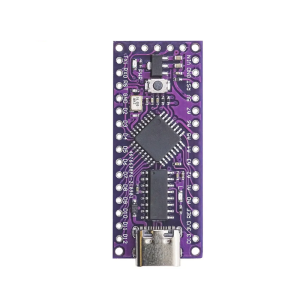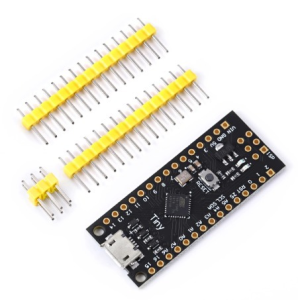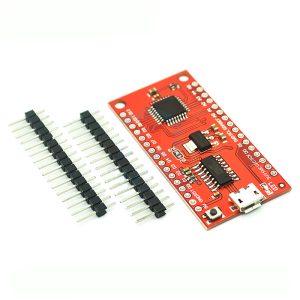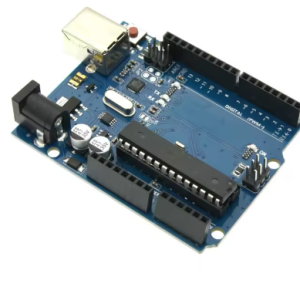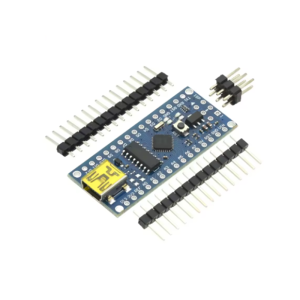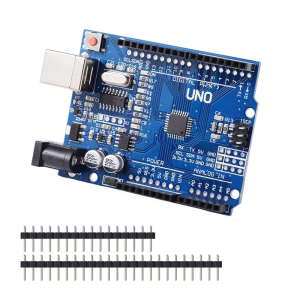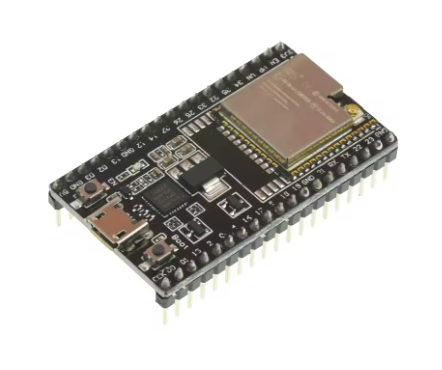
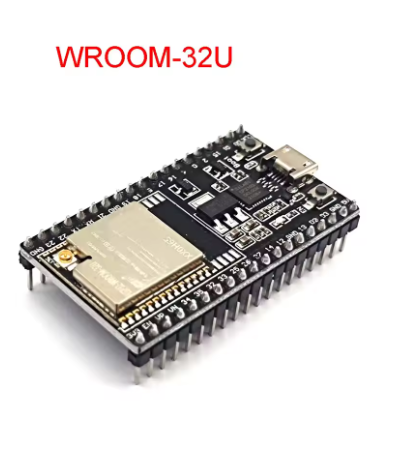
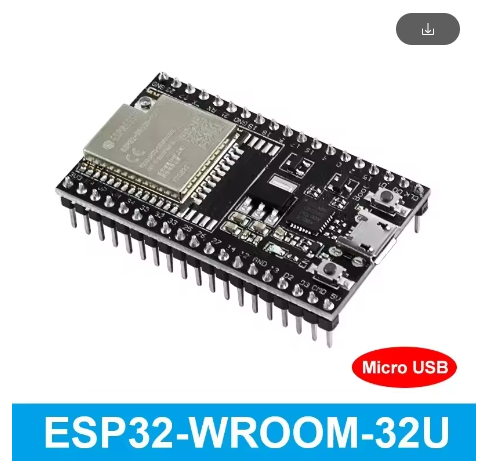
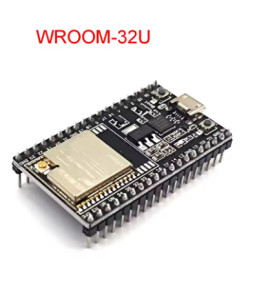
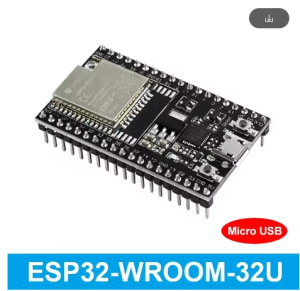
The ESP32-DevKitC Development Board with WROOM-32U-N4 module and CP2102 chip is a specialized and powerful prototyping platform designed for Internet of Things (IoT) applications that require long-range or customized external antenna configurations. It combines the robust processing power of the ESP32 with the flexibility of an external U.FL antenna connector.
Description
The ESP32-DevKitC with the WROOM-32U-N4 module is an advanced variant of the standard DevKitC series, tailored for scenarios where the integrated PCB antenna of other models is insufficient or unsuitable due to physical enclosures or specific environmental conditions. This board facilitates development using the powerful ESP32-D0WDQ6 System-on-Chip (SoC), which integrates 2.4 GHz Wi-Fi (802.11 b/g/n) and dual-mode Bluetooth (Classic and BLE) capabilities.
The key distinction of the “U” variant is the U.FL connector for attaching an external IPEX/U.FL antenna (sold separately). This allows developers to optimize signal strength and range by placing the antenna in an optimal location, outside of an interfering enclosure.
The board integrates the reliable CP2102 USB-to-UART bridge chip for stable serial communication and easy programming via the Micro USB interface. It provides a full breakout of the module’s GPIO pins, ensuring compatibility with breadboards and a wide array of sensors and peripherals, making it an excellent choice for both single users prototyping unique projects and businesses developing specialized commercial solutions.
Key Features
- External Antenna Support: Features a U.FL (IPEX) connector for connecting an external antenna to achieve optimized range and signal quality. Note: An external antenna is required for Wi-Fi/Bluetooth functionality.
- Powerful Dual-Core Processor: At its core is the Tensilica LX6 32-bit dual-core microprocessor, adjustable up to 240 MHz.
- Reliable USB Interface: Uses the Silicon Labs CP2102 USB-to-UART chip for stable and fast data transfer and programming.
- Rich Peripheral Set: Exposes interfaces like UART, SPI, I²C, I²S, PWM, ADC, DAC, SD card interface, and capacitive touch sensors.
- Flexible Development: Compatible with multiple development environments, including the Arduino IDE and the robust Espressif IoT Development Framework (ESP-IDF).
- Secure & Scalable: Supports secure OTA (Over-The-Air) updates, WPA/WPA2/WPS security, and hardware acceleration for encryption.
- Low-Power Operation: Designed with power-saving modes suitable for battery-powered and wearable applications.
Technical Specifications (Parameters)
| Feature | Detail |
|---|---|
| Main Module | ESP32-WROOM-32U-N4 |
| Microcontroller | ESP32-D0WD (Tensilica LX6 Dual-Core 32-bit) |
| Clock Frequency | 80 MHz to 240 MHz (adjustable) |
| SRAM | 520 KB on-chip SRAM |
| Flash Memory | 4 MB QSPI flash (N4 designation) |
| USB-to-UART Chip | Silicon Labs CP2102 |
| USB Interface | Micro USB |
| Antenna Type | U.FL Connector (External antenna required) |
| Input Voltage (USB) | 5V DC (via USB) |
| Operating Voltage (Module) | 3.3V DC |
| Wireless | Wi-Fi 802.11 b/g/n, Bluetooth 4.2 BR/EDR & BLE |
| Interfaces | UART, SPI, I²C, I²S, PWM, ADC, DAC, GPIO, Hall sensor |
| Operating Temperature | -40°C to +85°C |