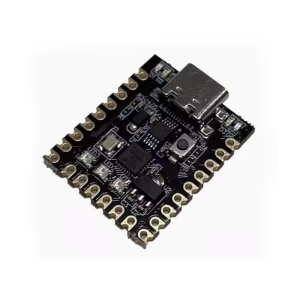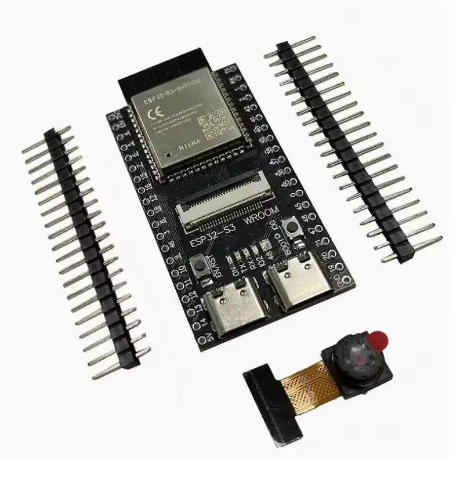
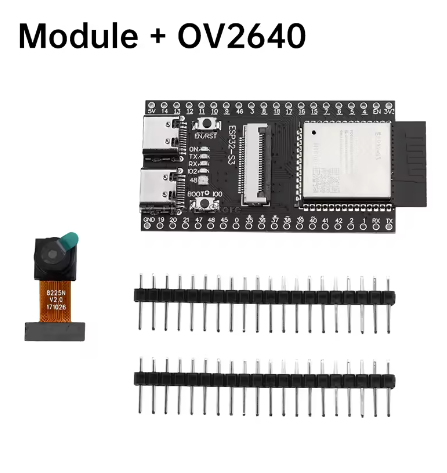
This high-performance ESP32-S3-CAM development platform is a professional-grade AIoT solution featuring the OV2640 camera and the ESP32-S3-WROOM-1 (N16R8) module. In 2025, this remains the gold standard for edge computing, featuring dual Type-C interfaces and a high-stability CP2102 serial chip.
Product Description
The ESP32-S3-CAM N16R8 is a specialized evolution of the ESP32 series, specifically optimized for Artificial Intelligence and Vision (AIoT). Equipped with 16MB of Flash and 8MB of Octal PSRAM, this board provides the high-speed memory overhead required for complex image processing and neural network models that standard boards cannot support.
The hardware is designed for professional stability, utilizing the Silicon Labs CP2102 USB-to-UART bridge to ensure reliable code flashing and debugging. The dual Type-C design provides a significant workflow advantage: one port is dedicated to serial debugging, while the other provides native USB OTG functionality, allowing the board to act as a USB Camera (UVC) or a HID device.
Key Features
- Edge AI Ready: The S3 core includes specialized vector instructions that accelerate AI computations (face detection, object recognition, and voice processing).
- Dual Type-C Versatility:
- Port 1 (UART): Stable programming and debugging via CP2102.
- Port 2 (USB OTG): High-speed native data transfer and peripheral emulation.
- High-Resolution Imaging: Comes with the 2-Megapixel OV2640 camera module, supporting JPEG, BMP, and Grayscale outputs.
- Maximum Memory (N16R8): 16MB Flash and 8MB Octal PSRAM allow for larger firmware and high-resolution video buffering.
- Rich Expandability: A 40-pin header provides access to nearly all GPIOs for integration with external sensors, SD cards, and displays.