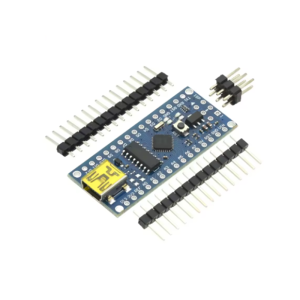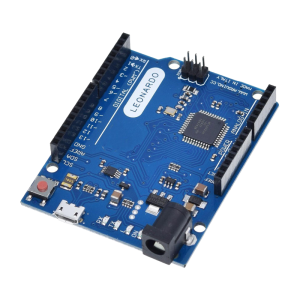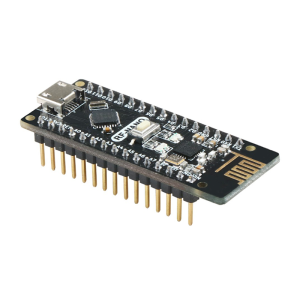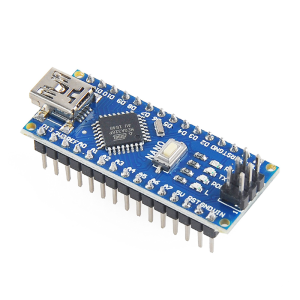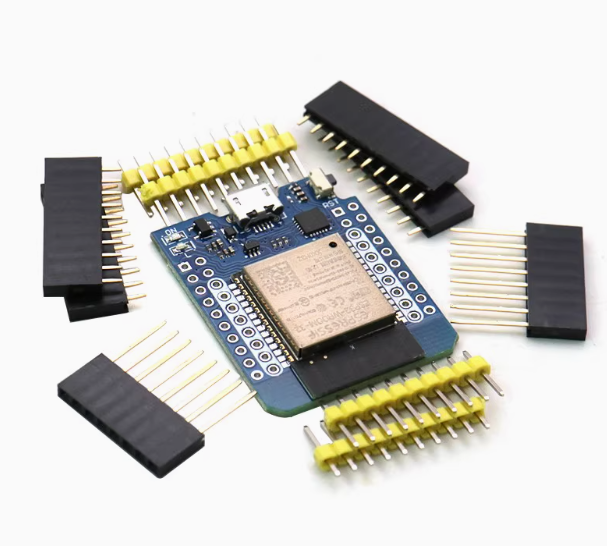
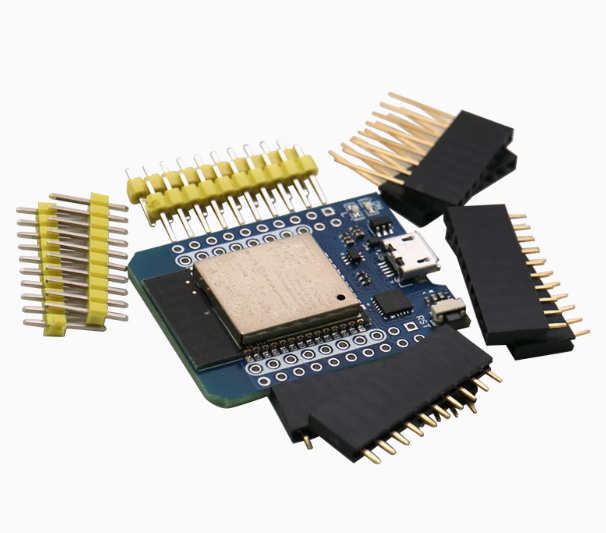
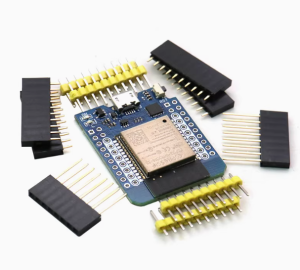
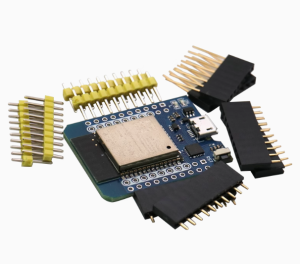
ESP32-WROOM Live Mini Kit – Dual-Core Wi-Fi & Bluetooth Development Board with CP2104 USB Interface (Micro-USB Powered)

SKU: FA1053-6
Microcontroller

ESP32-WROOM-32 (Dual-core Xtensa LX6)

Clock Speed

Up to 240 MHz

Wireless

2.4 GHz Wi-Fi (802.11 b/g/n), Bluetooth 4.2

Memory

4MB Flash, 520KB SRAM

Operating Voltage

3.3V (Logic Level)

Input Voltage

5V DC via Micro-USB or VIN pin

USB-Serial Chip

CP2104

Interface Access

30+ GPIO pins (ADC, DAC, I2C, SPI, UART)

Dimensions

Approx. 48mm x 25mm

The ESP32-WROOM Live Mini Kit is a compact, robust development board built around the popular ESP32-WROOM-32 module. Designed for versatility in the 2026 Internet of Things (IoT) landscape, this “mini” form factor board provides full access to the ESP32’s dual-core processing power, integrated Wi-Fi, and Bluetooth capabilities, all managed via a reliable CP2104 USB interface.
Long Description
This board is an excellent choice for developers who require the full power of the ESP32 chip in a breadboard-friendly and space-conscious design. The inclusion of the stable CP2104 USB-to-Serial converter ensures reliable programming and debugging across different operating systems. With 4MB of Flash memory, the board supports complex projects ranging from localized web servers and machine learning inference to secure cloud-based data acquisition.
For individual makers, the Mini Kit is the perfect starting point for learning about advanced IoT connectivity, offering easy integration with the Arduino IDE and MicroPython environments. For business purchasers, its small footprint and production-grade components make it a superb choice for integrating into finished commercial products, such as smart sensor nodes, gateways, or small-scale industrial automation interfaces.
Key Features
  • Compact & Breadboard-Friendly: Mini form factor designed to fit easily onto a standard breadboard without obstructing adjacent pin headers.
  • Reliable USB Interface: Utilizes the high-quality CP2104 USB-to-Serial bridge for stable data transfer and programming.
  • Dual-Core Connectivity: Integrated Wi-Fi (2.4GHz) and Bluetooth 4.2 (BLE and Classic) capabilities.
  • Generous Memory: 4MB QSPI Flash memory provides ample space for large firmware, data storage, and OTA (Over-The-Air) updates.
  • Flexible Power Input: Can be powered via Micro-USB 5V, the 5V (VIN) pin, or directly into the 3.3V pin.
Usage Instructions
  1. Hardware Connection: Connect the board to your development machine using a high-quality Micro-USB data cable.
  2. Driver Installation: Install the Silicon Labs CP2104 driver for your operating system (Windows, macOS, Linux).
  3. Software Configuration (Arduino IDE):
    • Add the ESP32 board package via the Boards Manager in the Arduino IDE.
    • Select “ESP32 Dev Module” as your target board under the Tools menu.
    • Ensure the correct COM/Serial Port is selected.
  4. Flashing Code: The board typically handles automatic boot mode selection; simply click ‘Upload’ in the IDE. If uploading fails, manually hold the BOOT (Flash) button while pressing and releasing the EN (Reset) button, then release BOOT.
  5. Prototyping: Plug the board into a breadboard to access all available GPIO pins for connecting sensors and actuators.
Q: Is this board 5V tolerant?

No. The ESP32 chip operates on 3.3V logic levels. Applying 5V directly to any GPIO pin will likely destroy the chip. Use a logic level converter if you need to interface with 5V components.

Q: Why choose the CP2104 version over the CH340 version?

The CP2104 driver is generally known for better stability and native compatibility across a wider range of operating systems (especially macOS and Linux) compared to the CH340 in some contexts. Both are reliable options.

Q: Can I power this board with a Li-Po battery?

Yes, you can power it by supplying regulated 3.3V to the dedicated 3.3V pin, or 5V to the VIN pin (if your battery setup includes appropriate regulation). Note: This board does not include an onboard battery charging circuit.

Q: My upload consistently fails. What should I do?

Ensure you have the correct CP2104 driver installed and are using a data-enabled USB cable. If issues persist, try manually putting the board into upload mode by holding the BOOT button, tapping the EN (Reset) button, and then releasing BOOT when the IDE starts uploading.

Q: Does it support MicroPython?

Yes, the ESP32 is fully compatible with MicroPython. You will need to flash the MicroPython firmware onto the board using a tool like esptool.py.