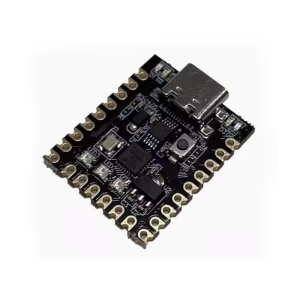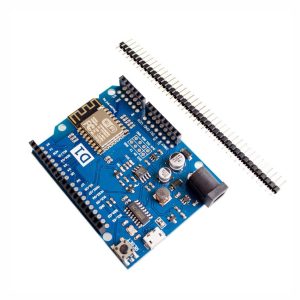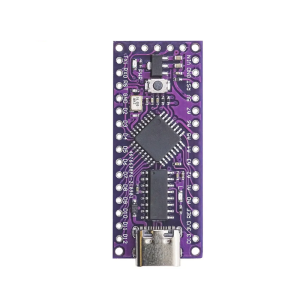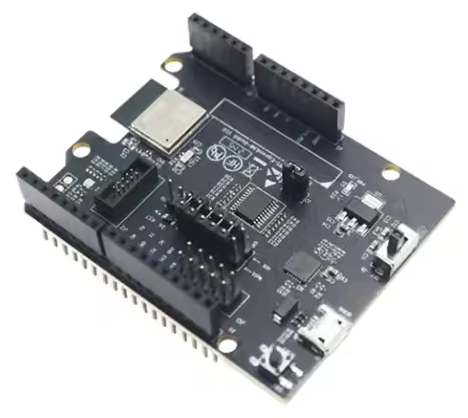
Espressif ESP32-C3 AWS ExpressLink Development Kit – IoT Gateway for AWS IoT Cloud

SKU: FA1054-2
Module

ESP32-C3-MINI-1 (RISC-V 32-bit core)

Firmware

Pre-flashed with AWS ExpressLink

Connectivity

2.4 GHz Wi-Fi & Bluetooth 5.0 (LE)

Cloud Compatibility

AWS IoT Core (MQTT, Device Shadow, OTA)

Interface

UART (High-speed AT Command set)

Operating Voltage

3.3V (Logic Level)

Power Supply

5V via USB Type-C or VIN pin

Security

Secure Boot, Flash Encryption, Hardware RNG

The Espressif ESP32-C3 AWS ExpressLink Development Kit is a specialized, production-ready solution designed to eliminate the complexity of connecting hardware to the cloud. As of 2026, it stands as the premier “shortcut” for developers needing to link edge devices to AWS IoT Core without writing complex networking or security stacks.
Long Description
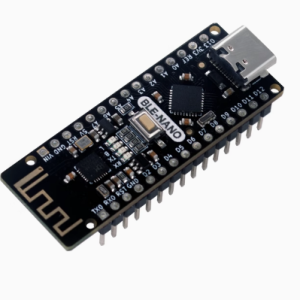
The ESP32-C3 AWS ExpressLink Kit is more than a standard development board; it is a secure IoT gateway pre-provisioned to work with Amazon Web Services. It runs the AWS ExpressLink firmware, which offloads the heavy lifting of security, Wi-Fi management, and cloud messaging to the ESP32-C3 module. This allows a “host” microcontroller (like an Arduino, STM32, or Raspberry Pi Pico) to communicate with the cloud using simple AT commands.
For business purchasers, this kit drastically reduces “Time to Market” by providing a pre-validated security implementation that meets AWS requirements out of the box. For individual makers, it removes the steep learning curve of AWS IoT certificates and MQTT protocols, making professional-grade cloud integration accessible via a simple serial interface.
Key Features
  • AWS ExpressLink Pre-installed: Offloads all AWS IoT connectivity logic, including Wi-Fi credential management and MQTT messaging.
  • Seamless AWS Integration: Direct support for AWS IoT Core features such as Device ShadowJobs, and Over-the-Air (OTA) updates.
  • Hardware-Based Security: Leverages the ESP32-C3’s RISC-V secure boot and flash encryption to maintain a secure “Root of Trust.”
  • Simple AT-Command Interface: Use a host MCU to control the kit via standard serial UART commands.
  • Ready for 2026 Standards: Fully compatible with current AWS IoT security standards and Wi-Fi 4 (802.11 b/g/n).
Usage Instructions
  1. Hardware Connection: Connect the kit to your host MCU (e.g., Arduino) via UART (TX/RX) or directly to your PC via USB Type-C.
  2. AWS Provisioning: Follow the AWS IoT ExpressLink Getting Started Guide to register the device’s unique serial number in your AWS Management Console.
  3. Commanding the Device: Send simple AT commands from your host code:
    • AT+CONNECT — Establishes connection to AWS.
    • AT+SEND — Publishes data to an MQTT topic.
  4. OTA Updates: Manage firmware updates for both the module and your host MCU remotely through the AWS IoT console.
Q: Do I need to be an ESP32 expert to use this?

No. That is the primary benefit. You do not need to learn ESP-IDF or specific ESP32 coding. You only need to know how to send serial (UART) strings from your preferred microcontroller.

Q: Can I re-flash this board with my own custom code?

Technically yes, but it is not recommended. This board is specifically licensed and pre-provisioned for AWS ExpressLink. Overwriting the firmware will remove the ExpressLink functionality and its unique security credentials.

Q: Is there a subscription fee for AWS ExpressLink?

There is no fee to use the ExpressLink firmware itself, but standard AWS IoT Core usage rates apply for the data sent and stored in your AWS account.

Q: Does it support 5GHz Wi-Fi?

No. Like all ESP32-C3 modules, this kit operates on the 2.4 GHz band only.

Q: Can this board act as a standalone sensor?

While it has a RISC-V processor, it is intended to act as a communications co-processor. For the best experience, it should be paired with a host MCU that manages the sensors while the ExpressLink kit handles the internet.

Q: What is the maximum distance for Wi-Fi?

Under 2026 testing conditions, the onboard PCB antenna provides reliable indoor coverage up to 30–50 meters, depending on obstructions. For metal enclosures, consider a version with a U.FL connector for an external antenna.