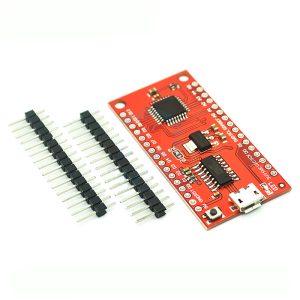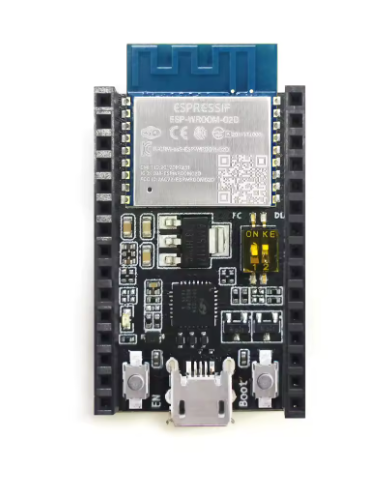
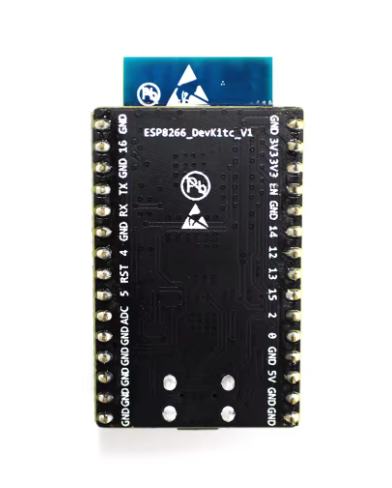
The ESP8266-DevKitC is a compact and efficient entry-level development board based on the ESP-WROOM-02D module. Designed by Espressif, it serves as the official hardware platform for the legendary ESP8266 Wi-Fi SoC, providing a stable and professional-grade bridge for connecting everyday devices to the internet.
Long Description
The ESP8266-DevKitC is the direct evolution of early Wi-Fi modules, offering a refined, breadboard-friendly layout that integrates all necessary support components including a USB-to-Serial bridge, voltage regulator, and reset/flash buttons. The onboard ESP-WROOM-02D module is a highly integrated Wi-Fi solution that features a sophisticated self-calibrated RF, allowing it to remain stable under varying operating conditions.
For business purchasers, the ESP-WROOM-02D module is a mature, field-proven component with full FCC/CE/TELEC certifications, making it a low-risk choice for commercial smart-home appliances and industrial monitoring nodes. For individual makers, it remains the most documented Wi-Fi platform in existence, ensuring that thousands of open-source libraries and tutorials are available for immediate project success in 2026.
Key Features
- Proven Reliability: Features the ESP-WROOM-02D, known for superior RF performance and stability in high-temperature environments.
- Breadboard Friendly: Slim design allows access to a row of holes on both sides of the board when plugged into a standard breadboard.
- Automatic Bootloader: Integrated USB-to-Serial bridge with auto-reset circuitry allows for one-click programming without toggling buttons.
- Low Power Consumption: Advanced power management allows for deep-sleep modes (~20μA), ideal for battery-operated sensor nodes.
- Extensive Ecosystem: Fully compatible with the Arduino IDE, MicroPython, and Espressif’s own Non-OS and RTOS SDKs.