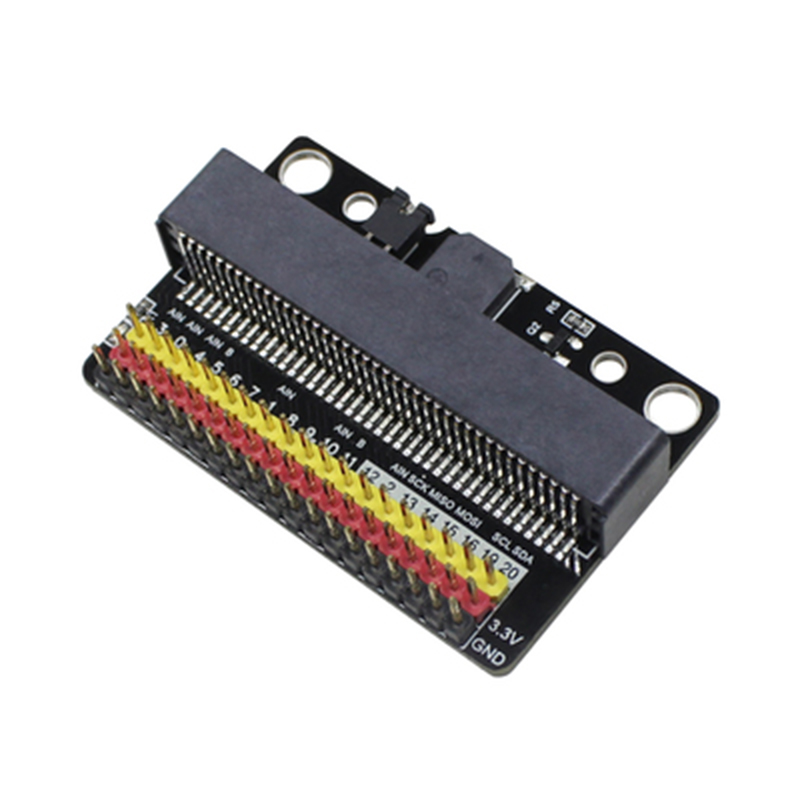
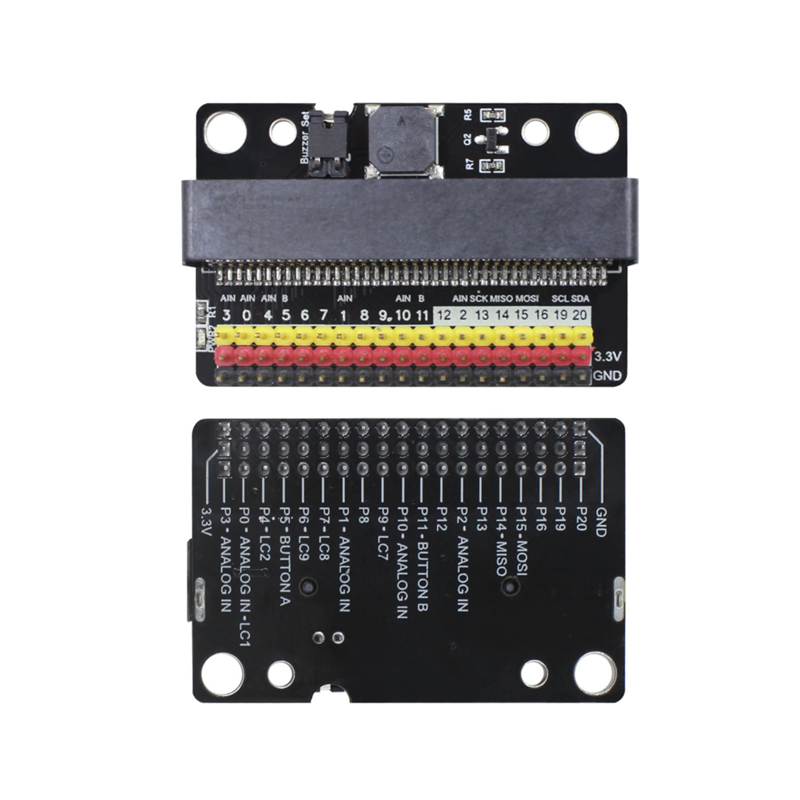
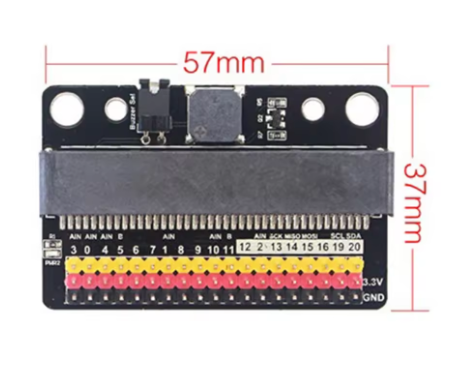
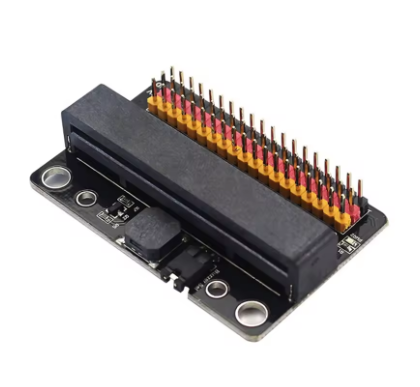
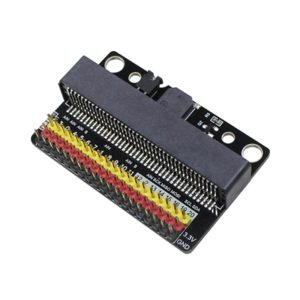
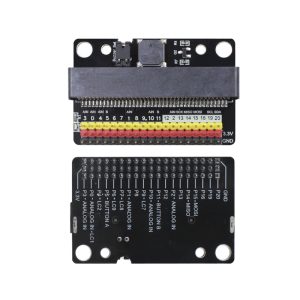
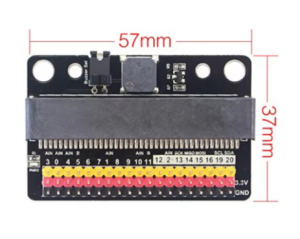
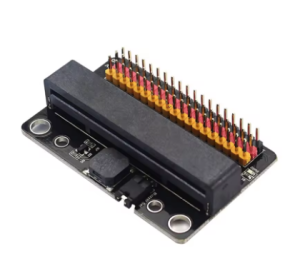
The BBC micro:bit Expansion Board V1.0 (also known as the IO Extender) is a fundamental accessory designed to unlock the full potential of the micro:bit by breaking out its specialized edge connector into standard, easy-to-use headers. As of 2026, it remains a staple for classroom learning and industrial rapid prototyping.
Long Product Description
The BBC micro:bit Expansion Board V1.0 is the essential bridge between the micro:bit’s compact design and the vast world of external electronics. While the micro:bit is powerful on its own, its gold-plated edge connector can be difficult to interface with without specialized clips. This expansion board solves that by providing a dedicated slot for the micro:bit and breaking out all Pins (P0 through P20), power (3.3V/5V), and Ground onto a clear, labeled grid of pin headers.
Designed for durability and educational versatility, the V1.0 board allows users to connect sensors, servos, and modules using standard jumper wires. It also includes an onboard power management system, often featuring a DC jack or micro-USB input to provide the extra current required for driving motors or large LED arrays that the micro:bit alone cannot handle. Whether you are a student building your first smart home project or a business engineer testing a new sensor array, this board provides the stable, organized platform needed for professional development.
Key Features
- Plug-and-Play Slot: Features a vertical or horizontal edge connector slot that securely holds the micro:bit (Compatible with V1.5 and V2).
- Full GPIO Access: Breaks out all 20 pins, including specialized I2C, SPI, and UART pins, into standard 0.1″ (2.54mm) headers.
- Onboard Power Management: Includes dedicated 3.3V and 5V power rails, allowing you to power high-voltage components like servos directly from the board.
- Lego/Mounting Compatibility: Often designed with standardized mounting holes, making it easy to integrate into physical housings or Lego-based robotic builds.
- Clear Labeling: Every pin is clearly silkscreened on the PCB, reducing wiring errors and making it ideal for beginners.
- Breadboard Friendly: Many versions allow for easy jumper wire connections, eliminating the need for difficult soldering.