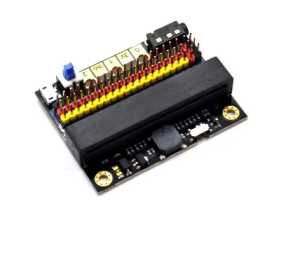
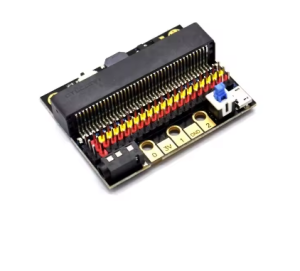
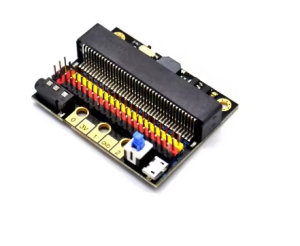
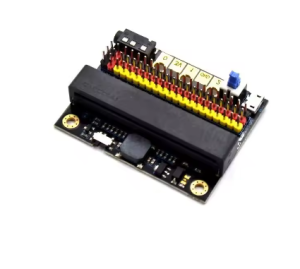
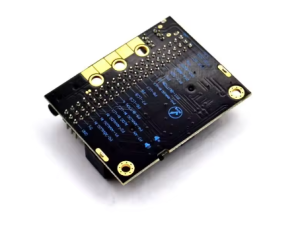
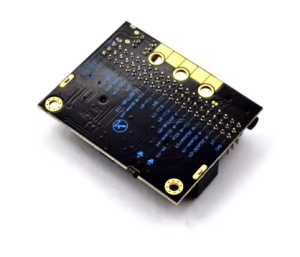
BBC micro:bit Expansion Board V2.0

SKU: FA1077-1
Input Voltage

6V – 12V DC (via 5.5mm DC Jack) or 5V (via Micro-USB/USB-C)

Output Current

Up to 1.5A (Continuous)

I/O Logic Level

3.3V (Micro:bit Standard)

Power Rails

Dedicated 5V (Red) and 3.3V (Yellow/Black) headers

Compatibility

Fully supports BBC micro:bit V1.5 and V2.0/V2.2+

Dimensions

76mm x 63mm

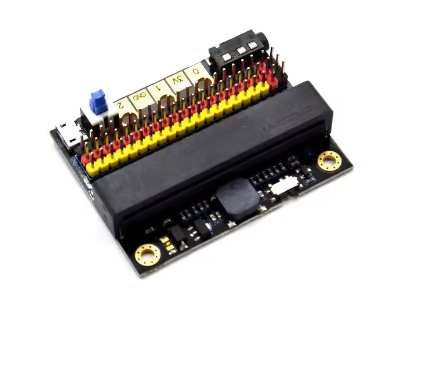
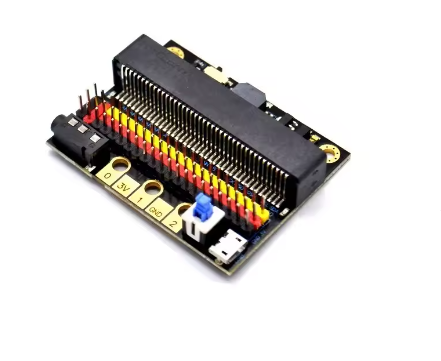
The BBC micro:bit Expansion Board V2.0 is an advanced I/O breakout system designed to bridge the gap between the micro:bit and complex electronic circuits. Released as an upgrade to the V1.0, the 2026 edition of this board features improved power stability and specialized headers for sensors and servos. 
Long Product Description
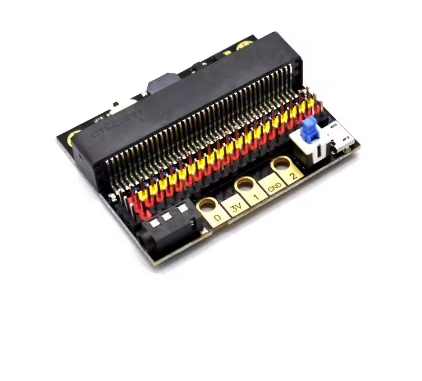
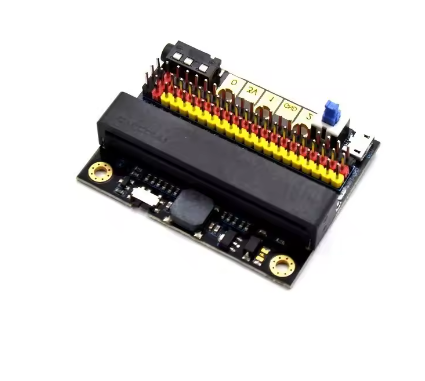
The BBC micro:bit Expansion Board V2.0 is the definitive tool for users looking to build sophisticated robotics, IoT gateways, and environmental monitoring stations. While the micro:bit itself is an excellent entry-point, the V2.0 Expansion Board transforms it into a full-scale development platform. It features a horizontal edge connector slot that securely houses the micro:bit, breaking out every pin (P0–P20) into a “G-V-S” (Ground-Voltage-Signal) format. 
This board is specifically engineered to handle the high-current demands of 2026-era peripherals. It includes a reinforced power management circuit that can simultaneously power multiple 5V servos and 3.3V sensors without taxing the micro:bit’s internal regulator. With its integrated DC power jack and dedicated toggle switch, it provides a professional-grade power solution for both classroom education and industrial prototyping. 
Key Features
  • G-V-S Header Arrangement: Each I/O pin is grouped with a dedicated Voltage and Ground pin, allowing for direct “plug-and-play” connection of 3-wire sensors and servos.
  • Enhanced Power Management: Equipped with an onboard voltage regulator capable of converting 6V–12V DC input into stable 3.3V and 5V rails.
  • Independent Power Switch: Features a physical toggle switch to cut power to the entire system without unplugging cables, preserving battery and hardware life.
  • Dual Voltage Support: Dedicated jumpers or rails allow users to select between 3.3V and 5V for specific pin groups, essential for interfacing with older 5V logic sensors.
  • Integrated Passive Components: Includes an onboard buzzer and power indicator LEDs for immediate feedback during debugging.
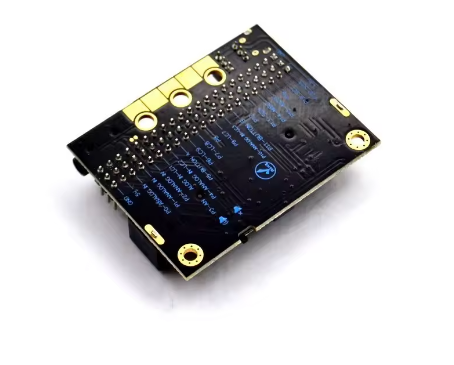
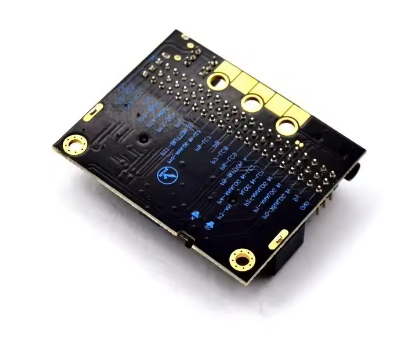
  • Robust Mounting Points: Four M3-sized mounting holes for secure integration into custom enclosures or 3D-printed chassis
Usage Instructions
  1. Insertion: Slide the micro:bit into the black edge-connector slot. Ensure the gold fingers are fully engaged and the LED matrix is facing upward.
  2. Power Setup: Connect a 9V battery or 12V DC adapter to the DC jack. Flip the onboard switch to the “ON” position. The power LED should illuminate.
  3. Peripheral Connection: Connect sensors or servos to the G-V-S pins. Ensure the Black wire goes to G (Ground), Red to V (Voltage), and Yellow/White to S (Signal).
  4. Programming: Code your micro:bit via its own USB port. The expansion board will automatically route the logic signals to the connected peripherals.
  5. Selection: If your board has a voltage jumper, ensure it is set to 3.3V when connecting sensitive sensors to avoid damage
Q: Can I use this board to build a 4-wheel drive robot?

Yes. The V2.0 board provides enough current to signal motor drivers. However, for the motors themselves, you should use the 5V rail provided by this board or an external motor driver shield

Q: Does it work with the newer Micro:bit V2 with the built-in speaker?

Absolutely. The physical edge connector has remained standardized. The V2.0 expansion board is designed to accommodate the slightly thicker PCB of the Micro:bit V2 perfectly.

Q: Is this board safe for younger students?

Yes. It includes reverse-polarity protection and a short-circuit fuse. It is a preferred choice for business and educational purchasing because it prevents the common “short circuits” that occur when using loose jumper wires on a bare micro:bit

Q: Why do I need the V2.0 board instead of the V1.0?

The V2.0 is superior for projects involving servos. Standard servos require 5V and high current; the V1.0 often struggles to provide this, leading to the micro:bit resetting. The V2.0 handles this load with ease

Q: Can I purchase these in bulk for my company's STEM outreach program?

Yes. We offer tiered wholesale pricing and “Neutral Packing” options for bulk orders of 50 units or more. Please visit our B2B Wholesale Portal for a direct quote.