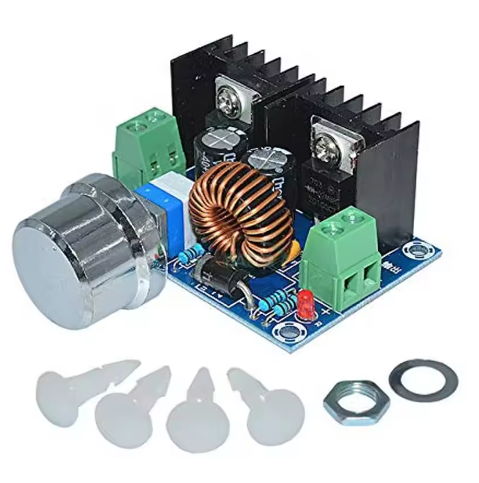
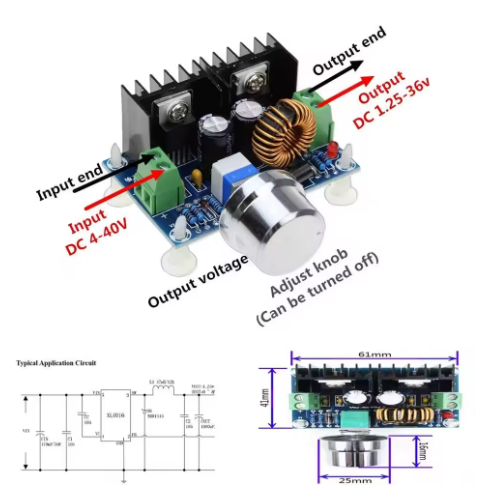
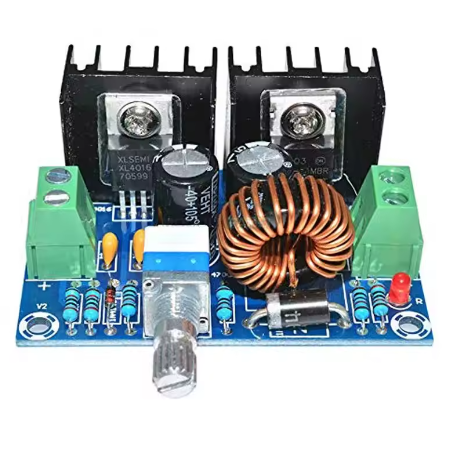
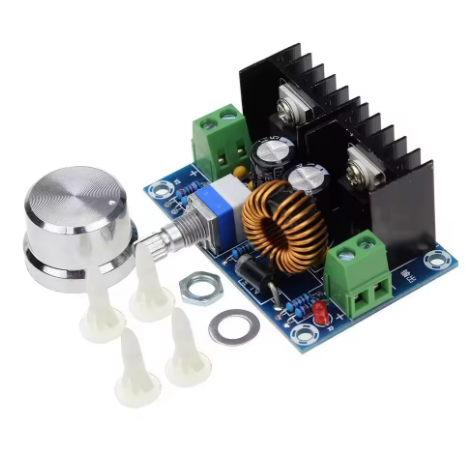
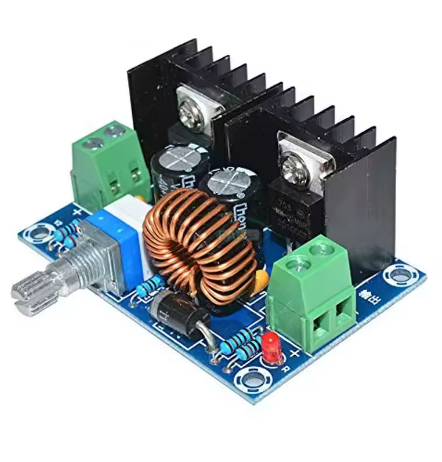
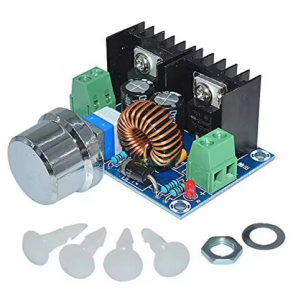
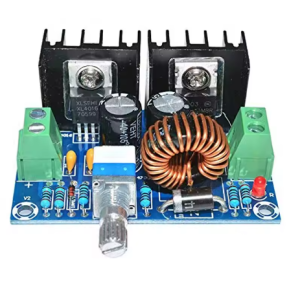
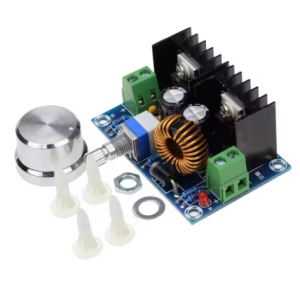
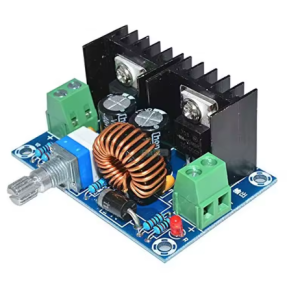
XH-M401 DC-DC Buck Module XL4016E1(B) High Power DC Regulator Board Max. 8A with Voltage Regulator 200W(Max Power)

SKU: FA2019-13
Model

XH-M401 (B-Series)

Voltage Regulator Chip

XL4016E1

Input Voltage

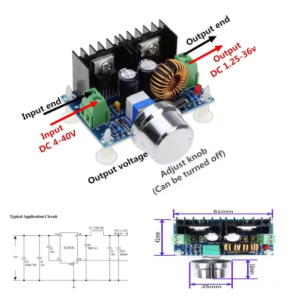
DC 4V – 40V

Output Voltage

DC 1.25V – 36V (Adjustable)

Maximum Output Current

8A (Peak)

Continuous Output Current

5A (Recommended for long-term use)

Maximum Power

200W

Conversion Efficiency

94% (Maximum)

Switching Frequency

180kHz

Dimensions

61mm x 41mm x 27mm

Weight

Approx. 48g

The XH-M401 DC-DC Buck Converter Module (B-Series) is a high-efficiency, high-power step-down voltage regulator designed for demanding power management tasks. Built around the robust XL4016E1 switching regulator chip, this module is engineered to convert a higher DC input voltage into a lower, stable DC output with up to 94% efficiency.
This “B-Series” variant is optimized for reliability in DIY power supplies, battery-operated systems, and industrial control cabinets. It features an integrated large-area heatsink and a high-precision potentiometer with a built-in “click” power switch, allowing users to adjust voltage and power the unit on or off using a single intuitive control knob.
Key Features
  • High Power Output: Capable of delivering a continuous 5A current, with a peak capacity of 8A (short-term) for high-draw applications.
  • Integrated Power Switch: The voltage adjustment potentiometer includes a built-in switch; turning the knob fully counter-clockwise turns off the module completely.
  • Efficient Heat Dissipation: Features a specialized dual-aluminum heatsink design to maintain stable operating temperatures during high-load tasks.
  • Advanced Protection Suite: Includes built-in over-temperature protection, over-current protection, and short-circuit protection to safeguard both the module and connected electronics.
  • Stable Regulation: Utilizes high-frequency switching technology (180kHz) to ensure low-ripple output and consistent voltage stability.
  • Premium Componentry: Uses high-quality inductors and solid-state capacitors for long-term durability in industrial environments.
Usage Guidelines
  1. Wiring Connection: Connect the input DC source (4V–40V) to the IN+ and IN- terminals. Connect the load to the OUT+ and OUT- terminals.
  2. Voltage Step-Down: This is a Buck (Step-Down) converter. Ensure your input voltage is at least 2V higher than the desired output voltage.
  3. Adjustment: Rotate the knob clockwise to increase the output voltage and counter-clockwise to decrease it. Continue rotating counter-clockwise past the click to turn the unit off.
  4. Heat Management: For continuous operation above 5A or 100W, we recommend adding a small cooling fan to ensure the heatsink maintains an optimal temperature.
  5. Pre-Connection Check: Always verify the output voltage with a multimeter before connecting sensitive equipment
Q: Can this module be used to increase voltage?

No. This is a Step-Down (Buck) converter. It can only output a voltage lower than the input voltage provided

Q: What is the difference between the 250W (A) and 200W (B) versions?

The B-series is optimized for a slightly lower thermal footprint while maintaining the same 8A peak current capability. It is often preferred for applications where space and heat management are priorities but 200W of power is more than sufficient.

Q: Is it suitable for charging batteries?

Yes, it can be used for battery charging applications, but it is highly recommended to add a “blocking diode” on the output to prevent the battery from discharging back through the module when the input power is off.

Q: Can I use this for business or industrial automation?
Absolutely. Business purchasers frequently use the XH-M401 to step down 24V industrial power supplies to 12V or 5V for sensors, PLCs, and microcontrollers. Its industrial-grade XL4016E1 chip ensures high reliability in 24/7 duty cycles.
Q: Why does the output voltage not change when I turn the knob?

Ensure your input voltage is higher than the output you are trying to set. If the input is only 12V, you cannot set the output to 15V. Also, new modules may require several full rotations of the knob initially to move the potentiometer off the factory minimum

Q: Does it have reverse polarity protection?

No. Connecting the input wires in reverse (+ to -) will damage the module. Please double-check all connections before applying power