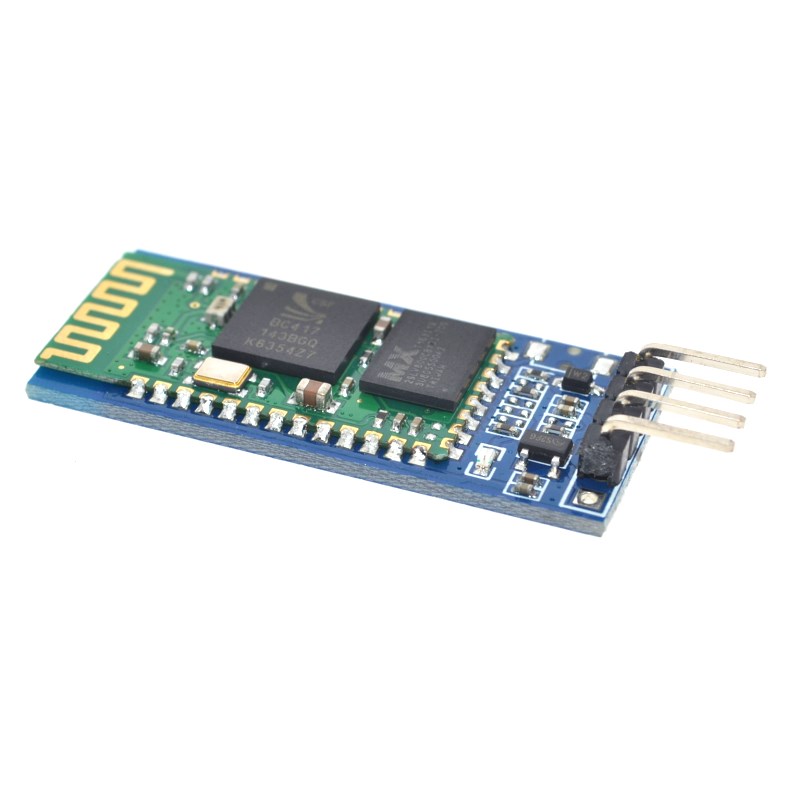
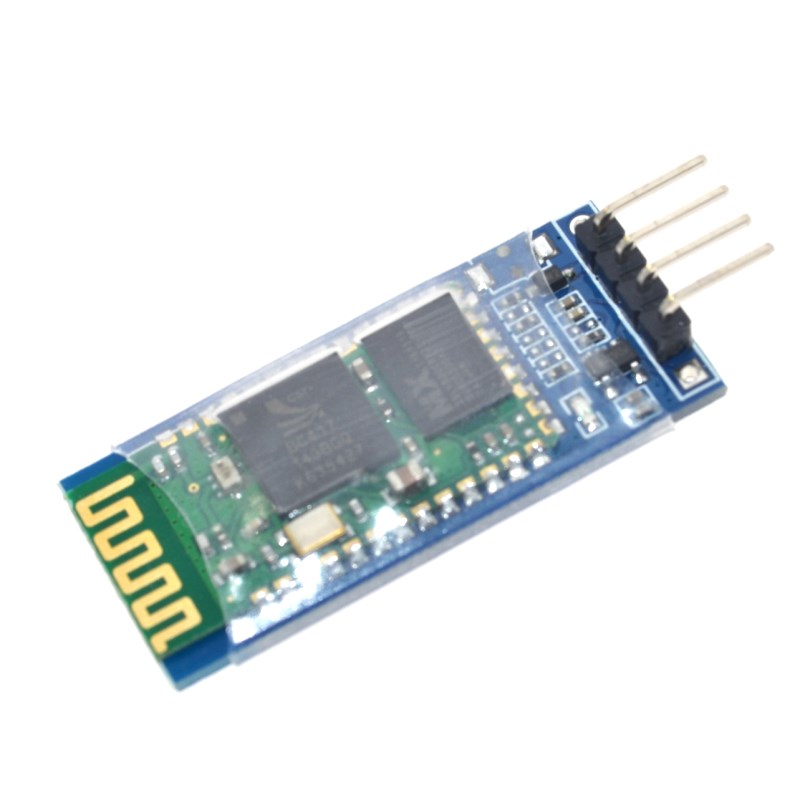
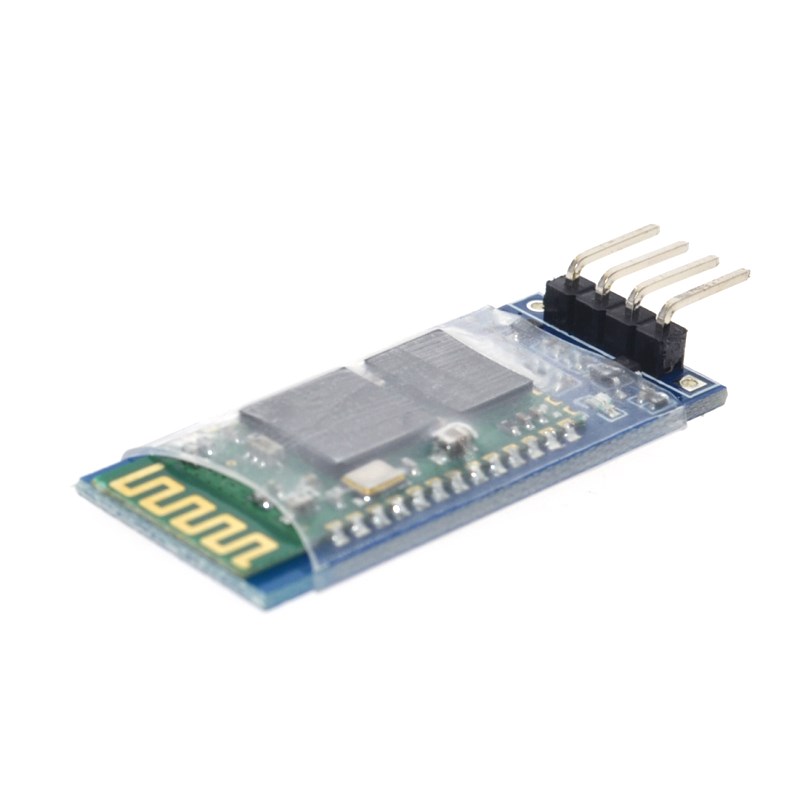
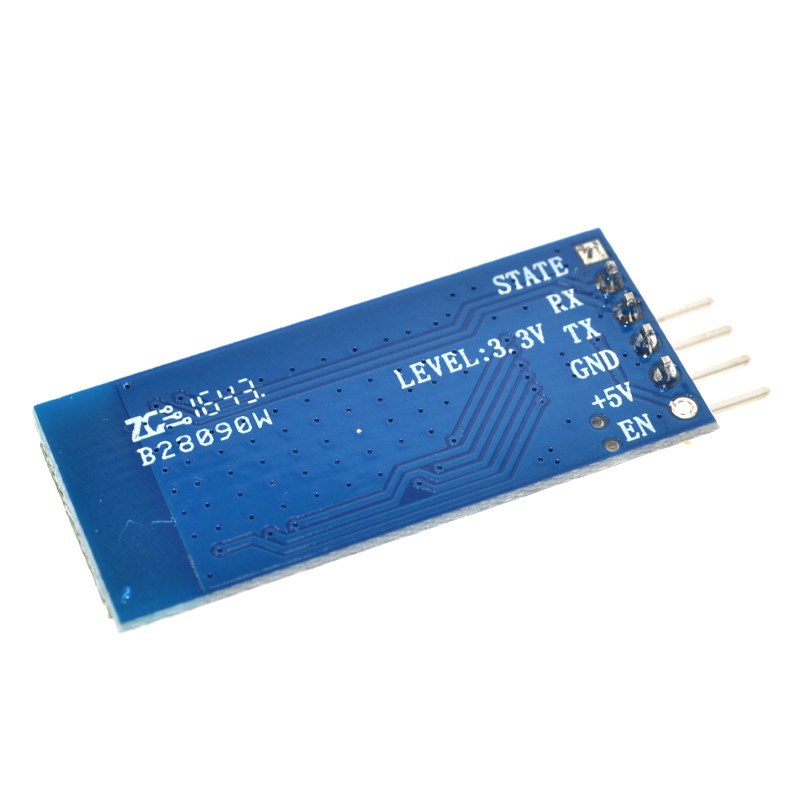
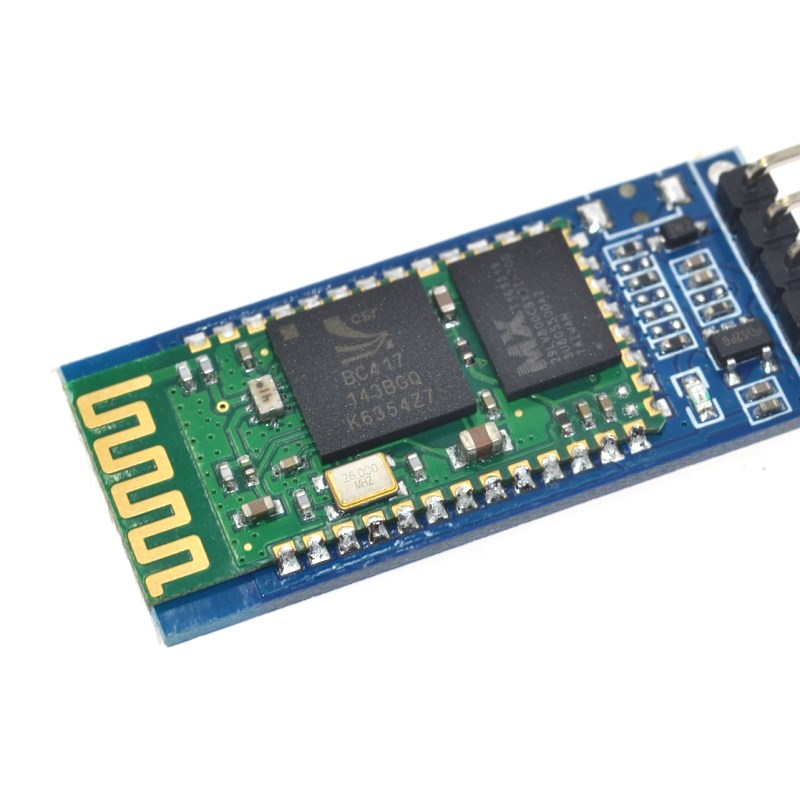
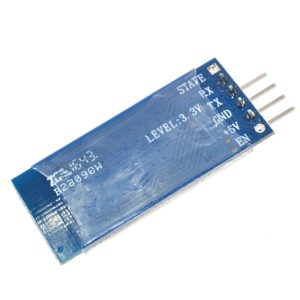
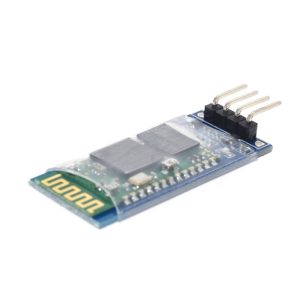
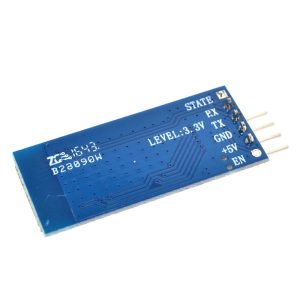
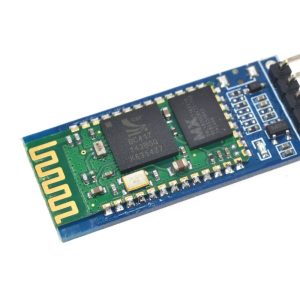
HC-06 BT 4pin Bluetooth Module with Button (Original version Type-A)

SKU: FA2040
Bluetooth Protocol

Bluetooth V2.0 + EDR (Classic)

Operating Voltage

3.6V – 6.0V DC

Operating Current

Pairing: ~35mA; Connected: ~8mA

Logic Level (I/O)

3.3V TTL (VCC is 5V compatible)

Default Baud Rate

9600 bps

Default Pairing PIN

1234

Frequency Band

2.4GHz ISM Band

Modulation

GFSK (Gaussian Frequency Shift Keying)

Transmission Power

Class 2 (+4dBm)

Operating Temperature

-25°C to +75°C

Product Description
The HC-06 (Original Type-A) is a professional-grade Bluetooth 2.0+EDR (Enhanced Data Rate) slave module designed for high-stability wireless serial communication. Unlike the HC-05, which can switch roles, the HC-06 is a dedicated Slave module, making it the ideal choice for devices that need to be discovered and controlled by a Master device such as a smartphone, tablet, or PC.
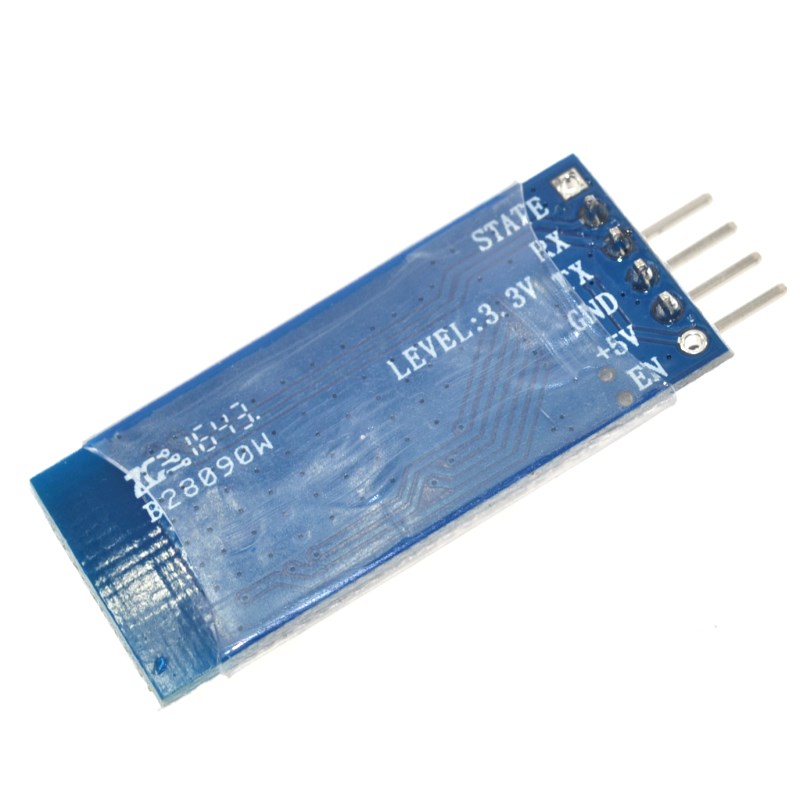
The Type-A Original version is built using high-quality components and genuine firmware, ensuring superior frequency consistency and lower packet loss compared to generic clones. This module functions as a “Transparent Wireless Bridge”—once a connection is established, data sent to the module’s RX pin is instantly transmitted to the paired device, and vice versa. Its 4-pin layout (VCC, GND, TXD, RXD) simplifies wiring for ArduinoRaspberry Pi, and Industrial PLC systems.
Key Features
  • Original Industrial Chipset: Features genuine silicon for enhanced thermal stability and a more reliable signal in environments with high 2.4GHz interference.
  • Dedicated Slave Mode: Pre-configured as a “set-and-forget” peripheral, ensuring it is always ready to be found and paired with by a Master device.
  • Transparent Serial Data: No complex Bluetooth programming is required. It functions exactly like a wireless RS232 cable for simple TTL serial communication.
  • High-Speed Matching: Optimized firmware allows for faster pairing and reconnection times compared to standard modules.
  • Wide Power Compatibility: The onboard regulator supports an input of 3.6V to 6.0V, allowing it to run safely on standard 5V rails.
  • Status LED Indicator: Built-in LED provides real-time feedback: rapid flashing (searching/pairing) and steady light (connected/paired).

Usage Scenarios
  • Business & Commercial: Wireless serial debugging for industrial machinery, point-of-sale (POS) terminal connectivity, and secure office access control logs.
  • Single User & Hobbyist: Smartphone-controlled Arduino robots, wireless remote sensors, and DIY wireless home automation interfaces
Q: Can I use the HC-06 with an iPhone or iPad?

No. The HC-06 uses Bluetooth Classic (2.0). Apple iOS devices only support “Bluetooth Low Energy” (BLE 4.0+) for serial data communication. This module is fully compatible with Android, Windows, macOS, and Linux.

Q: What is the difference between the HC-06 and the HC-05?

The HC-05 can be both a Master (connects to others) and a Slave. The HC-06 is a Slave-only module, which makes it simpler to use for projects that only need to receive a connection from a phone or computer.

Q: How do I change the Bluetooth name or Pairing PIN?

While the module is unpaired (LED is flashing), you can send AT commands via a serial monitor at 9600 baud. For example, AT+NAME=MyDevice or AT+PIN=5678. Note: Unlike some modules, the HC-06 does not require a newline (\r\n) after the command.

Q: Is a level shifter necessary for the RX/TX pins?

While the VCC pin is 5V compatible, the data pins are 3.3V logic. For long-term reliability in industrial applications, we recommend using a simple voltage divider (1kΩ and 2kΩ resistors) on the RX line of the HC-06 to protect it from 5V signals

Q: Why can't my computer find the module?

Ensure the module’s LED is flashing rapidly. If it is steady, it is already connected to another device. Also, ensure your PC’s Bluetooth is set to “Classic” mode or is compatible with Bluetooth 2.0

Q: Does it save my custom Baud Rate if the power is cut?

Yes. All settings changed via AT commands (Baud rate, Name, PIN) are stored in the internal non-volatile Flash memory and are preserved through power cycles.