Product Overview
The LT3045 Ultra-Low Noise Linear Voltage Regulator Module is a professional-grade power solution designed for applications where power supply noise cannot be tolerated. Engineered by Analog Devices (formerly Linear Technology), the LT3045 represents the gold standard in low-dropout regulator (LDO) technology, delivering an astonishing 0.8µVRMS output noise across the 10Hz to 100kHz bandwidth .
For engineers and audiophiles seeking to upgrade from legacy regulators like the LM78xx series or LM317, the LT3045 offers a dramatic performance improvement. While an LM317 typically produces around 40µVRMS of noise, the LT3045 achieves 50 times less noise, making it the definitive choice for powering high-resolution DACs, precision instrumentation, RF synthesizers, and medical imaging equipment .
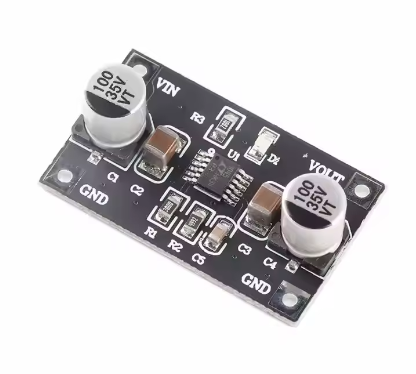
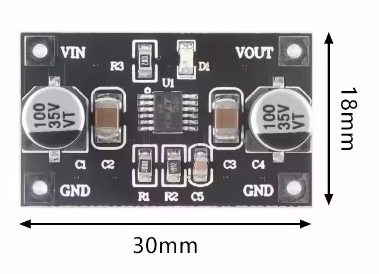
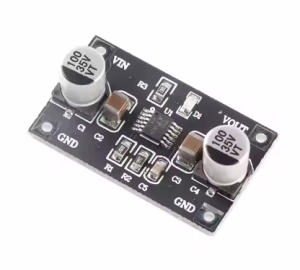
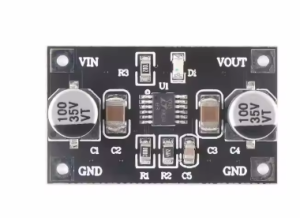
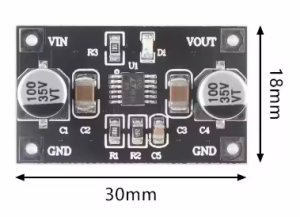
This fixed 5V output version simplifies integration for common logic and analog supply rails. The module incorporates all necessary support components on a compact PCB, allowing you to instantly upgrade existing 5V power rails or create new ultra-clean supplies for your most demanding projects. With an input range of 1.8V to 20V, high-frequency PSRR of 76dB at 1MHz, and a low dropout voltage of just 260mV, this regulator maintains exceptional performance regardless of load or line conditions .
Key Features
-
Ultra-Low Output Noise: 0.8µVRMS (10Hz to 100kHz) and 2nV/√Hz spot noise at 10kHz – unparalleled cleanliness for sensitive analog and RF circuits
-
High-Frequency Power Supply Rejection Ratio (PSRR): 76dB at 1MHz effectively eliminates switching regulator ripple and high-frequency interference
-
Fixed 5V Output: Pre-configured for convenient drop-in replacement of 5V rails in audio DACs, microcontrollers, FPGAs, and sensors
-
500mA Output Current: Capable of powering multiple low-noise devices simultaneously, with easy paralleling for higher current requirements
-
Wide Input Voltage Range: Accepts 1.8V to 20V DC input, providing flexibility for various power sources including batteries and pre-regulated supplies
-
Low Dropout Voltage: 260mV typical at full 500mA load – minimizes power dissipation and heat generation
-
Built-in Protection Features: Includes programmable current limit, reverse-battery and reverse-current protection, internal current limit with foldback, and thermal shutdown with hysteresis
-
Industrial Temperature Range: Rated for -40°C to +125°C, suitable for demanding environmental conditions
-
Pin-Compatible Replacement: This fixed 5V module can replace LM7805, LM317, and other 3-terminal regulators with superior performance
-
Parallelable Architecture: Can be easily paralleled to further reduce noise and increase output current
Technical Specifications
Pinout & Interface Guide
Input Side (Power Source)
-
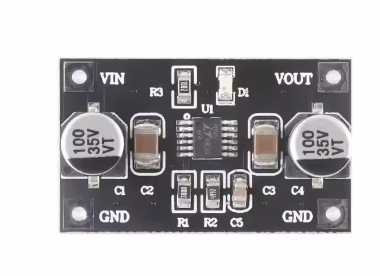
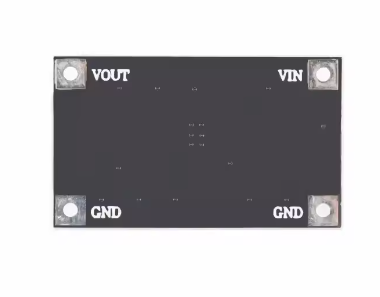
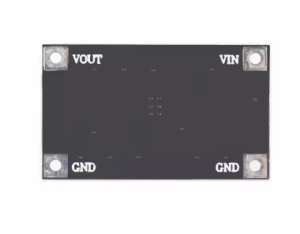
VIN (IN): Connect to the positive terminal of your DC power source (1.8V-20V). For optimal performance, a 6V-12V input source is recommended
-
GND (Input Ground): Connect to the negative terminal (ground) of your DC power source
Output Side (Load Connection)
Note: Input and output grounds are common and connected internally. To maintain ultra-low noise performance, use a short, low-impedance wiring .
Usage Guide
Wiring Instructions
IMPORTANT: Always disconnect the input power source before wiring or modifying connections.
-
Connect Input: Connect the positive wire of your DC power source to the VIN terminal. Connect the negative wire to the GND terminal. Use short, wide traces for power and ground to minimize impedance.
-
Add Filtering Capacitors (Optional but Recommended): For optimal performance:
-
Place a 10µF ceramic capacitor as close as possible to the VIN and GND pins
-
Add a 0.1µF ceramic capacitor at the output pin to suppress high-frequency noise
-
For noisy input supplies, a 100µF electrolytic capacitor can be added in parallel with the ceramic input capacitor
-
Connect Load: Attach your 5V device to the VOUT and GND terminals.
-
Power On: Apply input power. The regulator will output a clean 5V.
Important Usage Considerations
-
Minimum Dropout Voltage: The input voltage must be at least 260mV higher than the output voltage (5V + 0.26V = 5.26V minimum recommended input). For optimal performance, use a 6V-12V input source.
-
Thermal Management: At higher input-output voltage differentials or near-maximum load, the regulator will generate heat. For a 12V input supplying 5V at 500mA, power dissipation is approximately 3.5W. A small heatsink may be required for continuous operation at high differentials .
-
Output Capacitor Requirements: The LT3045 requires a minimum 10µF ceramic output capacitor for stable operation. Low-ESR X7R or X5R dielectric capacitors are recommended .
-
Paralleling for Higher Current: Multiple LT3045 modules can be used in parallel by connecting their SET pins together and sharing a common resistor. This configuration reduces noise and increases current capacity .
Application Examples
1. Upgrade LM7805 in Existing Circuit:
The LT3045 module serves as a drop-in upgrade for LM78xx regulators. Simply replace the 7805 with this module, maintaining the same input and output connections while experiencing immediate noise reduction .
2. Post-Regulator for Switching Power Supply:
-
Connect a 6V-12V switching power supply output to VIN
-
The LT3045’s 76dB PSRR at 1MHz will eliminate switching noise
-
Provide ultra-clean 5V to sensitive RF or analog components
3. High-Performance DAC Power Supply:
-
Use with a 7V-9V linear power supply as input
-
The module delivers ultra-clean 5V to audio DACs, eliminating power supply noise from the audio signal
Q: How much better is the LT3045 compared to an LM7805 or LM317?
The LT3045 represents a dramatic performance improvement. While an LM7805 typically produces significant output noise, the LT3045 achieves 0.8µVRMS noise (compared to 40µVRMS for LM317) and 76dB PSRR at 1MHz (compared to LM317’s rapidly declining high-frequency rejection). It also has much lower dropout voltage (260mV vs ~2V), making it far more efficient
Q: What is the actual noise level of this 5V fixed version?
The LT3045 maintains consistent noise performance regardless of output voltage. At 5V output, the noise remains 0.8µVRMS (10Hz-100kHz) and 2nV/√Hz at 10kHz. This constant noise characteristic is a unique feature of the LT3045’s architecture
Q: Can I use this module as a direct drop-in replacement for a 7805?
Yes. This 5V fixed module is specifically designed to replace LM7805 regulators. The module physically fits the same footprint and provides superior performance. However, ensure your input voltage is at least 5.26V (for proper dropout) and that your current requirements do not exceed 500mA
Q: What applications benefit most from the LT3045's low noise?
The LT3045 is ideal for :
-
High-end audio equipment: DACs, preamplifiers, headphone amplifiers
-
RF communications: PLLs, VCOs, mixers, LNAs (reduces phase noise)
-
Medical imaging: Ultrasound systems, diagnostic equipment
-
Precision instrumentation: High-precision sensors, spectrum analyzers
-
High-speed data conversion: 16+ bit ADC/DAC reference supplies
-
Switching power supply post-regulators: Cleaning up SMPS noise
Q: Does this module include the LT3045 chip or a clone?
This module uses the genuine Analog Devices LT3045 chip. All performance specifications are based on the authentic IC.
Q: What is the purpose of the SET pin?
The SET pin (100µA current source) sets the output voltage through a single resistor. The fixed 5V version has a precision resistor pre-installed for accurate 5V output. This architecture provides constant noise, PSRR, and bandwidth regardless of output voltage
Q: Why does this regulator need a minimum output capacitor?
The LT3045 requires a minimum 10µF ceramic output capacitor for stability. Unlike older regulators, it does not have a stringent minimum load current requirement. It remains stable even with zero load current
Q: The module gets warm during use. Is this normal?
Yes, as a linear regulator, the LT3045 dissipates heat proportional to the voltage drop and load current: P = (Vin – Vout) × Iout. For example, at 12V input, 5V output, and 500mA load, dissipation is approximately 3.5W. This is normal; ensure adequate airflow. For continuous high-power operation, a heatsink is recommended
Q: What is the recommended input voltage for 5V output?
For optimal performance, a 6V-12V input is recommended. The minimum is 5.26V (5V + 260mV dropout). Higher input voltages increase power dissipation and heat. For battery-powered applications, 6V-7V is ideal to maximize efficiency
Q: What happens if I exceed the 500mA output current?
The LT3045 features internal current limit with foldback protection. If the output current exceeds the limit, the regulator will reduce output voltage to protect itself. For sustained loads above 500mA, the regulator may enter thermal shutdown
Q: Can I increase the output voltage of this fixed 5V module?
This version is factory-configured for fixed 5V output. For adjustable output applications, use the adjustable LT3045 module variant, which allows you to set any voltage from 0V to 15V using an external resistor
Q: Why is PSRR important at high frequencies like 1MHz?
Switching power supplies operate at high frequencies (typically 100kHz-2MHz). The LT3045’s excellent 76dB at 1MHz PSRR means it effectively blocks switching noise that would otherwise pass through inferior regulators. This is critical for preventing digital and switching noise from contaminating sensitive analog and RF circuits
Q: Can I power this module directly from a 24V supply?
No. The maximum input voltage is 20V, so 24V input may damage the module. Use a pre-regulator to step down the voltage to between 5.26V and 20V before feeding the LT3045
Q: Why is my output voltage not 5V or fluctuating?
Verify the following :
-
Input voltage is between 5.26V and 20V (at least 260mV above output)
-
Input power supply can provide sufficient current
-
Proper capacitors are installed near the device
-
The device is not in thermal shutdown (allow to cool and test again)
Q: The output voltage is below 5V. What's wrong?
This typically indicates the input voltage is too low (below dropout), the device is in current limit, or the device is in thermal shutdown. Ensure your input is at least 5.26V and your load does not exceed 500mA.
Q: Do I need to add any external components?
The module includes all critical components for LT3045 operation. However, for best performance, you may wish to add :
-
A 100µF electrolytic capacitor at the input for bulk filtering
-
A 0.1µF ceramic capacitor at the output for high-frequency decoupling
-
Proper star grounding for sensitive applications
Q: Can I parallel multiple LT3045 modules to increase current?
Yes. The LT3045 is designed to be easily paralleled. Connect the SET pins together and share a common SET resistor. This configuration reduces overall output noise (noise decreases by √N) and increases available current (N × 500mA). The modules will automatically share current with high accuracy
Q: Why does the module stop working after a few minutes?
This is a classic symptom of thermal shutdown. Verify that your input voltage is not too high and that your load current is within specifications. Allow the module to cool and test again. If the problem persists, check for proper capacitor installation near the IC