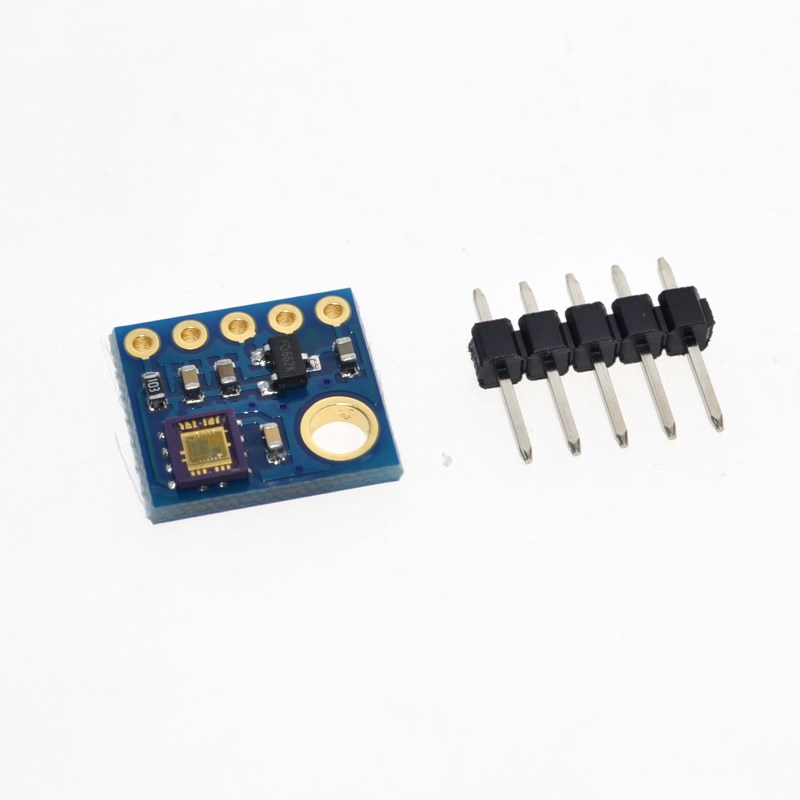
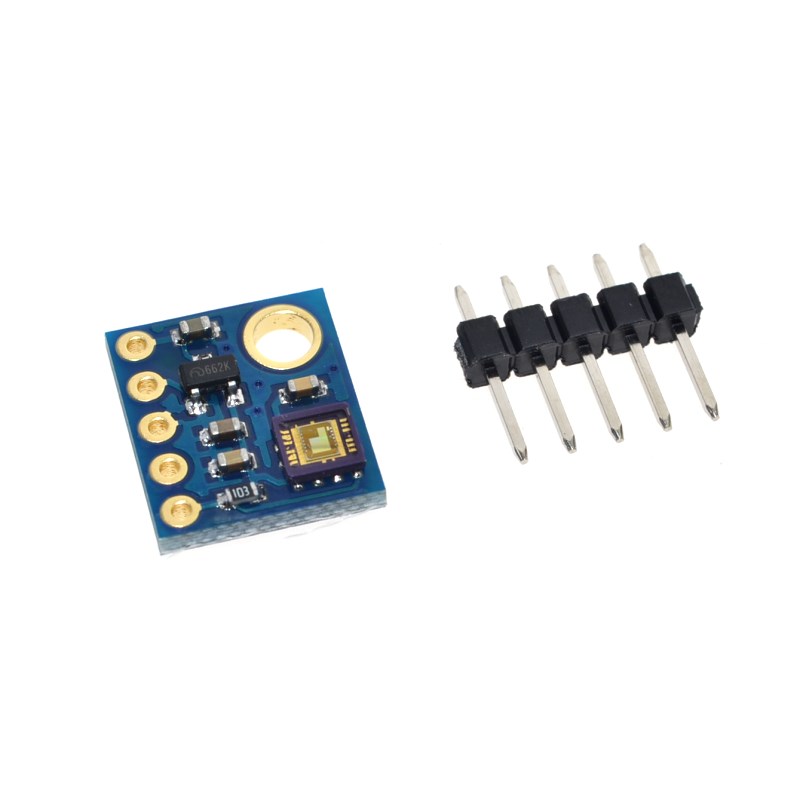
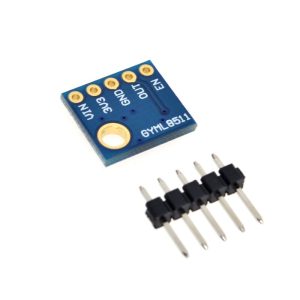
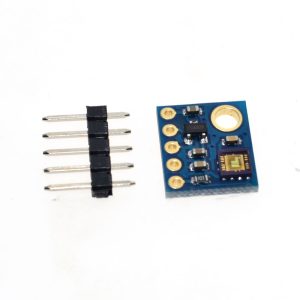
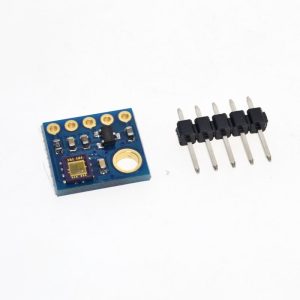
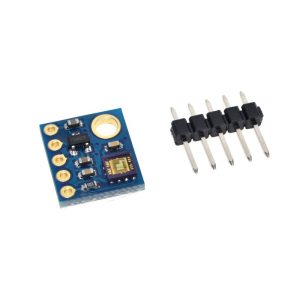
GY-8511 UV Sensor Module (GYML8511) – Analog Output UV Light Sensor Breakout Board for Arduino & Embedded Systems

SKU: FA2170
Sensor IC

ML8511 (OKI Semiconductor)

Operating Voltage

3.0V – 5.0V DC

Active Current

120µA – 300µA (typical)

Standby Current

0.1µA (typical)

Detection Wavelength

280nm – 390nm (UV-A & UV-B)

Peak Wavelength Sensitivity

365nm

Output Type

Analog Voltage (0V – 2.8V typical range)

Operating Temperature

-40°C to +90°C

Description

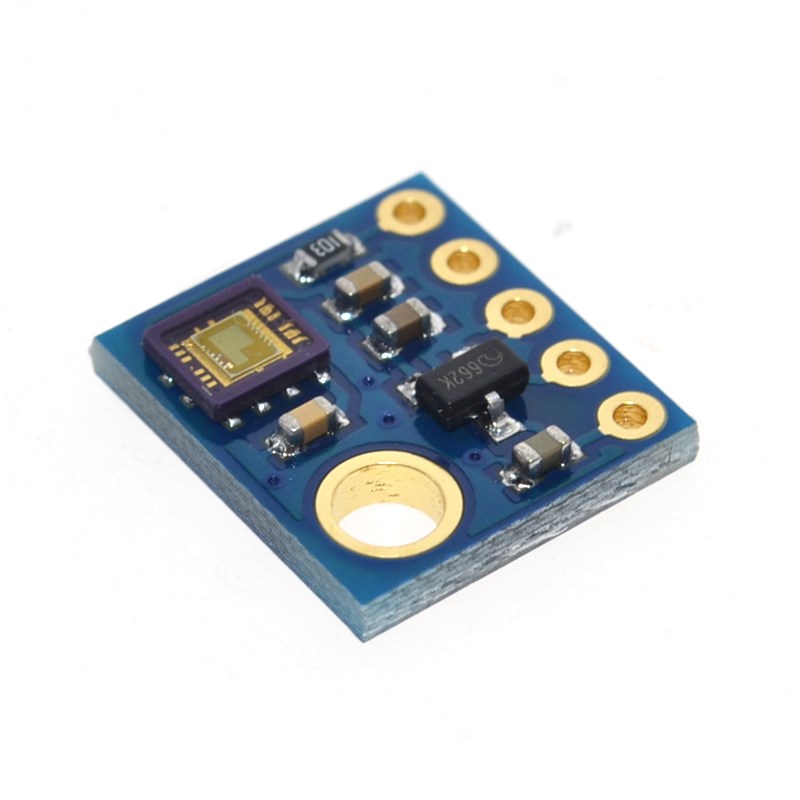
The GY-8511 UV Sensor Module is an easy-to-use ultraviolet light detection board designed for measuring UV-A and UV-B radiation levels. Built around the ML8511 sensor from OKI Semiconductor, this module outputs an analog voltage that is linearly proportional to the detected UV intensity, making it exceptionally simple to interface with any microcontroller that features an analog-to-digital converter (ADC) .

The sensor is most sensitive to light in the 280nm to 390nm wavelength range, which covers the entire UV-B (burning rays) spectrum and the majority of the UV-A (tanning rays) spectrum, with a peak sensitivity at 365nm . An embedded operational amplifier on the sensor die converts the photocurrent generated by the UV photodiode directly into a voltage output, eliminating the need for external signal conditioning circuits .

Operating from a 3.3V to 5V power supply, the module draws only 120µA to 300µA during active measurement and less than 1µA in standby mode, making it ideal for battery-powered wearable devices and portable weather stations . The GY-8511 includes an enable pin (EN) that allows the user to put the sensor into standby mode for additional power savings.

Whether you are building a personal sunburn alert device, monitoring UV index for agricultural applications, or developing UV exposure control systems for industrial processes, the GY-8511 provides a simple, analog solution that integrates seamlessly with Arduino, ESP32, STM32, Raspberry Pi (with ADC), and other embedded platforms.


Key Features

  • Analog Voltage Output – Linear output voltage directly proportional to UV intensity (mW/cm²), no complex protocol decoding required .

  • UV-A and UV-B Detection – Effective detection range of 280nm to 390nm, covering both tanning and burning UV spectra .

  • Built-in Operational Amplifier – Embedded op-amp converts photocurrent to voltage, eliminating external components .

  • Wide Voltage Compatibility – Operates from 3.0V to 5.0V, compatible with both 3.3V and 5V logic systems .

  • Ultra-Low Power Consumption – Only 120µA to 300µA in active mode, ideal for battery-powered applications .

  • Standby Mode Support – Enable pin (EN) allows reducing current consumption to 0.1µA when not measuring .

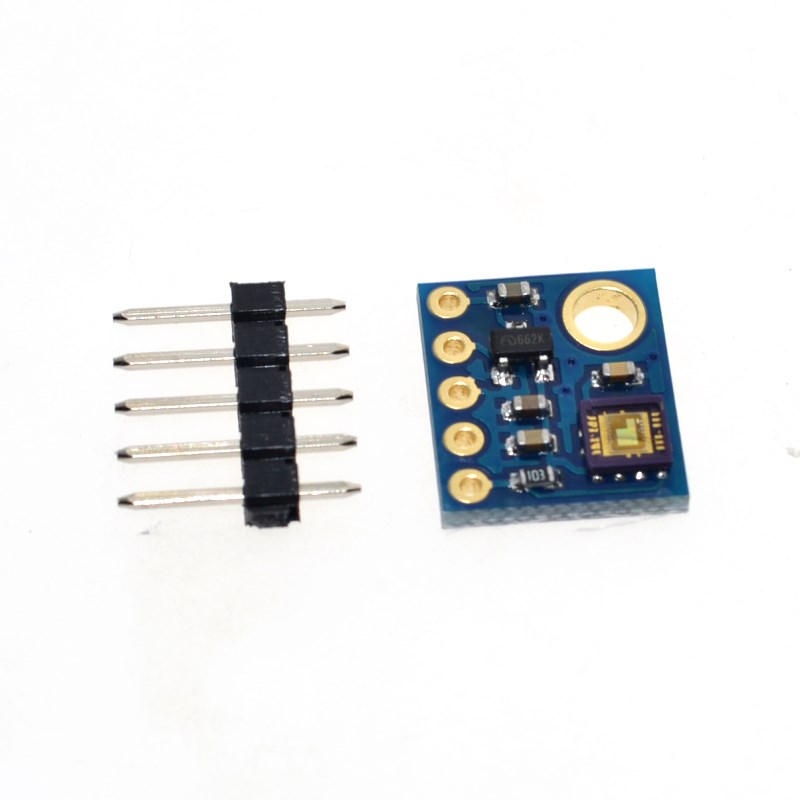
  • Compact Form Factor – Small 21mm × 15mm (approx.) board with pre-drilled mounting holes.

  • Wide Operating Temperature – Rated for -40°C to +90°C, suitable for outdoor and industrial environments .


Technical Specifications 

Specification Value
Sensor IC ML8511 (OKI Semiconductor)
Operating Voltage 3.0V – 5.0V DC 
Active Current 120µA – 300µA (typical) 
Standby Current 0.1µA (typical) 
Detection Wavelength 280nm – 390nm (UV-A & UV-B) 
Peak Wavelength Sensitivity 365nm 
Output Type Analog Voltage (0V – 2.8V typical range)
Operating Temperature -40°C to +90°C 

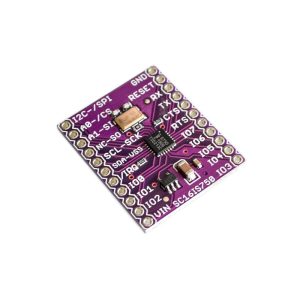
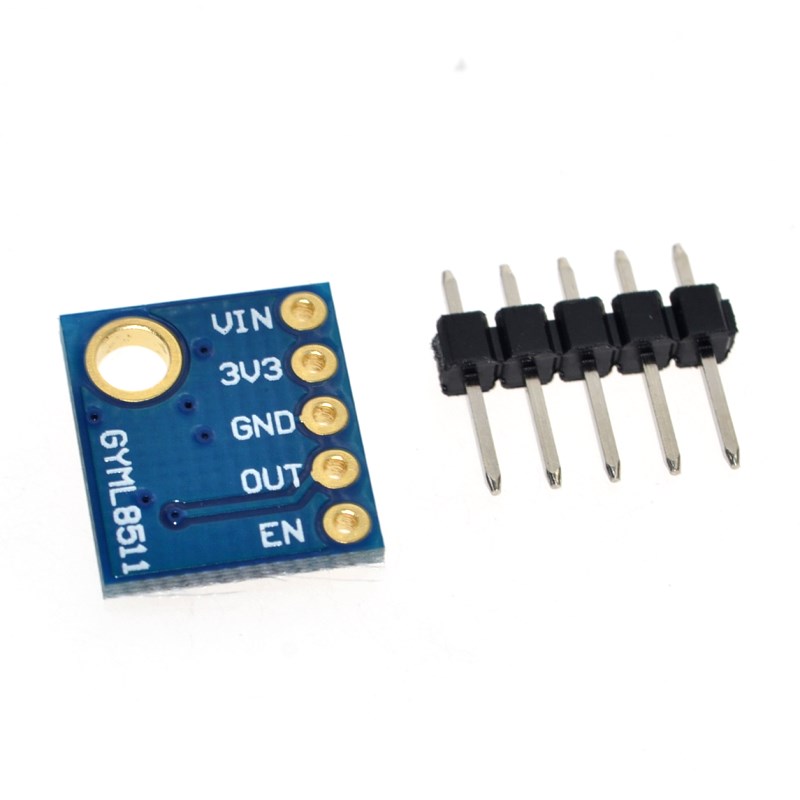
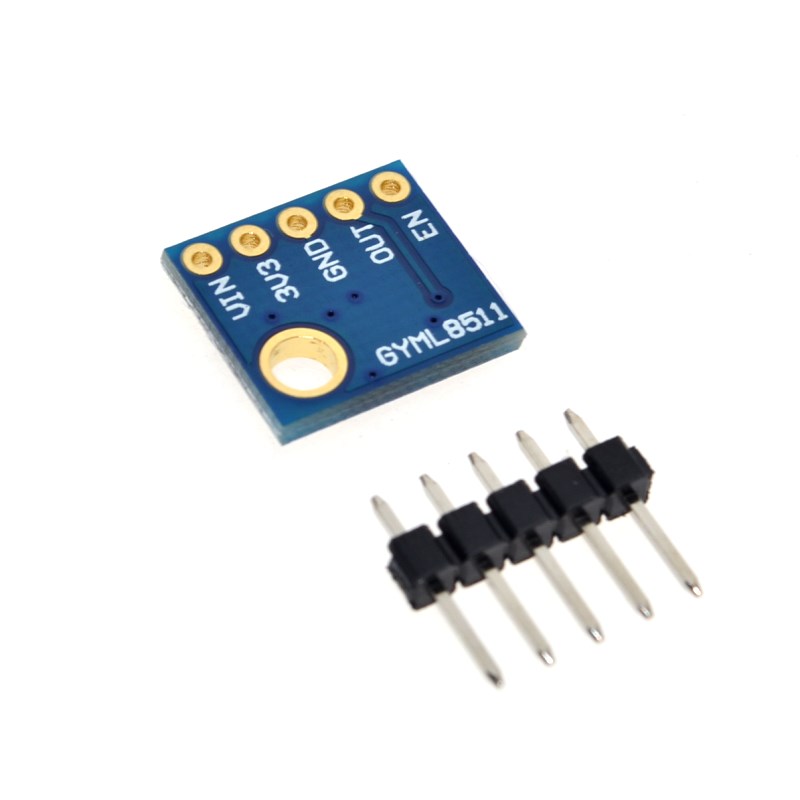
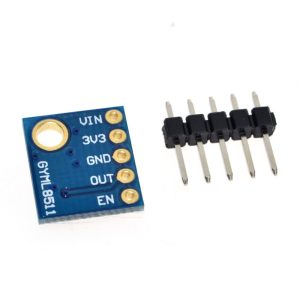
Pinout Description

Pin Function
VIN Power input (3.0V – 5.0V DC)
3V3 Onboard 3.3V regulator output
GND Ground connection
OUT Analog voltage output (connect to ADC pin)
EN Enable input (High = Active, Low = Standby)

Typical Usage

  • Personal Sunburn Alert Devices – Measure real-time UV intensity to warn users of dangerous exposure levels .

  • Weather Station Integration – Add UV index monitoring to environmental sensing systems .

  • UV Exposure Monitoring – Track cumulative UV exposure for skin health applications.

  • Controlled UV Chambers – Monitor and regulate UV intensity in laboratory or industrial curing equipment .

  • Agricultural UV Monitoring – Measure UV levels affecting crop growth and plant health.

  • Wearable Electronics – Integrate into fitness trackers or smart clothing for outdoor activity safety.

  • Aquarium & Reptile Enclosures – Verify UV-B output from specialty bulbs for pet health.

  • Educational Projects – Teach students about UV radiation, sensor interfacing, and data logging.

Basic Wiring Example (Arduino Compatible)

GY-8511 Pin Arduino Connection
VIN 5V
GND GND
OUT Analog Pin A0
EN 3.3V (or digital pin set HIGH)
3V3 Not connected (or to A1 for reference)

Note: For accurate readings, connect the 3.3V pin to an analog reference input (e.g., Arduino A1) to compensate for supply voltage variations .

Q: What is the difference between the GY-8511 and a digital UV sensor?

The GY-8511 outputs an analog voltage proportional to UV intensity. Digital UV sensors typically use I²C or UART interfaces and may provide pre-calculated UV index values. The GY-8511’s analog output is simpler to use but requires ADC conversion and some mathematical conversion to obtain UV index values.

Q: Can I use this module with a 5V Arduino?

Yes. The GY-8511 accepts 3.3V to 5V power directly. However, note that the analog output voltage range is 0V to approximately 2.8V, which is within the 0V-5V ADC input range of 5V Arduino boards .

Q: Can I use this with a 3.3V board like ESP32 or Raspberry Pi Pico?

Absolutely. The module operates perfectly at 3.3V. Simply connect VIN to 3.3V, and the analog output (0V-2.8V) will be compatible with the 0V-3.3V ADC input range of these boards.

Q: How do I convert the analog reading to UV Index?

The sensor outputs voltage linearly related to UV intensity (mW/cm²). The typical conversion is: UV Intensity (mW/cm²) = map(voltage, 0.99V, 2.8V, 0.0, 15.0). UV Index approximately equals UV Intensity (mW/cm²) × 40. Calibration with a known UV source will improve accuracy .

Q: What is the Enable (EN) pin for?

The EN pin controls the sensor’s power state. Pulling EN HIGH (to VIN) enables normal operation. Pulling EN LOW (to GND) puts the sensor into standby mode, reducing current consumption to 0.1µA for power-sensitive applications .

Q: Does the sensor measure UV-C?

No. The ML8511 detects UV-A (315-400nm) and UV-B (280-315nm), with a peak at 365nm. It is not sensitive to UV-C (100-280nm), which is typically filtered out by the Earth’s atmosphere .

Q: What is the response time of this sensor?

The ML8511 has a fast response time, typically under 1 millisecond, making it suitable for real-time UV monitoring applications.

Q: Is calibration required for accurate measurements?

For relative measurements (e.g., “more UV than before”), no calibration is needed. For absolute UV Index readings, calibration against a known reference UV meter is recommended due to variations in window transmission and component tolerances.

Q: Can this module be used outdoors?

Yes, the operating temperature range of -40°C to +90°C makes it suitable for outdoor use. However, the PCB is not waterproof. For permanent outdoor installations, protect the module inside a UV-transparent, weather-resistant enclosure (e.g., acrylic or quartz window) .

Q: What is the expected lifespan of this sensor?

When used within specified conditions, the ML8511 has a long operational life. However, like all photodiodes, prolonged exposure to very high UV levels can cause gradual sensitivity degradation over many years. For most consumer and industrial applications, this is not a practical concern.