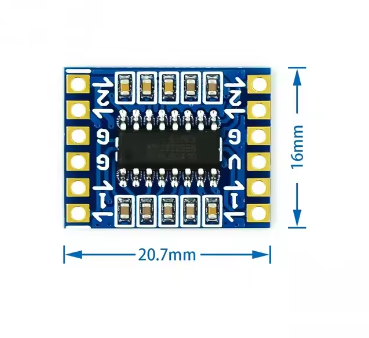
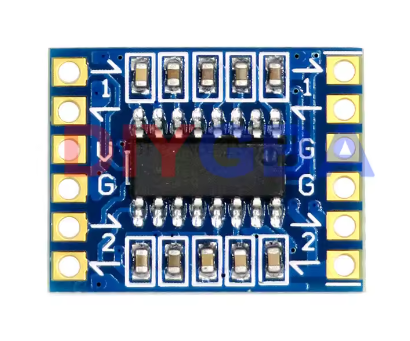
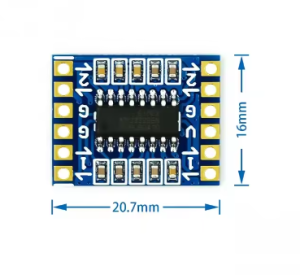
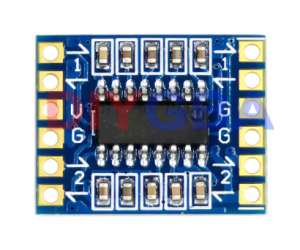
1 EXAR Chip Single-Channel TTL to RS232 Bidirectional Converter Module (Serial Port Adapter)

SKU: FA2045-1
Control Chip

EXAR (MaxLinear) Series Transceiver

Operating Voltage

3.0V to 5.5V DC

Logic Level (TTL)

3.3V / 5V Auto-Compatible

Interface (RS232)

DB9 Female / Header (Model Dependent)

Interface (TTL)

4-Pin Header (VCC, GND, TXD, RXD)

Max Data Rate

Up to 460 kbps

Operating Temp

-40°C to +85°C (Industrial Grade)

Static Protection

Integrated ±15kV ESD Protection

Product Description
The EXAR Chip TTL to RS232 Bidirectional Converter is a high-performance serial communication module engineered for industrial and professional applications. Powered by a genuine EXAR (MaxLinear) transceiver, this module provides superior data integrity and noise immunity compared to standard consumer-grade chips. It functions as a robust bridge between the high-voltage RS232 signals of PCs, PLCs, and legacy hardware and the low-voltage TTL logic of modern microcontrollers.
Designed for reliability in demanding environments, this module supports a wide supply voltage range and is fully compatible with both 3.3V and 5V TTL systems. Whether you are performing high-speed firmware updates, long-distance data logging, or industrial equipment diagnostics, the EXAR architecture ensures stable, error-free transmission at rates exceeding standard converters. Its compact, single-channel design makes it an ideal choice for space-constrained embedded systems and permanent industrial installations.
Key Features
  • Genuine EXAR Silicon: Utilizes high-grade EXAR transceiver technology for enhanced signal stability and lower electromagnetic interference (EMI).
  • True Bidirectional Conversion: Seamlessly converts RS232 signals to TTL and vice versa for full-duplex serial communication.
  • Wide Voltage Compatibility: Works natively with 3.3V and 5V microcontrollers (Arduino, Raspberry Pi, ESP32, STM32) without external level shifters.
  • High-Speed Throughput: Supports high baud rates (up to 460kbps or higher depending on the specific EXAR model), far exceeding standard 115200 limiters.
  • Industrial Protection: Features integrated ESD protection to safeguard your sensitive microcontroller from high-voltage spikes on the RS232 line.
  • Hardware Flow Control Support: Includes standard TX and RX lines with a stable ground reference for consistent data synchronization.
Usage & Applications
  • Industrial PLC Communication: Interfacing modern laptops or controllers with legacy PLCs and CNC machinery.
  • Telecommunications Debugging: Accessing serial consoles on high-end networking gear, servers, and routers for configuration.
  • High-Speed Data Acquisition: Logging high-frequency data from industrial sensors (GPS, Flow Meters, Scales) to a database.
  • Embedded System Development: Prototyping wireless-to-serial bridges using ESP32 or Raspberry Pi with RS232 peripherals.
  • Scientific Research: Connecting laboratory instruments to modern data processing units where high-speed serial stability is critical.
Q: What makes the EXAR chip better than the standard MAX3232?

EXAR transceivers are often preferred in industrial settings for their superior driver capabilities and higher resistance to signal noise over longer cable runs. They also typically support higher maximum baud rates for high-speed data applications

Q: Can I use this with a 3.3V Raspberry Pi?

Yes. Simply power the module from the Pi’s 3.3V rail. The module will automatically adjust its TTL logic levels to match the 3.3V pins of the Raspberry Pi, ensuring safe and reliable operation

Q: Do I need a crossover (Null Modem) cable?

This depends on the device you are connecting to. If the external device is a “DCE” (like a modem), use a straight-through cable. If it is a “DTE” (like another PC), you may need a Null Modem adapter or cable.

Q: Does the module require any software setup?

No. This is a hardware-only level converter. It is completely transparent to your software—just set the correct baud rate in your serial terminal application

Q: Why isn't my module receiving data?

Most serial issues are caused by swapping the TX and RX lines. If communication isn’t working, try reversing the TX and RX connections on the TTL side of the module