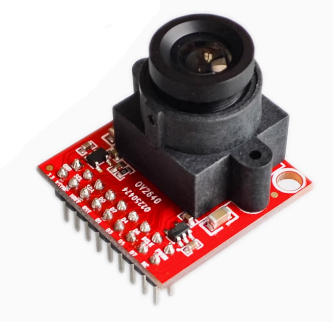
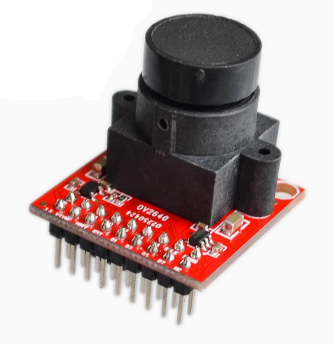
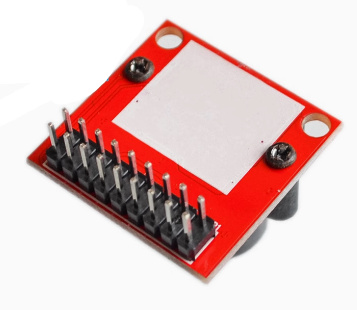
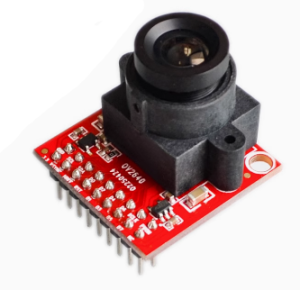
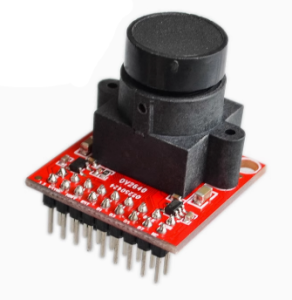
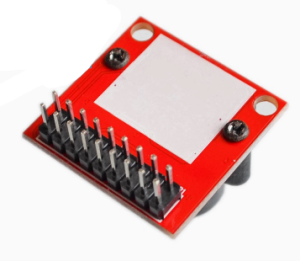
2MP OV2640 Camera Module with STM32F4 Driver (JPEG Output Support) – New Version
The OV2640 Camera Module is a powerful and versatile 2-megapixel (UXGA resolution) image sensor designed for integration with microcontrollers that demand higher resolution and simplified data handling, such as the STM32F4 series and ESP32. This newer version specifically supports outputting images in the JPEG format, which drastically reduces the data bandwidth required between the camera and the host MCU.
By encoding images into JPEG onboard, the module minimizes the memory requirements of the host microcontroller, making complex imaging applications like remote monitoring, object detection, and high-resolution capture feasible even on relatively constrained embedded systems. It includes features like automatic exposure control, automatic gain control, and automatic white balance, ensuring clear, high-quality images with minimal configuration required.
Key Features
High Resolution: Features a 2-megapixel sensor capable of capturing images up to 1600×1200 pixels (UXGA).
Onboard JPEG Encoding: A critical feature that compresses raw image data into the efficient JPEG format internally, significantly reducing bandwidth and memory requirements for the host MCU.
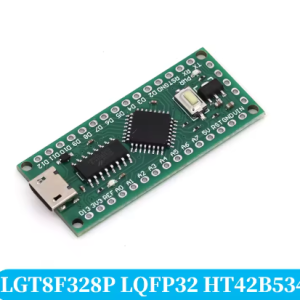
STM32F4 Compatibility: Specifically designed with driver examples and interface compatibility for powerful microcontrollers like the STM32F4, which can easily handle the camera’s output stream.
High Frame Rate: Capable of various frame rates (e.g., up to 15 FPS at UXGA, 30 FPS at SVGA), depending on resolution and configuration.
SCCB/I2C Interface: Configuration settings are managed via the standard two-wire Serial Camera Control Bus (SCCB), compatible with I2C protocol.
Integrated Functions: Automatic Exposure Control (AEC), Automatic Gain Control (AGC), Automatic White Balance (AWB), and more are handled by the chip internally.
Technical Parameters (Specifications)
Parameter
Value/Description
Image Sensor
OmniVision OV2640 CMOS Sensor (1/4 inch)
Effective Pixels
Max 1600 x 1200 (2 Megapixel)
Operating Voltage
3.3V DC (Core 1.3V – 3.0V, I/O 1.7V – 3.3V)
Power Consumption
~125mA active (JPEG mode)
Output Formats
JPEG, YUV/YCbCr 4:2:2, RGB565/555, Grayscale
Interface Type
SCCB (I2C compatible for config), Parallel 8-bit data interface
Lens Mount
Standard M12 mount lens (interchangeable)
Dimensions
Compact module size (e.g., ~28mm x 28mm)
Usage Instructions
The OV2640 connects to a microcontroller using an 8-bit parallel data bus and a 2-wire serial configuration bus (I2C/SCCB). It requires a host MCU with sufficient available GPIO pins and fast interrupt handling capabilities.
Hardware Connection Notes:
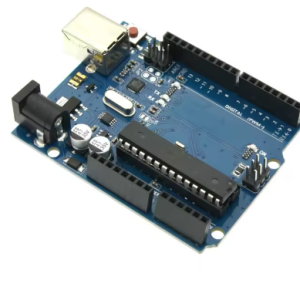
Logic Levels: The module operates at 3.3V logic levels. It is highly compatible with 3.3V microcontrollers like the STM32 or ESP32. Do not connect directly to 5V MCUs like the Arduino Uno without a logic level converter.
Pin Requirements: A significant number of pins are used (8 data pins, 2 I2C pins, VSYNC, HREF, PCLK, XCLK, etc.).
STM32 Integration: This module pairs perfectly with STM32F4 series MCUs, which have hardware support for camera interfaces (DCMI) that significantly simplify data acquisition and speed up processing.
Software & Programming:
Driver Implementation: You will need specific driver code for your microcontroller that handles the SCCB configuration sequences.
JPEG Library: The key is initializing the module to output JPEG format. You will then need a way to store this data, typically onto an SD card module using an appropriate file system library.
Data Acquisition: The host MCU reads the compressed JPEG stream via the parallel interface, typically transferring the data into a RAM buffer or directly to an SD card for storage or later transmission over Wi-Fi/Ethernet.
Q: What is the main advantage of the JPEG output version over basic RGB/YUV?
JPEG compression drastically reduces the file size of the image data. A raw 1600×1200 image is huge in memory; a compressed JPEG version is much smaller, allowing microcontrollers with limited RAM (like most Arduinos/STM32s) to actually capture and save high-resolution images.
Q: Can I use this with an Arduino Uno?
No. An Arduino Uno has insufficient RAM and processing power to handle the data stream from this 2MP sensor. It is intended for more powerful 32-bit microcontrollers like the STM32, ESP32-CAM boards, or specific Arduino Mega implementations with external RAM.
Q: How do I store the images taken by the camera?
The module does not have internal storage. You must interface the camera module with a Micro SD card module via your microcontroller to save images.
Q: I am a business buyer. Is this sensor reliable for a commercial product?
The OV2640 is a popular, cost-effective sensor used widely in entry-level consumer electronics and IoT devices (like ESP32-CAMs). It offers excellent value for low-resolution embedded vision applications, provided you have a capable host MCU (like an STM32F4) to manage the data stream effectively.