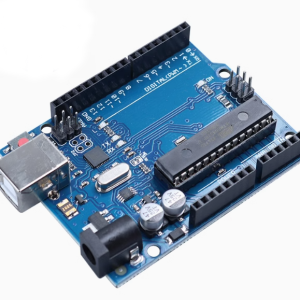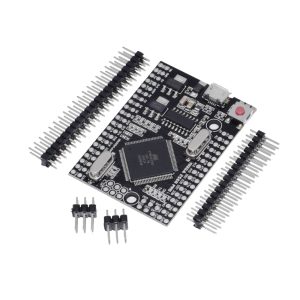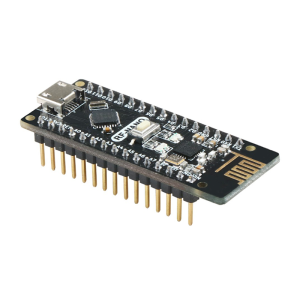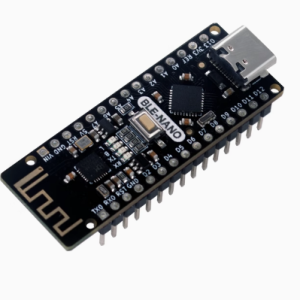
The BBC micro:bit Go is a compact, feature-rich development board designed for coding education, STEM learning, and creative electronics projects. Based on the original Nordic nRF51822 microcontroller, this board packs a powerful ARM Cortex-M0 core, multiple onboard sensors, and a range of built-in features into a pocket-sized form factor that is easy for beginners to use and versatile enough for advanced projects .
The board is built around a Nordic nRF51822 SoC featuring a 16 MHz ARM Cortex-M0 core, paired with 256 KB Flash and 16 KB RAM . This provides reliable processing power for coding projects ranging from simple LED animations to sensor-driven applications. The board also includes a 2.4GHz radio for wireless communication, enabling peer-to-peer and mesh networking between multiple micro:bit boards .
The micro:bit is equipped with a comprehensive set of onboard sensors and input/output devices. It features a 5×5 LED matrix for displaying text, icons, and animations, two programmable buttons (A and B) for user input, and an accelerometer and magnetometer for motion and compass sensing . A temperature sensor allows you to measure ambient conditions, and the LED matrix itself can function as a light sensor for detecting brightness levels . Connectivity options include a Micro USB port for programming and power, a 20-pin edge connector for attaching accessories, and a battery jack for portable power using 2×AAA batteries .
The micro:bit platform is supported by a wide range of development environments. MakeCode offers block-based programming ideal for beginners, while Python (MicroPython) and JavaScript provide text-based options for more advanced users . The board appears as a USB drive when connected to a computer, allowing you to simply drag and drop compiled program files to flash your code .
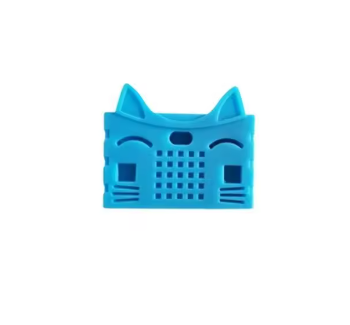
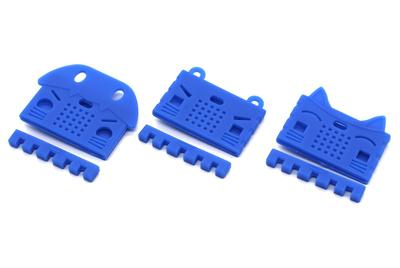
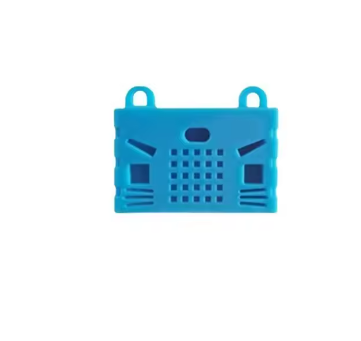
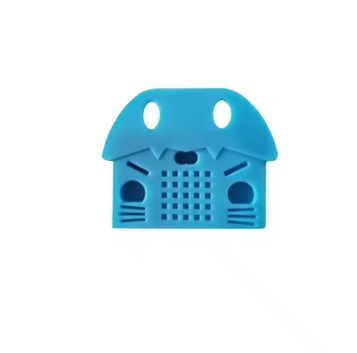
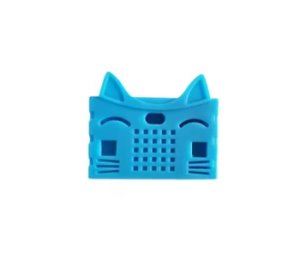
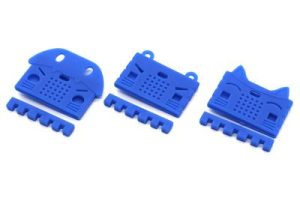
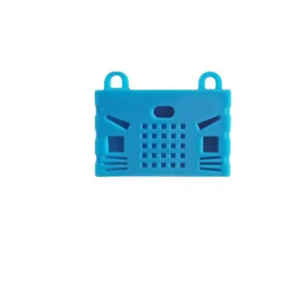
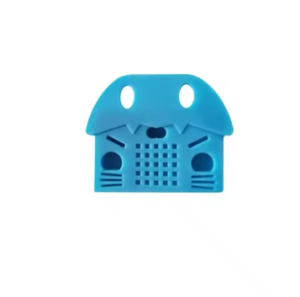
This set includes a silicone protective shell designed to fit the micro:bit board. The shell protects the board from bumps and scratches while keeping all buttons, pins, and connectors accessible. It is compatible with the micro:bit V1 and V2 form factors .
Whether you are a student, teacher, hobbyist, or business purchasing in bulk for education and training, the BBC micro:bit Go offers a reliable, engaging platform for learning and creating.
Features
-
Nordic nRF51822 ARM Cortex-M0 @ 16 MHz — Reliable processing for educational and creative projects .
-
256 KB Flash / 16 KB RAM — Ample memory for coding, sensors, and wireless communication .
-
5×5 LED matrix display — Show text, icons, animations, and sensor data visually .
-
Two programmable buttons (A and B) — For user input and interactive control .
-
Onboard sensors — Accelerometer, magnetometer (compass), and temperature sensor .
-
Wireless communication — 2.4GHz radio for peer-to-peer and mesh networking .
-
Multiple programming options — MakeCode (blocks), Python (MicroPython), and JavaScript .
-
20-pin edge connector — For attaching accessories and expansion boards .
-
Silicone protective shell included — Protects the board while keeping all features accessible .
-
Battery jack for portable use — Runs on 2×AAA batteries for untethered projects .
Technical Specifications
| # | Parameter | Specification |
|---|---|---|
| 1 | Microcontroller | Nordic nRF51822 (ARM Cortex-M0) |
| 2 | Clock Speed | 16 MHz |
| 3 | Flash / RAM | 256 KB / 16 KB |
| 4 | Display | 5×5 LED matrix (25 LEDs) |
| 5 | Sensors | Accelerometer, magnetometer (compass), temperature |
| 6 | Inputs | 2× programmable buttons (A and B) |
| 7 | Wireless | 2.4GHz radio (Bluetooth Low Energy compatible) |
| 8 | Power | Micro USB or 2×AAA battery pack (battery not included) |