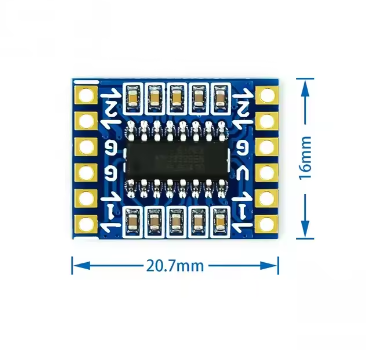
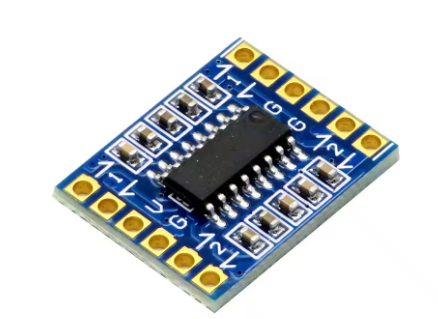
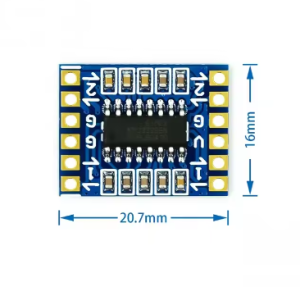
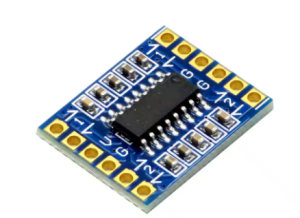
Dual-Channel TTL to RS232 Converter Module (EXAR Chip) – Serial Adapter for Flashing & Debugging (Model: -5)

SKU: FA2045-3
Main Chipset

EXAR (MaxLinear) Industrial Series

Model Number

Model: -5

Channels

Dual-Channel (Two independent TX/RX pairs)

Operating Voltage

3.0V – 5.5V DC

Logic Level (TTL)

3.3V / 5V Fully Compatible

Max Transmission Speed

460 kbps (Typical)

Interface (RS232)

DB9 Female (Industrial Grade)

Interface (TTL)

6-Pin or 8-Pin Header (Model Dependent)

Operating Temp

-40°C to +85°C

Product Description
The Dual-Channel EXAR TTL to RS232 Converter (Model: -5) is a professional-grade serial bridge designed for high-performance data exchange and hardware recovery. Built with a genuine EXAR (MaxLinear) industrial chipset, this module offers two independent communication channels, allowing for simultaneous data monitoring or multi-device management.
Engineered specifically for “flashing” (firmware updates) and deep-system debugging, the Model: -5 provides a stable, noise-resistant link between RS232-level equipment (like PCs and industrial PLCs) and low-voltage TTL logic (3.3V/5V). The EXAR architecture is favored by engineers for its superior timing accuracy and driver strength, ensuring that critical firmware uploads are completed without data loss. Whether you are unbricking network hardware, repairing hard drive controllers, or maintaining factory automation systems, this dual-channel module provides the reliability and versatility required for professional environments.
Key Features
  • Dual-Channel Versatility: Supports two independent sets of TX/RX paths for multi-device debugging or redundant signal monitoring.
  • Genuine EXAR Silicon: Premium industrial chipset provides enhanced signal stability and lower electromagnetic interference (EMI) compared to standard consumer chips.
  • Optimized for Firmware Flashing: High-speed support and precise timing make it the ideal tool for “unbricking” routers, satellite receivers, and industrial controllers.
  • True 3.3V/5V Dual Compatibility: Features an auto-sensing logic interface that safely pairs with 3.3V (Raspberry Pi/STM32) and 5V (Arduino/Industrial PLC) systems.
  • Industrial-Grade Protection: Integrated ±15kV ESD protection on the RS232 side safeguards your sensitive TTL-side microcontrollers from voltage spikes.
  • High Baud Rate Support: Handles communication speeds up to 460kbps (and higher depending on the specific EXAR variant), ensuring rapid data transfer.
Usage & Applications
  • Advanced Firmware Flashing: The primary choice for repairing hard drive firmware, unbricking routers, and flashing automotive ECUs.
  • Industrial PLC Monitoring: Connect multiple serial devices to a single controller for synchronized data logging and diagnostics.
  • Network Hardware Recovery: Access the serial console ports of switches and servers to perform low-level system recovery.
  • Telecommunications: Reliable signal bridging for radio base stations and high-speed modem communication.
  • Lab Equipment Interfacing: Connect high-precision RS232 instruments to modern 3.3V/5V data processing boards.
Q: What is the advantage of the "Dual-Channel" design?

The dual-channel architecture allows you to handle two serial connections simultaneously. This is particularly useful for complex debugging where you need to monitor a device’s output while sending commands to another, or for creating a “pass-through” logger.

Q: Why should I choose the EXAR chipset over a standard MAX3232?

EXAR transceivers are built for industrial stability. They offer better timing performance and can drive longer cable runs with less signal degradation, which is critical during high-speed firmware “flashes” where a single error can fail the update.

Q: Can I use this with a 3.3V Raspberry Pi?

Yes. By powering the module from your device’s 3.3V rail, the logic levels are automatically matched to 3.3V, ensuring your microcontroller pins are safe from high-voltage damage

Q: Is it safe for 5V systems like an Arduino Uno?

 Absolutely. The Model: -5 is designed to handle both 3.3V and 5V logic seamlessly, making it a “universal” tool for almost any microcontroller.

Q: My computer doesn't see the module—do I need a driver?

This is a hardware-level level converter, so no drivers are required for the module itself. However, if you are using a USB-to-Serial adapter cable to connect this to your PC, ensure that the cable’s drivers are correctly installed