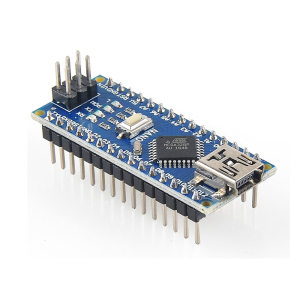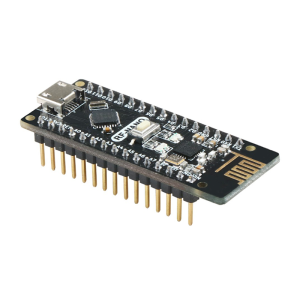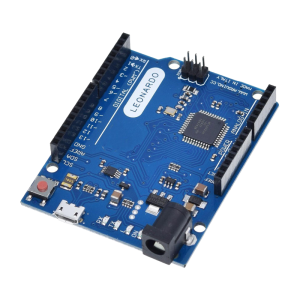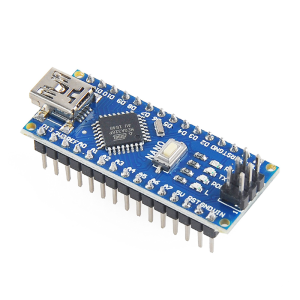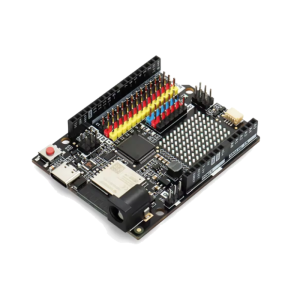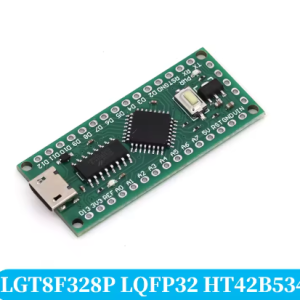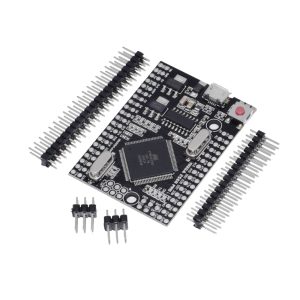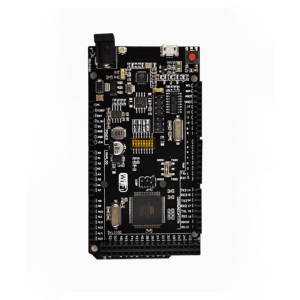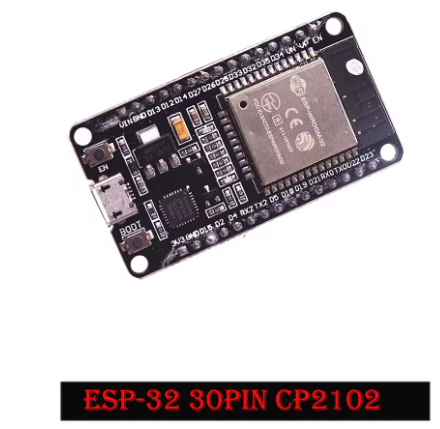
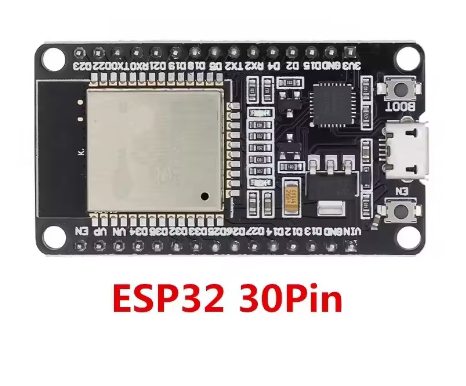
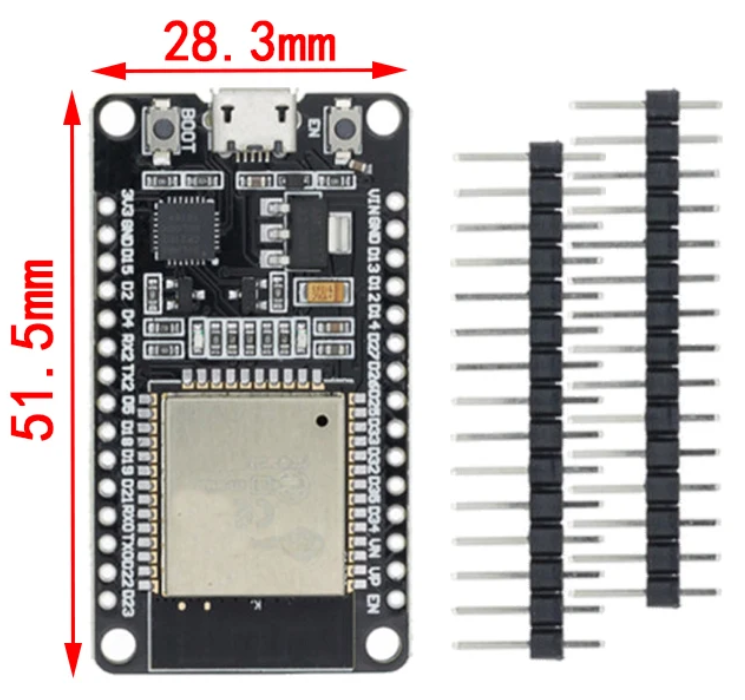
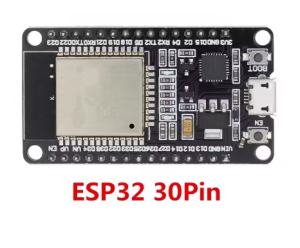
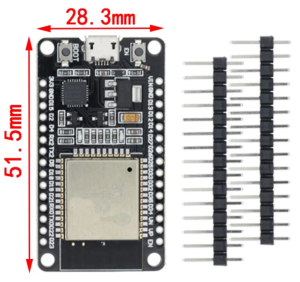
The Espressif ESP-WROOM-32 (30-pin) development board, featuring the CH9102 USB-to-UART bridge, is a compact, ultra-low-power, and versatile solution for IoT projects. It integrates powerful dual-core processing with both Wi-Fi and Bluetooth capabilities, making it a highly effective platform for both individual developers and commercial applications.
Description
The ESP-WROOM-32 development board is an efficient, highly integrated platform designed for easy prototyping and deployment of connected devices. At its core is the robust ESP32-D0WDQ6 (or similar module variant like ESP-32S) chip, which houses a 32-bit Xtensa® LX6 dual-core microprocessor operating at up to 240 MHz. This power allows the board to handle demanding tasks such as voice recognition, real-time data processing, and managing diverse sensor inputs.
This board provides comprehensive wireless functionality, supporting 2.4 GHz dual-mode Wi-Fi (802.11b/g/n) and Bluetooth (v4.2 BR/EDR and BLE). The coexistence of both technologies offers maximum flexibility in network design, allowing communication with local networks, cloud services, and mobile devices.
A key differentiator of this specific variant is the use of the CH9102 USB-to-UART bridge chip. The CH9102 provides a stable and fast serial communication interface for programming and debugging via the onboard Micro-USB port. The 30-pin form factor ensures the board is compact and easy to integrate into small projects while remaining breadboard-friendly.
Designed with power efficiency as a priority, the ESP32 chip leverages 40nm ultra-low-power technology and offers sophisticated power management modes, including a deep sleep mode that extends battery life in portable and wearable applications to the maximum possible duration. It is compatible with popular development environments such as the Arduino IDE, MicroPython, and the native ESP-IDF, ensuring wide community support and extensive resources.
Features
- Powerful Dual-Core Processing: Two Tensilica LX6 cores, operating at up to 240 MHz, for high performance.
- Integrated Wireless Connectivity: Onboard 2.4 GHz Wi-Fi (802.11b/g/n) and Bluetooth v4.2 BR/EDR and BLE.
- Ultra-Low Power Consumption: Multiple power modes, including a deep sleep mode drawing less than 5 µA.
- Reliable USB Interface: Uses the stable CH9102 USB-to-UART bridge for efficient programming and debugging.
- Rich Peripherals: Includes 34 programmable GPIOs, 12-bit SAR ADCs, 8-bit DACs, I²C, I²S, SPI, UART, PWM, and capacitive touch sensors.
- Compact Design: 30-pin configuration offers a small footprint ideal for final product integration.
- Versatile Programming: Compatible with the Arduino IDE, ESP-IDF, and MicroPython.
- Robust Security: Supports secure boot, flash encryption, and TLS 1.2 for secure IoT communications.
Parameters
| Feature | Detail |
|---|---|
| Microcontroller | ESP32-D0WDQ6 (within the WROOM-32/ESP-32S module) |
| Processor Cores | Xtensa dual-core 32-bit LX6 |
| Clock Speed | Adjustable from 80 MHz to 240 MHz |
| SRAM | 520 KB |
| Flash Memory | 4 MB SPI Flash |
| Operating Voltage | 3.3V |
| Input Voltage (via USB) | 5V DC |
| Connectivity | Wi-Fi (802.11b/g/n), Bluetooth 4.2 BR/EDR & BLE |
| USB Interface Chip | CH9102 (USB-to-UART bridge) |
| Pin Count | 30 Pins |
| Operating Temperature | -40°C to +85°C (module level) |