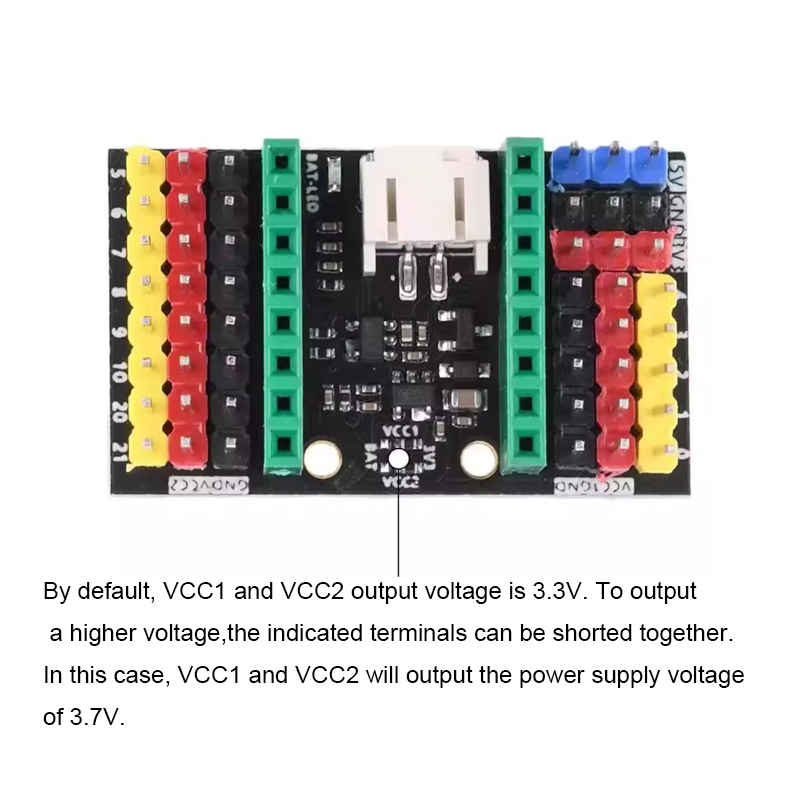
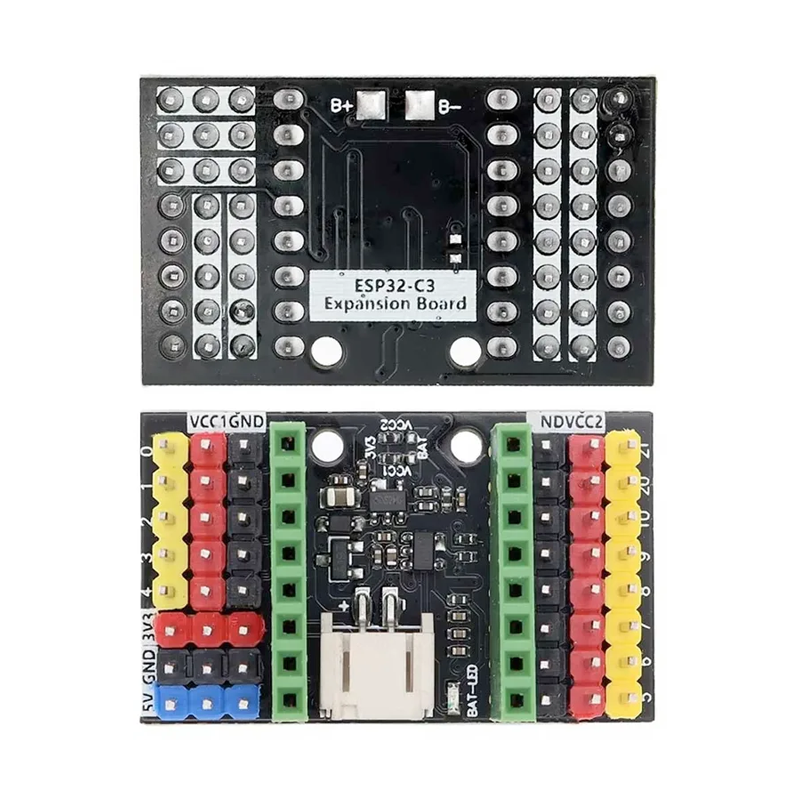
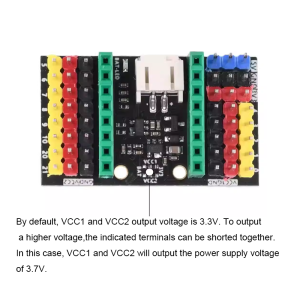
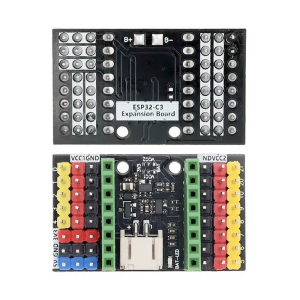
The ESP32 SuperMini Expansion Board is a dedicated breakout adapter designed to simplify wiring and expand the connectivity of ESP32-C3, ESP32-S3, ESP32-C6, and ESP32-H2 SuperMini development boards. The SuperMini series is beloved for its ultra-compact form factor, but that same compactness makes it challenging to connect multiple sensors, power sources, and peripherals using the board‘s tightly spaced header pins. This expansion board solves that problem by providing a secure socket for the SuperMini and duplicating its pins onto standard 2.54mm pitch headers with clear silkscreen labeling.
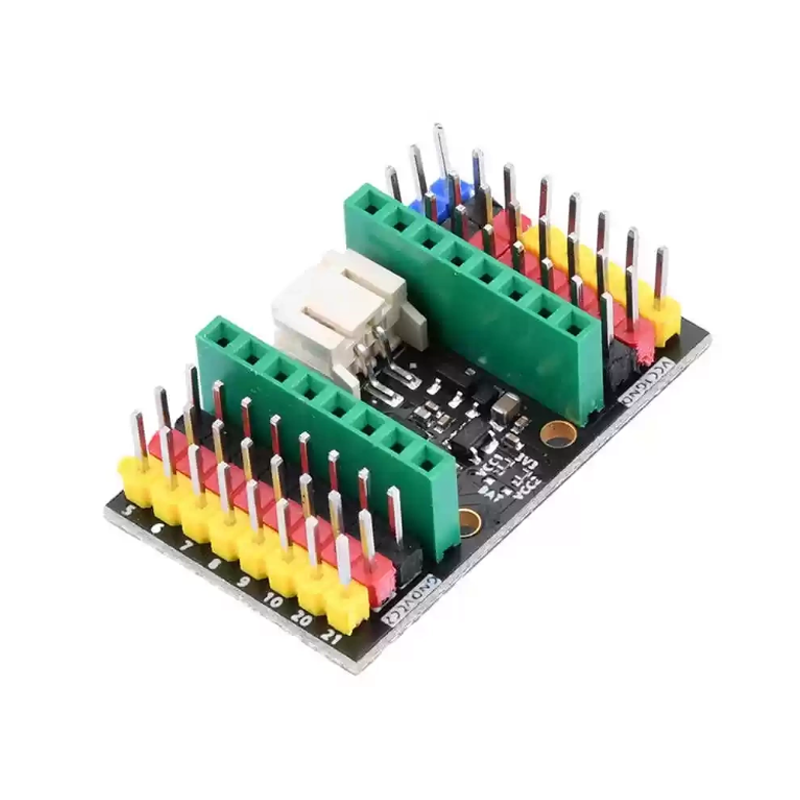
The expansion board features a central female socket where the SuperMini board plugs in directly, similar to inserting an integrated circuit into a socket . The SuperMini’s available GPIO pins are then replicated on rows of male headers along both sides of the adapter, with each pin clearly labeled by GPIO number and signal type . This means you can connect multiple sensors, power modules, and communication interfaces without soldering directly to the tiny SuperMini board.
Color-coded header rows and printed silkscreen on the PCB make it easy to identify power rails, ground pins, and signal lines at a glance. Dedicated breakout points for 5V, 3.3V, and multiple GND connections eliminate the need for messy jumper wire daisy-chains when powering several modules simultaneously.
The expansion board also includes a 2-pin PH2.0 connector for a 3.7V lithium battery, along with an onboard LTH7R charging chip (equivalent to LTC4054) for battery management . A green status LED indicates charging state. The VCC1 and VCC2 power output pins can be configured to supply either 3.3V or direct battery voltage via jumper pads on the PCB, giving you flexibility for different peripheral power requirements .
The board is compatible with the most popular SuperMini variants, including the ESP32-C3 SuperMini (16 pins, 2.54mm pitch), ESP32-S3 SuperMini (18 pins), ESP32-C6 SuperMini (20 pins), and ESP32-H2 SuperMini (18 pins) . The socket accommodates boards with 600 mil row spacing (approximately 15.24mm between pin rows) .
Whether you are prototyping a multi-sensor IoT node, building a battery-powered portable device, or simply want to make your SuperMini projects easier to wire and debug, this expansion board provides a practical, organized solution that preserves the SuperMini’s compact advantages while adding the convenience of full-size breakout headers.
Features
-
Direct plug-in socket — SuperMini board inserts into a central female header socket, no soldering required
-
Full pin breakout — All available SuperMini GPIO pins duplicated onto standard 2.54mm pitch male headers
-
Clear silkscreen labeling — GPIO numbers and signal types printed on the PCB for easy identification
-
Color-coded header rows — Visual differentiation between power, ground, and signal pins
-
Multiple power and ground rails — Dedicated 5V, 3.3V, and GND breakout points for powering multiple modules
-
Lithium battery support — 2-pin PH2.0 connector with onboard LTH7R charging chip for 3.7V LiPo batteries
-
Configurable VCC output — VCC1 and VCC2 jumper pads selectable between 3.3V and battery voltage
-
Broad SuperMini compatibility — Works with ESP32-C3, ESP32-S3, ESP32-C6, and ESP32-H2 SuperMini variants
Technical Specifications
| # | Parameter | Specification |
|---|---|---|
| 1 | Compatibility | ESP32-C3/S3/C6/H2 SuperMini (600 mil row spacing) |
| 2 | Socket Type | Central female header for SuperMini plug-in |
| 3 | Breakout Headers | Standard 2.54mm (0.1″) pitch male pins |
| 4 | Power Outputs | 5V, 3.3V, GND breakout rails |
| 5 | Battery Connector | 2-pin PH2.0 for 3.7V LiPo |
| 6 | Charging Chip | LTH7R (LTC4054 equivalent) |
| 7 | VCC Configuration | VCC1/VCC2 jumper-selectable (3.3V or battery) |
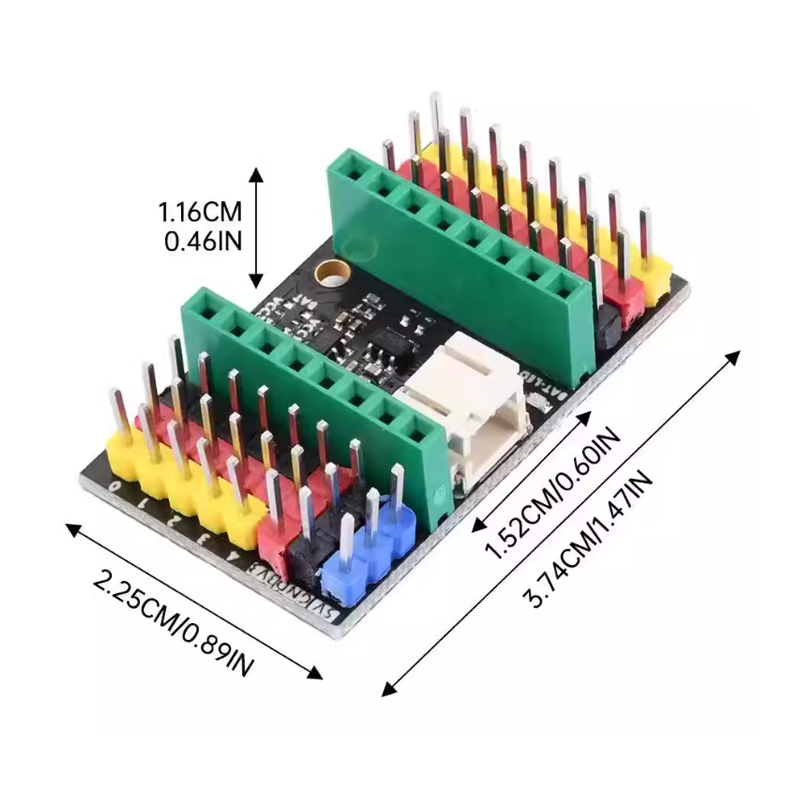
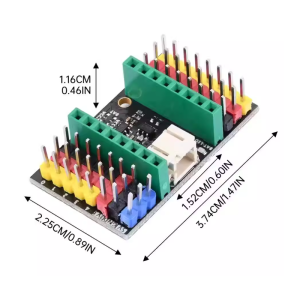
| 8 | Board Dimensions | Approximately 37.3 × 23.3 × 11.7 mm |