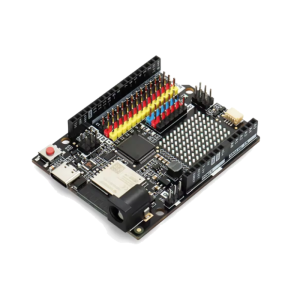
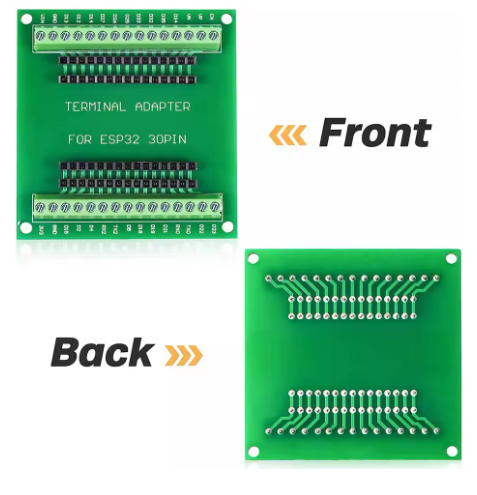
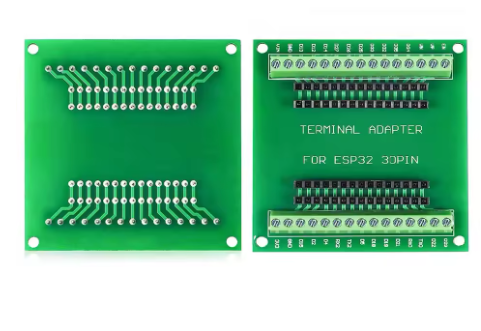
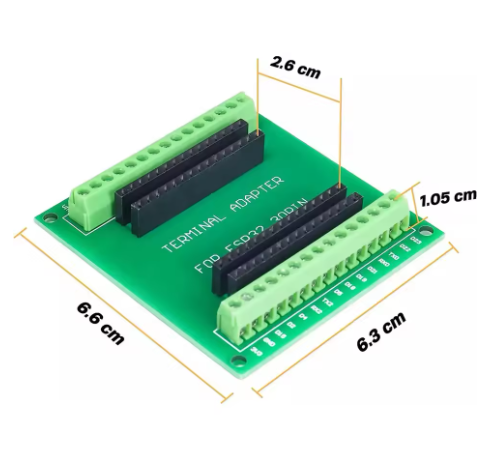
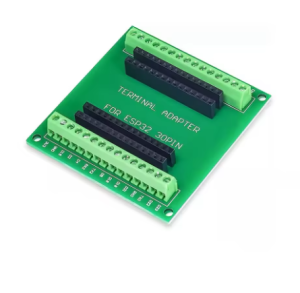
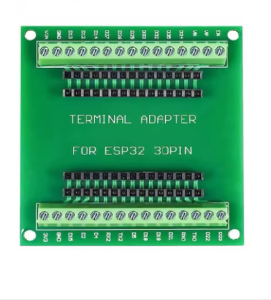
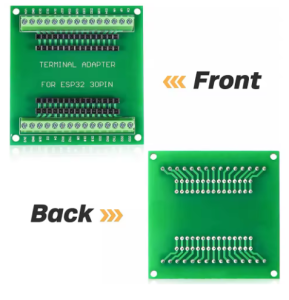
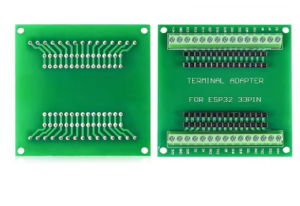
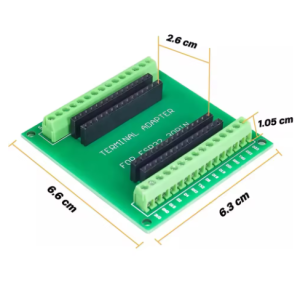
This 30-Pin ESP32 Development Board with Matching Baseboard (Expansion Shield) is a versatile, high-stability hardware kit designed to simplify IoT prototyping. By combining the industry-standard ESP32-DevKitC with a dedicated power-management baseboard, it eliminates the need for messy breadboards and unstable jumper wires.
Product Description
The ESP32-DevKitC 30-Pin Kit is an entry-level yet powerful solution for wireless connectivity. The core board features the ESP32-WROOM-32 module, providing a dual-core 240MHz processor with integrated Wi-Fi and Dual-mode Bluetooth.
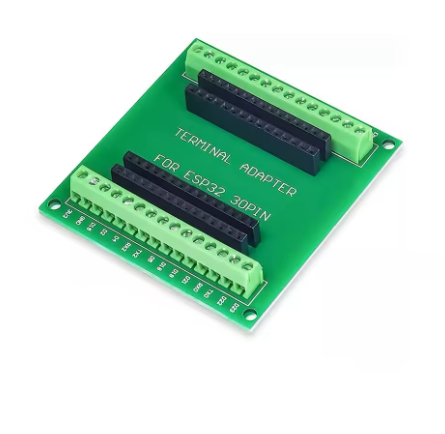
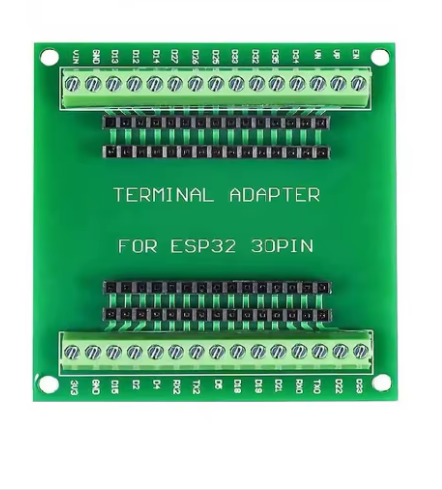
The accompanying Baseboard (Expansion Shield) is the highlight of this kit. It breaks out all 30 pins into easy-to-use headers and includes a dedicated DC Power Jack and specialized voltage regulation. This allows the ESP32 to drive power-hungry peripherals—such as servos, motors, and large LED displays—that would normally crash a board powered only by a computer’s USB port. This combination is highly recommended for industrial prototyping and educational environments where durability is key.
Key Features
- Dual-Core Processing: Powered by the Xtensa® 32-bit LX6 microprocessor, capable of handling complex tasks independently.
- Robust Power Management: The baseboard accepts a wide range of DC input (6.5V–12V) and provides stable 5V and 3.3V rails to all peripheral pins.
- Plug-and-Play Headers: Every GPIO pin is broken out alongside dedicated VCC and GND pins, allowing for “one-cable” sensor connections.
- Hybrid Connectivity: Supports Wi-Fi 802.11 b/g/n and Bluetooth (Classic + BLE) simultaneously.
- Breadboard Eliminator: The baseboard includes four mounting holes (3mm) for permanent installation in project boxes or industrial panels.