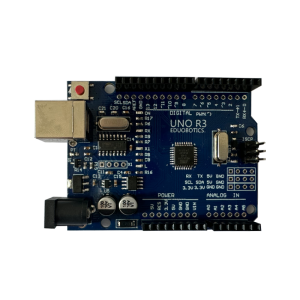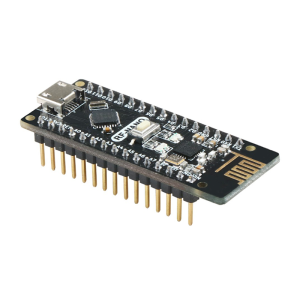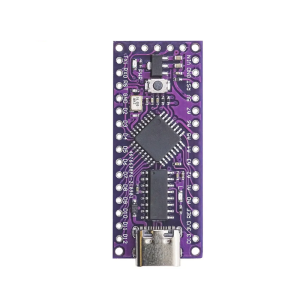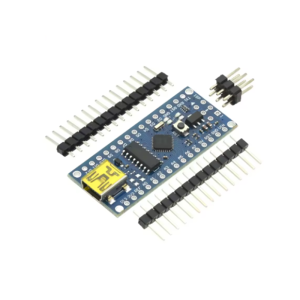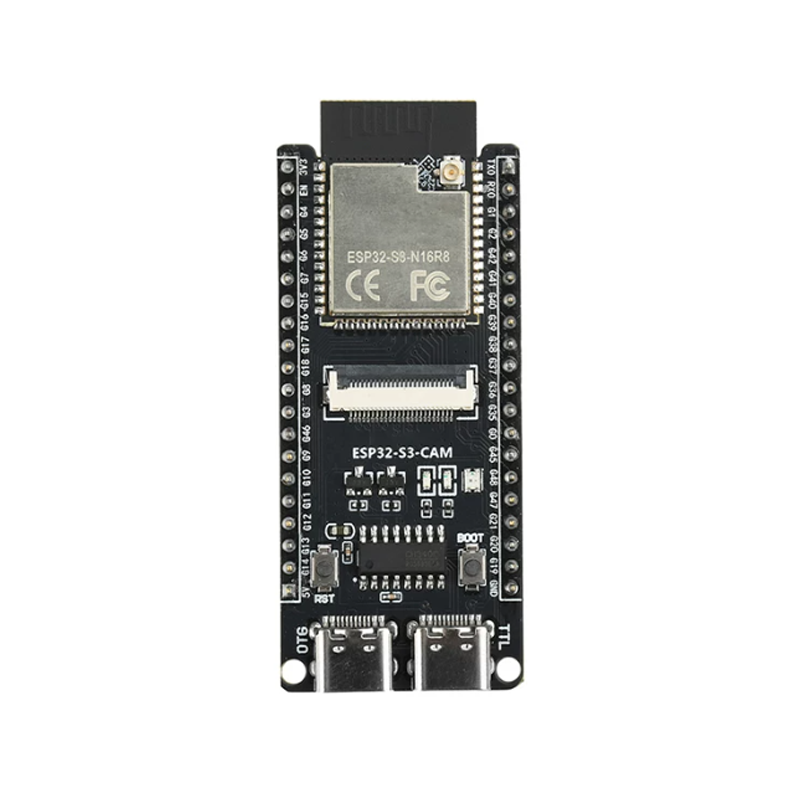
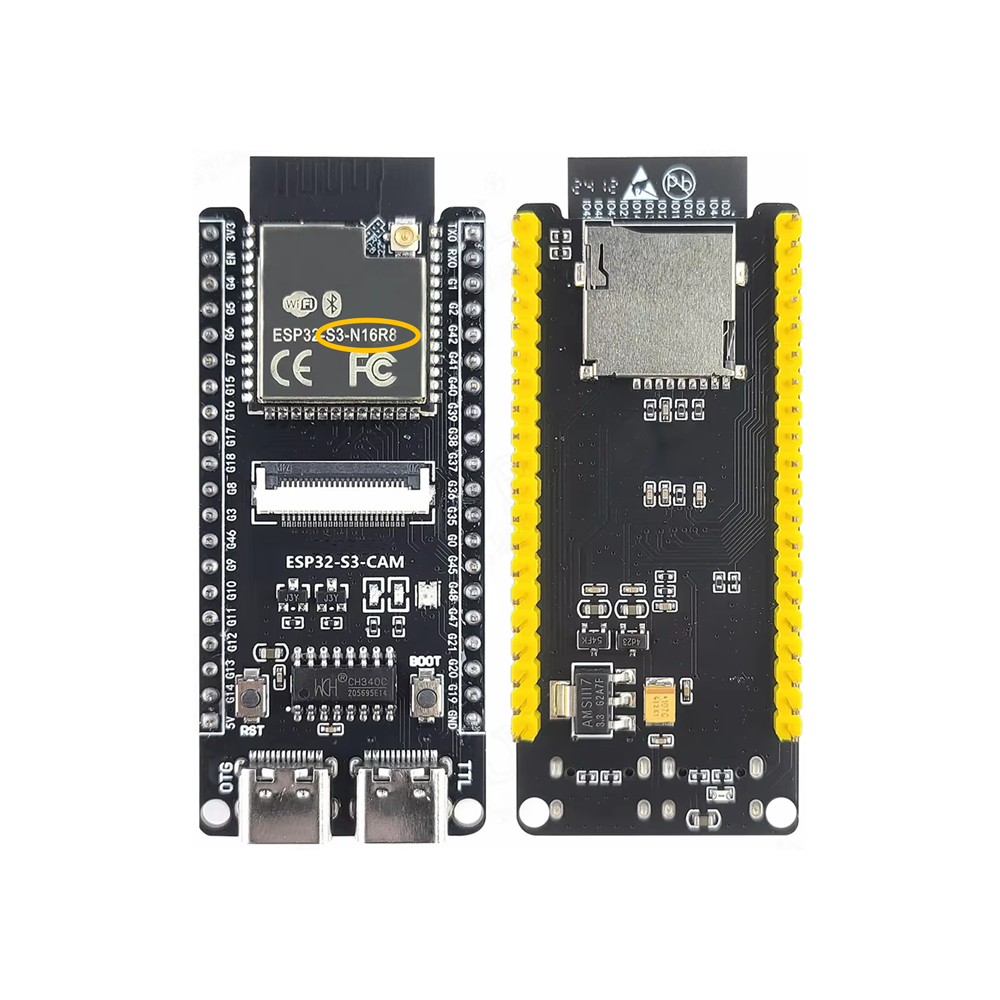
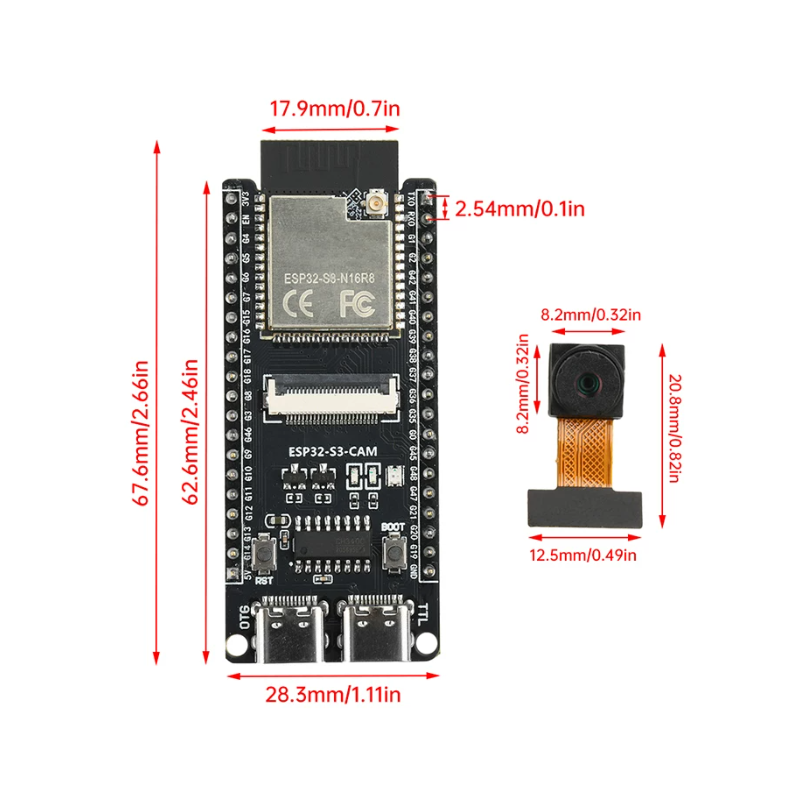
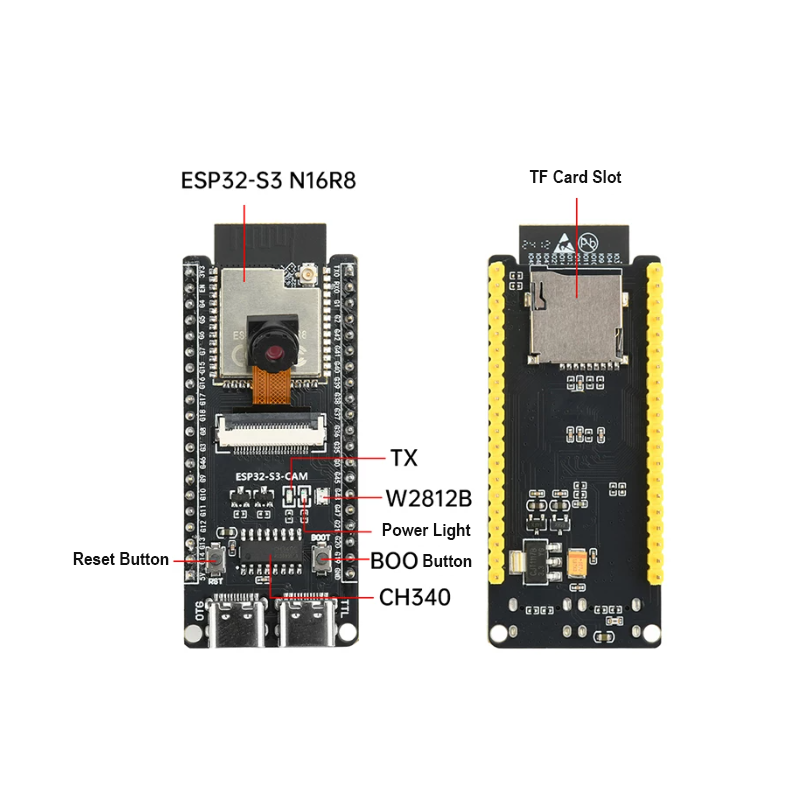
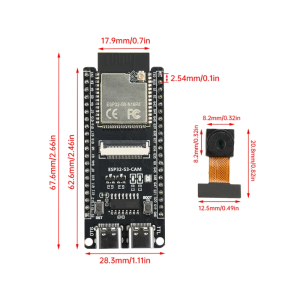
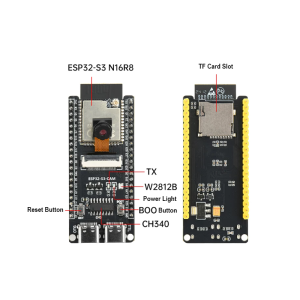
ESP32-S3-CAM using ESP32-S3-N16R8 development board 40pins with IPEX antenna mount CH340C Chip 2×Type-C interface

SKU: FA1053-0-1-12-1
Module

ESP32-S3-WROOM-1 N16R8

Processor

Dual-core Xtensa LX7, up to 240 MHz

Memory

16 MB Flash + 8 MB PSRAM

Wireless

WiFi 802.11 b/g/n + Bluetooth 5 (LE/Mesh)

USB Interfaces

2× Type-C (CH340C UART + native USB OTG)

Camera Interface

24-pin DVP (OV2640/OV5640 compatible)

Antenna

Onboard PCB + IPEX/U.FL external mount

Pin Count

40 pins (2×20 headers)

The ESP32-S3-CAM Development Board is a high-performance, camera-ready IoT platform built around the ESP32-S3-WROOM-1 N16R8 module. Designed for embedded vision, AIoT applications, and wireless monitoring projects, this board combines the processing power of the ESP32-S3 with a dedicated camera interface, dual USB-C connectivity, and flexible antenna options in a compact, breadboard-friendly form factor.

At its core is the ESP32-S3-WROOM-1 N16R8 module, featuring a dual-core Xtensa LX7 32-bit processor running at up to 240 MHz, with 16 MB Flash and 8 MB PSRAM . This generous memory configuration is essential for camera applications, allowing you to buffer high-resolution images, run complex AI models, or stream video without memory constraints. The module supports 2.4GHz WiFi (802.11 b/g/n) and Bluetooth 5 (LE + Mesh), providing versatile wireless options for connected devices .

The board features dual Type-C interfaces for maximum development flexibility. One port is dedicated to UART programming and debugging via the onboard CH340C USB-to-serial chip, which requires a one-time driver installation on most systems . The second Type-C port connects directly to the ESP32-S3’s native USB (GPIO19/20), supporting USB OTG functionality — you can use it to emulate HID devices, access external storage, or debug via the ESP32-S3’s built-in USB Serial/JTAG interface . This separated design means you can program via UART while using native USB for other purposes, without cable swapping.

The 40-pin layout exposes a comprehensive set of GPIOs on standard 0.1-inch headers along both sides of the board, making it ideal for connecting sensors, displays, and peripherals . For wireless connectivity, the board includes both an onboard PCB antenna and an IPEX/U.FL antenna mount, allowing you to connect an external antenna for extended range in challenging RF environments . A dedicated 24-pin DVP camera interface supports popular camera modules including the OV2640 (2MP) and OV5640 (5MP), covering everything from basic image capture to high-resolution photography .

The ESP32-S3’s AI acceleration capabilities, including vector instructions, make this board well-suited for edge AI applications such as image recognition, voice wake-word detection, and object classification . Development is fully supported through Arduino IDE, ESP-IDF, and MicroPython, with extensive community libraries including the esp32-camera library for rapid camera project development .

Whether you are building a smart doorbell, a remote surveillance system, an AI vision prototype, or an IoT camera device, the ESP32-S3-CAM Development Board provides a powerful, well-supported platform that balances processing performance, memory capacity, and camera readiness.


Features

  • ESP32-S3-WROOM-1 N16R8 module — dual-core Xtensa LX7 @ 240 MHz with 16 MB Flash + 8 MB PSRAM .

  • Dual Type-C interfaces — one for UART programming (CH340C), one for native USB OTG .

  • CH340C USB-to-serial chip — stable, widely supported UART programming and serial communication .

  • 40-pin GPIO breakout — comprehensive pin access on standard 0.1″ headers .

  • IPEX antenna mount — supports external antenna for extended wireless range .

  • 24-pin DVP camera interface — compatible with OV2640, OV5640, and other DVP cameras .

  • AI acceleration — vector instructions for neural network inference and edge AI applications .

  • Wireless connectivity — WiFi 802.11 b/g/n + Bluetooth 5 (LE/Mesh) .

  • PSRAM for camera buffering — 8 MB PSRAM essential for high-resolution image processing .

  • Wide development support — Arduino IDE, ESP-IDF, and MicroPython compatible .


Technical Specifications 

# Parameter Specification
1 Module ESP32-S3-WROOM-1 N16R8
2 Processor Dual-core Xtensa LX7, up to 240 MHz
3 Memory 16 MB Flash + 8 MB PSRAM
4 Wireless WiFi 802.11 b/g/n + Bluetooth 5 (LE/Mesh)
5 USB Interfaces 2× Type-C (CH340C UART + native USB OTG)
6 Camera Interface 24-pin DVP (OV2640/OV5640 compatible)
7 Antenna Onboard PCB + IPEX/U.FL external mount
8 Pin Count 40 pins (2×20 headers)

Usage

Getting Started

  1. Install the CH340C driver — required on most systems for first-time UART use .

  2. Connect via UART Type-C port — use the port labeled UART or COM for programming and serial monitoring .

  3. Select the development environment — Arduino IDE, ESP-IDF, or PlatformIO.

  4. Configure board parameters — select “ESP32S3 Dev Module”, set PSRAM to “OPI PSRAM”, and Flash Size to 16MB .

  5. Connect the camera — attach a compatible DVP camera (OV2640/OV5640) to the 24-pin FPC connector .

  6. Upload and test — use the CameraWebServer example from the esp32-camera library to test the camera and WiFi streaming .

Camera Configuration Notes

  • PSRAM is essential — the 8 MB PSRAM is required for high-resolution camera operation and JPEG buffering .

  • Camera model selection — use CAMERA_MODEL_ESP32S3_EYE or the appropriate model definition for your camera .

  • Pin mapping — camera pin assignments vary by board revision. Verify against your specific board’s documentation .

Typical Applications

  • AI vision prototyping — image recognition and object detection with TensorFlow Lite .

  • IoT surveillance cameras — WiFi streaming and remote monitoring .

  • Smart doorbells and access control — face detection and image capture.

  • Edge AI projects — voice wake-word detection and image classification .

  • Robotics vision — camera feedback for navigation and object tracking.

  • OEM product development — camera-enabled IoT devices for commercial applications.

Notes for Business Buyers

  • Dual Type-C flexibility — reduces cable swapping during development and debugging .

  • IPEX antenna mount — enables extended range for deployments in challenging RF environments .

  • N16R8 configuration — 16 MB Flash + 8 MB PSRAM provides ample memory for AI and camera applications .

  • Suitable for bulk purchasing — ideal for product development teams, IoT integrators, and educational institutions.

Q: What is the difference between this board and the standard ESP32-S3-N16R8 development board?

The ESP32-S3-CAM adds a 24-pin DVP camera interface, an IPEX antenna mount, and a 40-pin layout optimized for camera projects . The standard N16R8 board lacks the camera connector.

Q: Which camera modules are compatible?

The board supports OV2640 (2MP), OV5640 (5MP), and other DVP-interface cameras . The 24-pin FPC connector accepts standard camera modules.

Q: What is the difference between the two Type-C ports?

One port is for UART programming via the CH340C chip. The other connects to the ESP32-S3’s native USB for OTG functionality, debugging, or USB device emulation .

Q: Do I need to install a driver for the CH340C?

Yes. On most operating systems, a one-time CH340C driver installation is required before the UART port is recognized .

Q: How do I configure the board in Arduino IDE?

Select “ESP32S3 Dev Module”, set PSRAM to “OPI PSRAM”, and Flash Size to “16MB” .

Q: Is PSRAM required for camera operation?

Yes. The 8 MB PSRAM is essential for high-resolution image capture and JPEG buffering. Without PSRAM, camera resolution and performance will be severely limited .

Q: Can I use an external antenna with this board?

Yes. The board includes an IPEX/U.FL antenna mount for connecting an external 2.4GHz antenna, improving range in challenging RF environments .

Q: What AI capabilities does this board support?

The ESP32-S3 includes vector instructions that accelerate neural network inference. It supports TensorFlow Lite Micro, ESP-WHO, and ESP-SR for image recognition and voice processing .

Q: Which development environments are supported?

The board supports Arduino IDE (with esp32-camera library), ESP-IDF, and MicroPython .

Q: Can I purchase in bulk for a product development project?

Yes. This board is suitable for both individual users and business purchasing, including product development, IoT integration, and volume production.