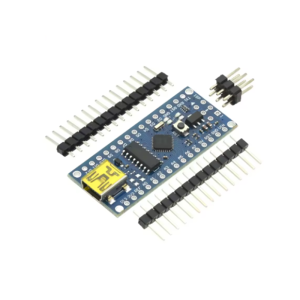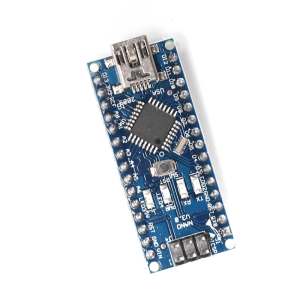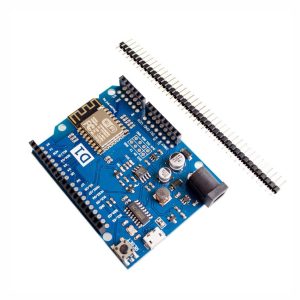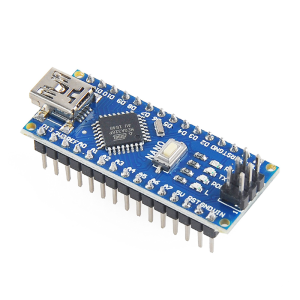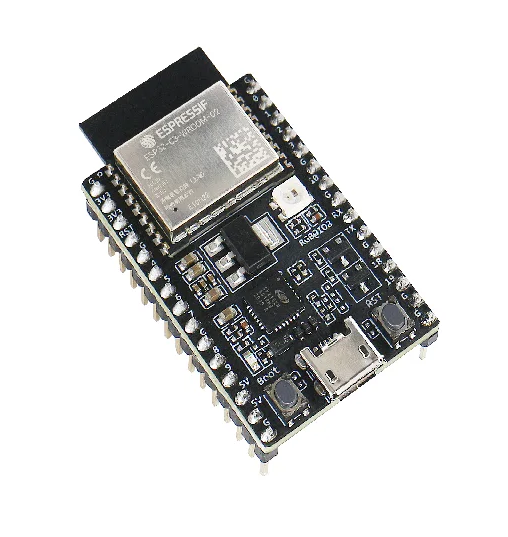
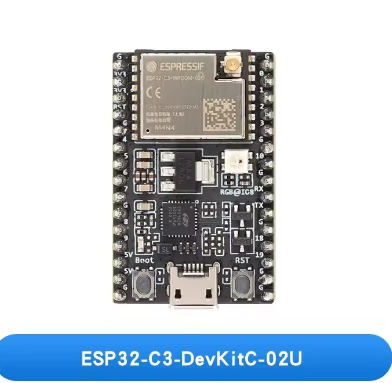
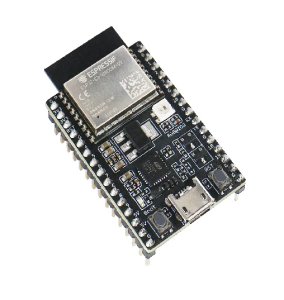
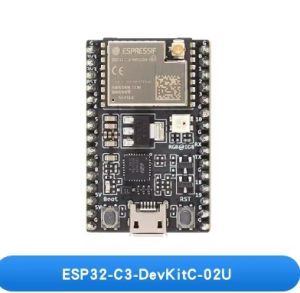
The ESP32-C3-DevKitC-02U is a entry-level, highly secure development board powered by the ESP32-C3-WROOM-02U module. Designed for the 2026 IoT market, this board is built around a RISC-V single-core processor and features a specialized U.FL connector for an external antenna, making it the premier choice for projects requiring superior wireless range or installation inside metal enclosures.
Long Description
The ESP32-C3-DevKitC-02U represents the modern standard for secure, low-power IoT. Unlike traditional ESP32 modules that use an onboard PCB antenna, the “02U” variant is equipped with a U.FL (IPEX) connector, allowing users to attach high-gain external antennas to significantly extend Wi-Fi and Bluetooth LE range.
Under the hood, it features a 160MHz RISC-V processor that balances high performance with industry-leading energy efficiency. For business purchasers, the “C3” series is highly attractive due to its advanced security features, including Secure Boot and Flash Encryption, which provide a “Root of Trust” for commercial applications. For individual makers, it offers a cost-effective, breadboard-friendly platform that is fully compatible with the Arduino ecosystem, perfect for smart home sensors and wearable prototypes that require compact, high-range connectivity.
Key Features
- External Antenna Support: Features a U.FL/IPEX connector for external antenna attachment, ideal for long-range or metal-housed applications.
- RISC-V Architecture: Powered by a 32-bit RISC-V single-core processor (up to 160MHz).
- Dual Wireless Stack: Integrated 2.4GHz Wi-Fi and Bluetooth 5 (LE) with long-range support.
- Advanced Security: Hardware accelerators for AES, SHA, RSA, and a Random Number Generator (RNG), plus Secure Boot and Flash Encryption.
- Compact Breadboard Design: Most I/O pins are broken out to the pin headers on both sides for easy interfacing and prototyping.