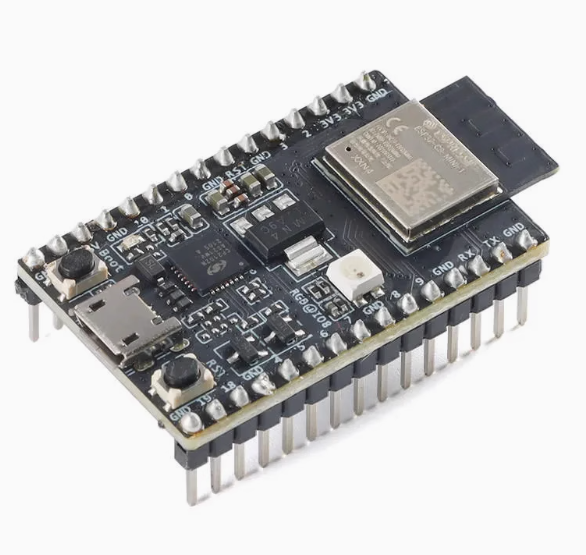
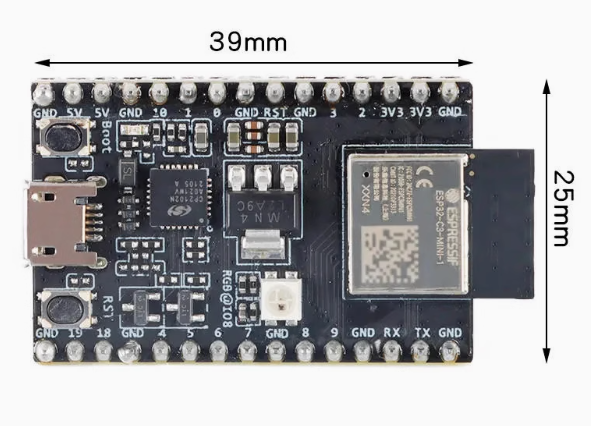
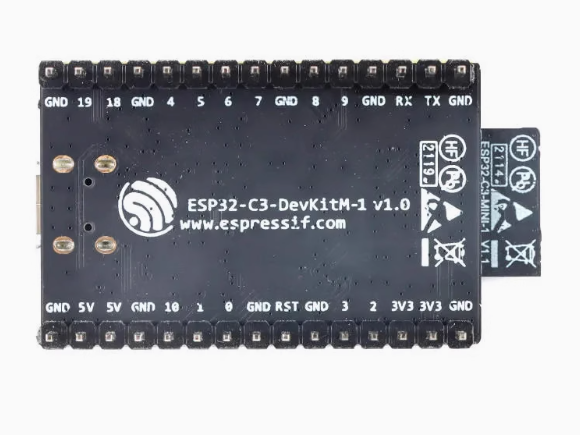
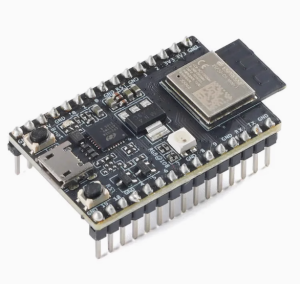
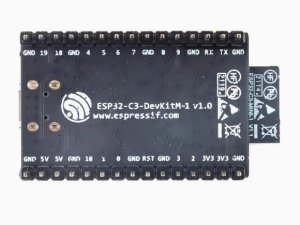
Espressif ESP32-C3-DevKitM-N4X Development Board – Featuring ESP32-C3-WROOM-02 Module (Wi-Fi & Bluetooth LE)

SKU: FA1054-1
Microcontroller

ESP32-C3-MINI-1 (RISC-V)

Clock Speed

160 MHz

Flash Memory

4MB (32Mbit) SPI Flash

SRAM

400 KB (16 KB for cache)

Wireless

Wi-Fi 4 (802.11 b/g/n), Bluetooth 5.0 LE

Operating Voltage

3.3V (Logic Level)

Input Voltage

5V via Micro-USB or VIN pin

I/O Pins

15–22 GPIOs (depending on configuration)

Interfaces

UART, SPI, I2C, I2S, ADC, PWM, USB-to-Serial

The ESP32-C3-DevKitM-1-N4 (often referred to as the N4X variant in industrial purchasing) is a compact, entry-level development board utilizing the ESP32-C3-MINI-1 module. Built on a 32-bit RISC-V architecture, it is designed for the 2026 IoT era, providing a highly secure and cost-effective solution for Wi-Fi and Bluetooth Low Energy (BLE 5.0) applications.
Long Description
The ESP32-C3-DevKitM-1 is the gold standard for secure, low-power connectivity. Powered by a single-core RISC-V processor running at 160MHz, it offers a modern alternative to the older Xtensa-based ESP32 models, focusing on energy efficiency and a smaller physical footprint. The “MINI” module design makes this board exceptionally breadboard-friendly, leaving ample space for peripheral wiring.
For business purchasers, the ESP32-C3 series is a strategic choice for high-volume commercial deployments. It features industrial-grade security with Secure Boot and Flash Encryption, ensuring that proprietary firmware remains protected. For individual makers, it provides an affordable entry point into the world of RISC-V, offering full compatibility with the Arduino IDE and MicroPython for smart home sensors, wearables, and automation projects.
Key Features
  • Modern RISC-V Core: Features a 32-bit RISC-V single-core processor, balancing high performance with ultra-low power consumption.
  • Dual Wireless Connectivity: Integrated 2.4 GHz Wi-Fi (802.11 b/g/n) and Bluetooth 5 (LE) with long-range support.
  • Enhanced Security: Hardware cryptographic accelerators for AES-128/256, SHA, RSA, and HMAC, alongside Secure Boot and Flash Encryption.
  • Compact “MINI” Design: Optimized pin layout for small-scale prototypes and embedding into compact commercial housings.
  • Breadboard Friendly: All essential GPIO pins are broken out to 0.1″ pitch headers for easy experimentation.
Usage Instructions
  1. Hardware Connection: Connect the board to your workstation via a Micro-USB data cable.
  2. Driver Setup: Ensure you have the appropriate USB-to-Serial driver installed (typically CH340 or CP2102).
  3. Software Environment:
    • Open the Arduino IDE (Version 2.x recommended).
    • Navigate to Boards Manager and install the “ESP32” package by Espressif.
    • Select “ESP32-C3 Dev Module” from the board list.
  4. Coding: Use standard Arduino libraries or the ESP-IDF for professional-grade development.
  5. Flashing: Most boards feature auto-reset circuitry. If the upload fails, hold the BOOT button, tap RESET, and then release BOOT to enter manual download mode.
Q: What makes the C3 different from the original ESP32?

The C3 uses a RISC-V core, which is more energy-efficient and cost-effective. It also supports Bluetooth 5.0 (LE), which offers better range and stability compared to the older Bluetooth 4.2.

Q: Can this board be used for Matter-compliant devices?

Yes. The ESP32-C3 has the necessary Wi-Fi and BLE hardware to support the Matter protocol, making it a favorite for 2026 smart home development.

Q: Does it have a built-in antenna?

Yes, the ESP32-C3-MINI-1 module includes a high-performance onboard PCB antenna, so no external antenna is required for standard operation.

Q: Is it safe to connect 5V sensors directly to the pins?

No. Like all ESP32 chips, the GPIO pins are 3.3V logic only. Supplying 5V to a data pin will likely destroy the board. Use a logic level shifter for 5V components.

Q: Is this board suitable for battery-powered projects?

Highly suitable. The RISC-V core is optimized for low-power operation. In Deep Sleep mode, the board consumes very little current (approx. 5μA), allowing it to run for months on a single Li-Po battery.