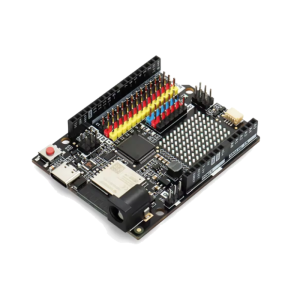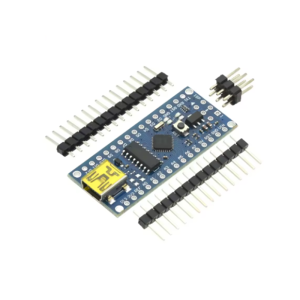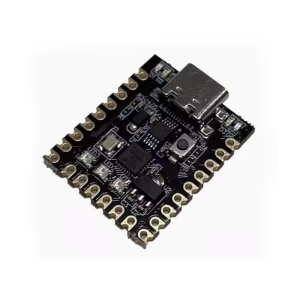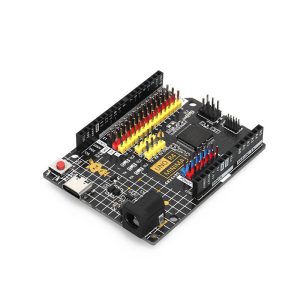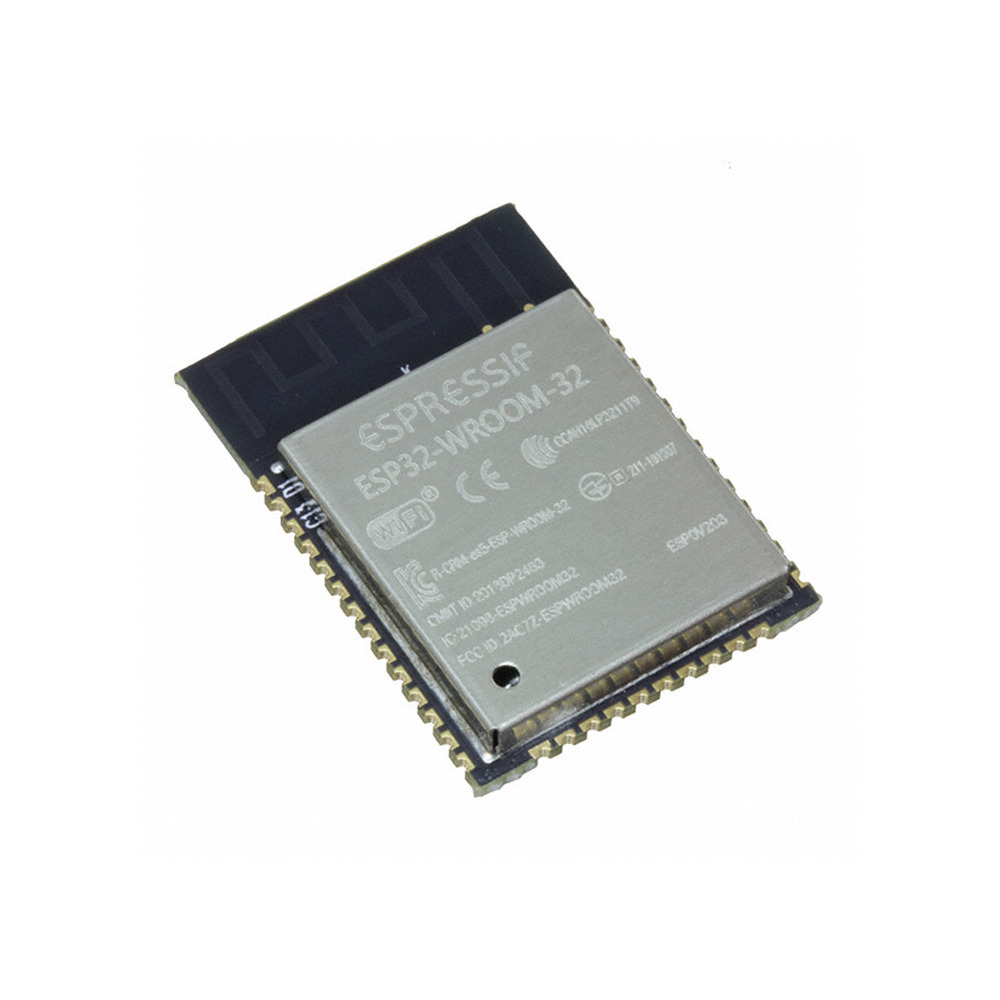
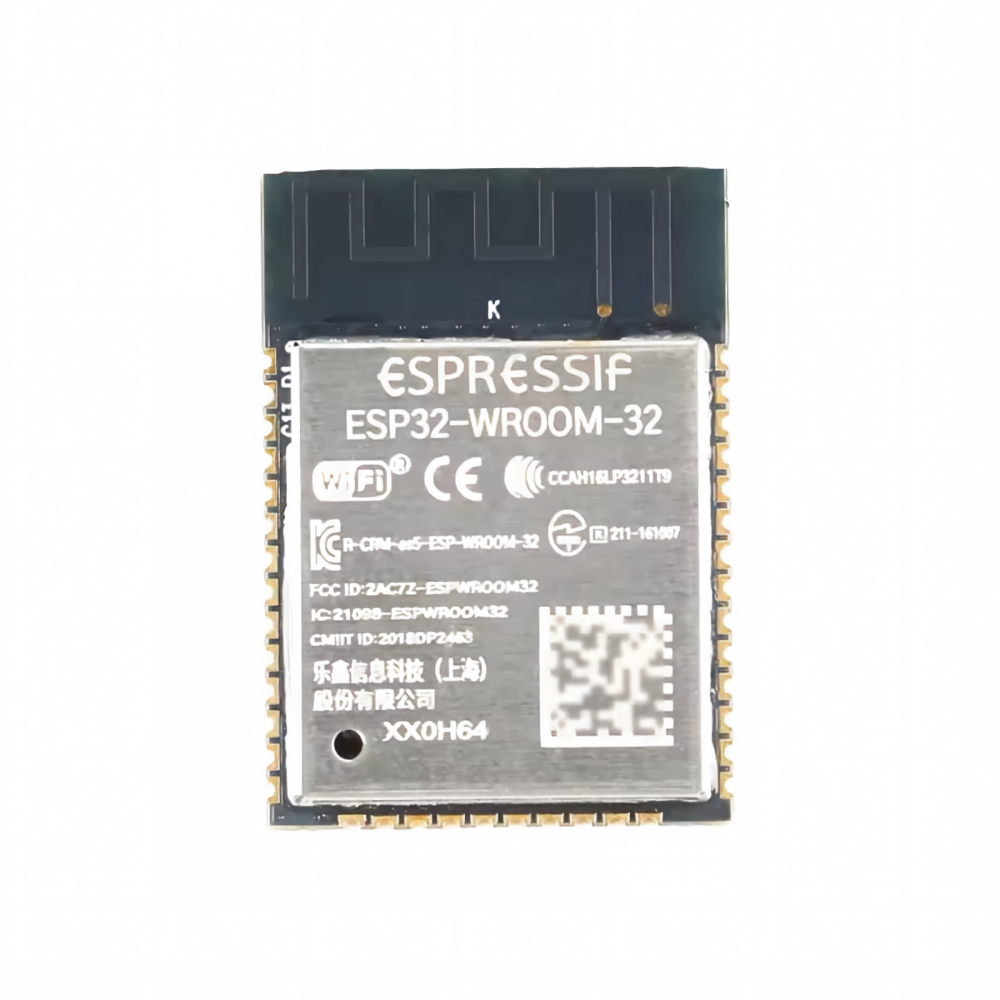
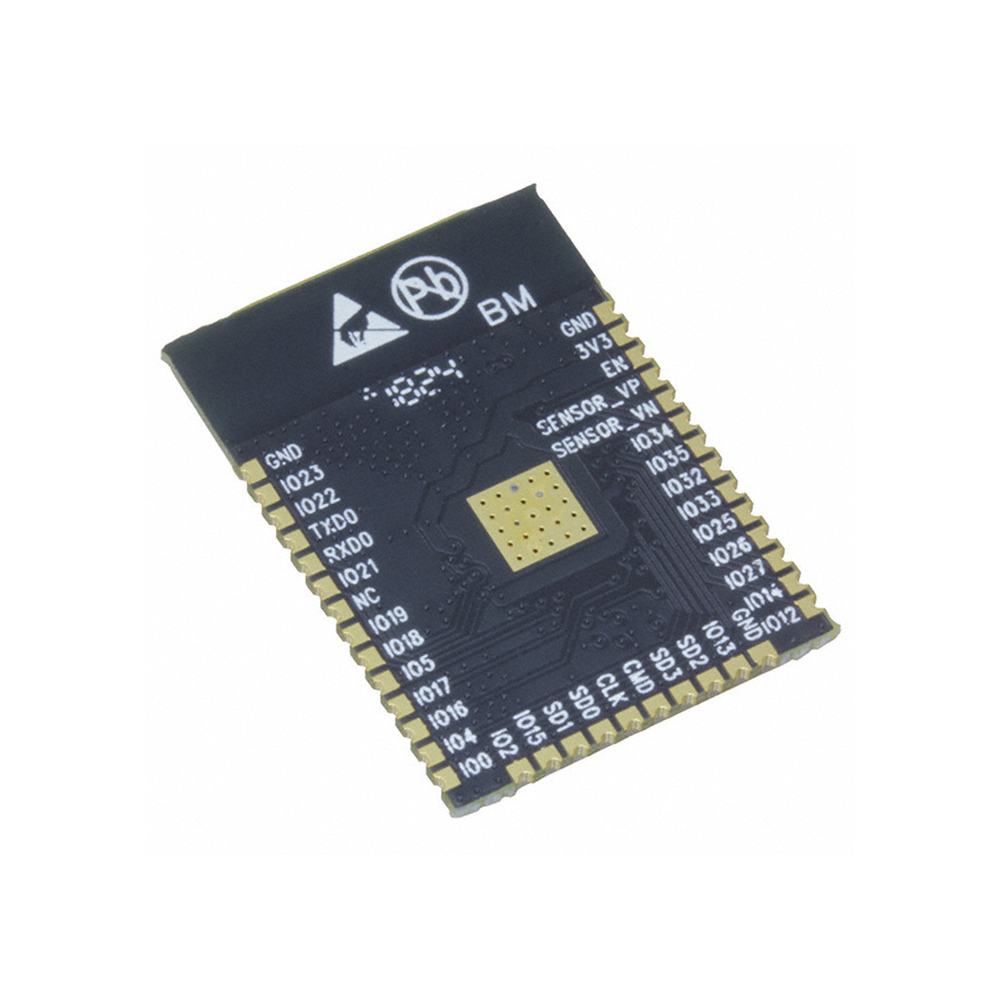
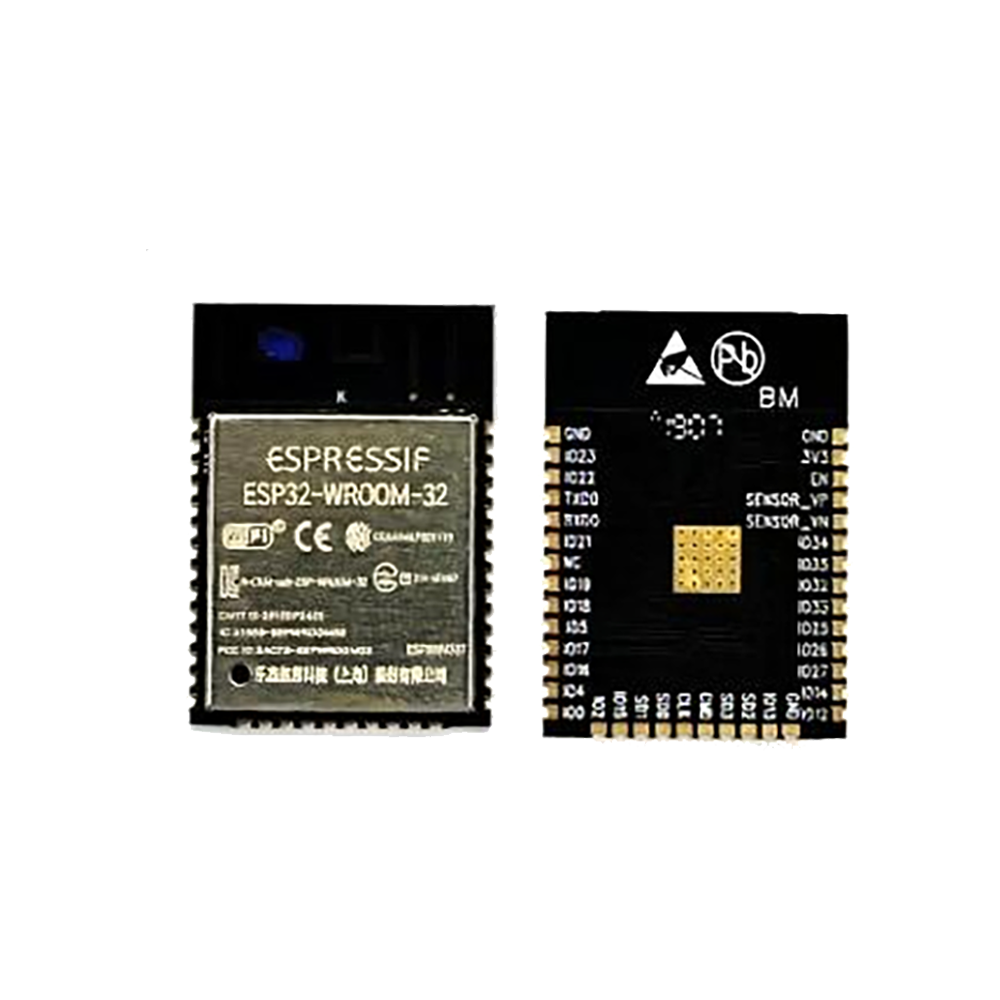
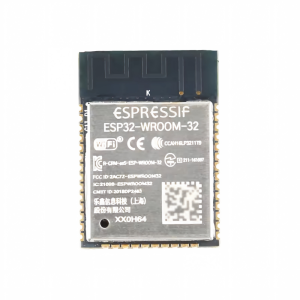
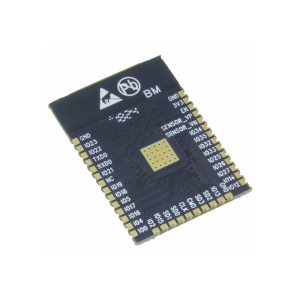
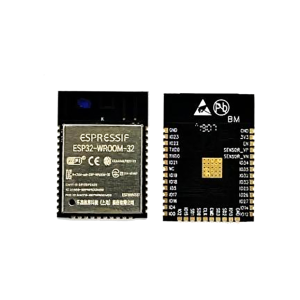
ESPRESSIF ESP32-WROOM-32 Module 16M=128mbit

SKU: FA1053-1-0-0-1
Microcontroller

ESP32-D0WDQ6, Xtensa dual-core 32-bit LX6

Clock Speed

Up to 240 MHz

Flash Memory

16 MB (128 Mbit)

Wireless

Wi-Fi 802.11 b/g/n, Bluetooth v4.2 BR/EDR + BLE

GPIO Count

Up to 32 GPIOs (5 strapping)

Operating Voltage

3.0 – 3.6 V

Operating Temperature

-40°C to +85°C

Dimensions

18 × 25.5 × 3.1 mm

The ESP32-WROOM-32 is a general-purpose Wi-Fi + Bluetooth + Bluetooth LE MCU module from Espressif Systems, designed for a broad spectrum of IoT applications. This version features 16MB (128Mbit) of SPI flash memory, offering the largest storage capacity available for this module family and four times the capacity of the standard 4MB variant . It is built around the ESP32-D0WDQ6 chip, featuring a dual-core Xtensa 32-bit LX6 microprocessor with a clock frequency of up to 240 MHz .

The module integrates a 40 MHz crystal oscillator and supports both Wi-Fi (802.11 b/g/n) and Bluetooth v4.2 (BR/EDR and BLE) . With its rich set of peripherals and low-power modes, it is suitable for everything from simple sensor nodes to demanding tasks like voice encoding and audio streaming .

The module’s compact form factor (18 × 25.5 × 3.1 mm) and onboard PCB antenna make it easy to embed into space-constrained designs . It exposes up to 32 GPIOs, with 5 strapping pins for boot configuration, and supports a wide array of interfaces including UART, SPI, I2C, I2S, SDIO, PWM, ADC, DAC, and capacitive touch sensing .

The 16MB flash configuration is ideal for applications requiring extensive firmware images, large OTA (Over-The-Air) update buffers, or substantial data storage for logging, configuration files, and multimedia content. With 16MB of storage, you have ample room for complex applications that would exceed the capacity of standard 4MB modules. Development support is extensive, with official support for Espressif’s ESP-IDF and the Arduino IDE through the Arduino-ESP32 core . The module is suitable for both individual makers and businesses purchasing for product development, smart home devices, industrial automation, and more .

Note: The ESP32-WROOM-32 series is marked as Not Recommended for New Designs (NRND) by Espressif. For new product development, the ESP32-WROOM-32E series is the recommended replacement, offering the same functionality with updated chip revisions and continued manufacturing support .


Features

  • Dual-Core Processing — Xtensa 32-bit LX6 dual-core microprocessor, up to 240 MHz

  • 16MB Flash Storage — Largest storage capacity for the WROOM-32 family, ideal for complex firmware and data logging

  • Integrated Wireless — Wi-Fi 802.11 b/g/n and Bluetooth v4.2 BR/EDR + BLE

  • Rich Peripheral Set — Up to 32 GPIOs, UART, SPI, I2C, I2S, PWM, ADC, DAC, and touch sensing

  • Low-Power Modes — Deep-sleep support with current consumption as low as 5µA for battery-powered applications

  • PCB Antenna — Onboard antenna for easy integration

  • Wide Operating Range — 3.0–3.6 V supply, -40°C to +85°C operating temperature

  • Development Ready — Supported by ESP-IDF and Arduino IDE


Technical Specifications 

# Parameter Specification
1 Microcontroller ESP32-D0WDQ6, Xtensa dual-core 32-bit LX6
2 Clock Speed Up to 240 MHz
3 Flash Memory 16 MB (128 Mbit)
4 Wireless Wi-Fi 802.11 b/g/n, Bluetooth v4.2 BR/EDR + BLE
5 GPIO Count Up to 32 GPIOs (5 strapping)
6 Operating Voltage 3.0 – 3.6 V
7 Operating Temperature -40°C to +85°C
8 Dimensions 18 × 25.5 × 3.1 mm

Usage

Getting Started

  1. Install the Arduino IDE and add Espressif’s board manager URL in Preferences .

  2. Install the ESP32 platform via the Boards Manager.

  3. Connect the module to a USB-to-UART adapter (or a development board that hosts it) and select the correct port and board (e.g., “ESP32 Dev Module”).

  4. Write and upload your sketch. If uploading fails, hold the BOOT button during the “Connecting…” phase.

Typical Applications

  • Smart home devices — Wi-Fi and Bluetooth connectivity for connected appliances and sensors

  • Industrial automation — Reliable wireless communication for equipment and monitoring systems

  • Audio streaming and voice encoding — Dual-core processing for demanding audio tasks

  • Battery-powered remote monitoring — Deep-sleep modes extend operational life

  • Data-intensive IoT applications — 16MB flash supports extensive logging and OTA updates

Notes for Business Buyers

  • 16MB Flash advantage — Suitable for applications requiring large firmware images, extensive data logging, or multimedia storage.

  • NRND status — For new designs, consider the ESP32-WROOM-32E series, which offers the same functionality with updated chip revisions and continued manufacturing support .

  • Proven, widely documented platform — Large community and extensive documentation support .

  • Suitable for bulk purchasing — Ideal for product development and volume deployment.

Q: What is the ESP32-WROOM-32 module used for?

It is a general-purpose Wi-Fi and Bluetooth MCU module for IoT applications, including smart home, industrial automation, audio streaming, and sensor networks .

Q: How much flash memory does this version have?

This version includes 16 MB (128 Mbit) of SPI flash, the largest capacity available for the WROOM-32 family .

Q: What is the difference between the 4MB, 8MB, and 16MB versions?

The primary difference is storage capacity. The 16MB version provides the most space for firmware, OTA update buffers, and data logging, while the core processor and wireless capabilities remain identical .

Q: Is it compatible with the Arduino IDE?

Yes, it is supported through the Arduino-ESP32 core. You need to install the ESP32 board platform via the Boards Manager .

Q: What is the difference between the ESP32-WROOM-32 and ESP32-WROOM-32E?

The ESP32-WROOM-32 uses the ESP32-D0WDQ6 chip, while the -32E uses updated chip revisions (ESP32-D0WD-V3) and is the recommended replacement for new designs .

Q: How do I enter programming mode?

If using a bare module with a USB-UART adapter, connect GPIO0 to GND, reset the module, then release GPIO0. On development boards, this is handled by the BOOT button.

Q: What is the operating voltage?

The module operates from 3.0 to 3.6 V, with 3.3 V being the typical supply .

Q: Does it support low-power modes?

Yes, it supports Deep-sleep mode with current consumption as low as approximately 5µA for battery-powered applications .

Q: What development environments are supported?

It supports Espressif’s ESP-IDF and the Arduino IDE (via the Arduino-ESP32 core) .

Q: Can I purchase in bulk for a product development project?

Yes, the module is suitable for both individual users and business purchasing, including product development and volume production. For new designs, consider the ESP32-WROOM-32E series which is the actively recommended version .