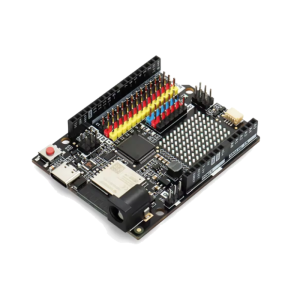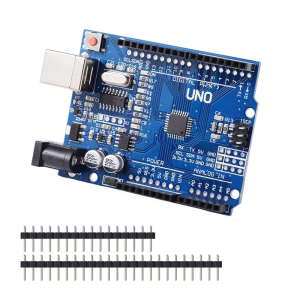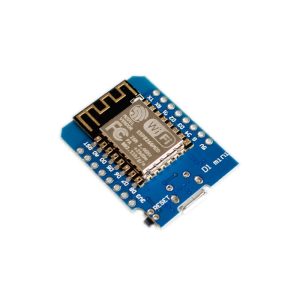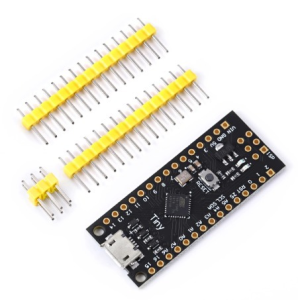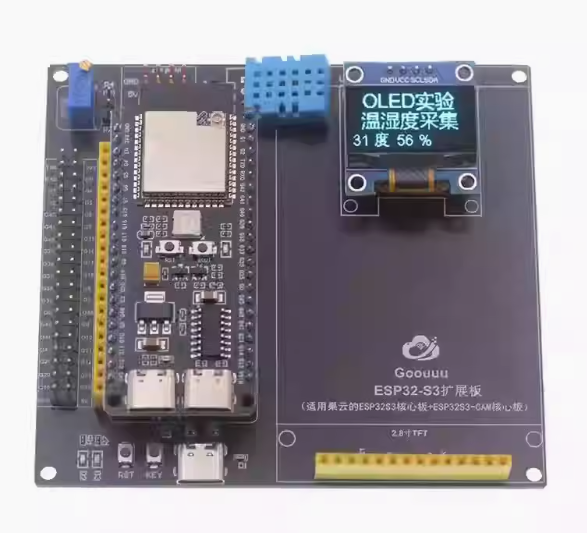
This Goouuu ESP32-S3 Ultimate Development Kit is a professional-grade, all-in-one IoT prototyping station. It combines the raw power of the ESP32-S3-WROOM-1 (N16R8) with a dedicated Expansion Shield and a high-contrast 0.96″ OLED Display. Designed for 2025’s complex AIoT requirements, this kit provides a plug-and-play environment for both industrial engineers and advanced makers.
Product Description
The Goouuu ESP32-S3 Kit is engineered to eliminate the “rat’s nest” of jumper wires. At its heart is the ESP32-S3, featuring 16MB Flash and 8MB PSRAM, which provides the memory overhead needed for Edge AI, voice processing, and complex UI rendering.
The included Expansion Board acts as a power and I/O hub, breaking out the 42-pin module into accessible headers while providing stable power rails for peripherals. To complete the interface, the 0.96″ OLED screen (I2C) allows for real-time data visualization, debugging, and user interaction without needing a connection to a PC serial monitor. This kit is ideal for professional evaluation and rapid deployment of smart-home hubs or industrial sensor nodes.
Key Features
- Integrated Visual Interface: The 0.96″ OLED (SSD1306) offers 128×64 resolution for displaying sensor data, Wi-Fi status, or QR codes.
- Massive Memory (N16R8): 16MB Flash and 8MB Octal PSRAM handle high-end applications like MicroPython, CircuitPython, and AI models.
- Industrial Power Hub: The expansion board supports multiple power inputs (Type-C, DC Jack) and provides high-current 3.3V/5V outputs for motors or bright displays.
- Dual Type-C on S3: Separate ports for UART Debugging and Native USB OTG, allowing the device to act as a USB peripheral.
- AI Acceleration: The Xtensa® LX7 dual-core processor includes vector instructions to speed up neural network inference.
- No Soldering Required: Usually shipped with pre-soldered headers, allowing immediate connection between the S3 module, expansion board, and OLED.