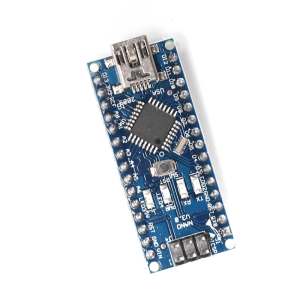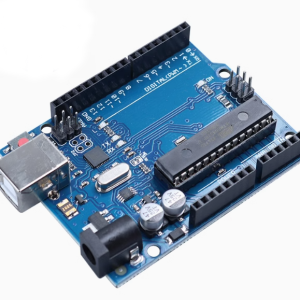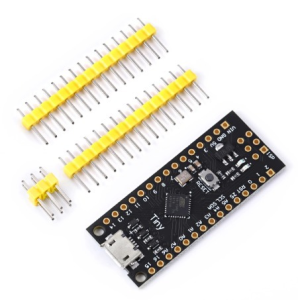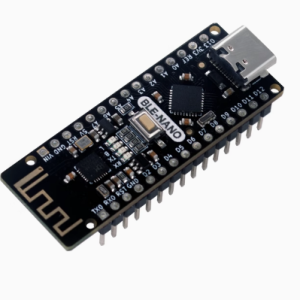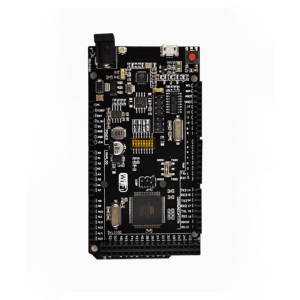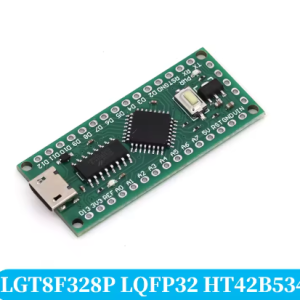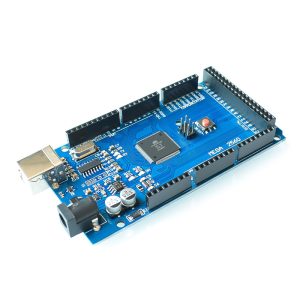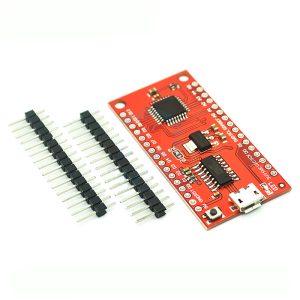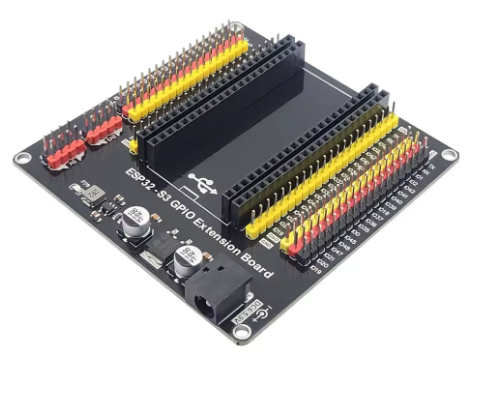
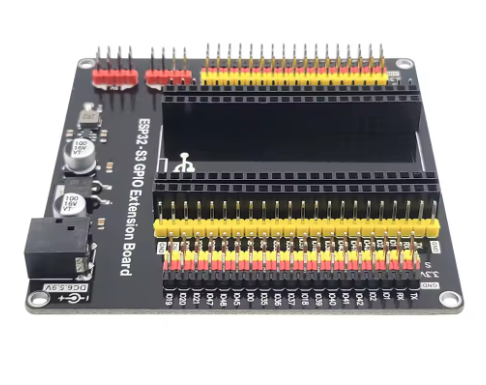
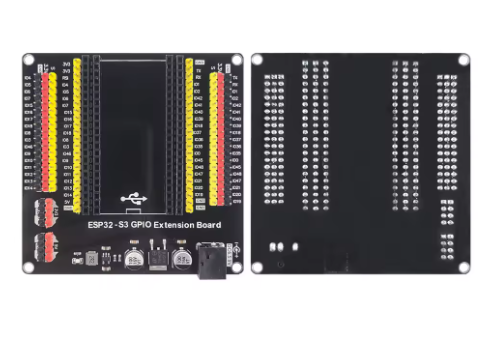
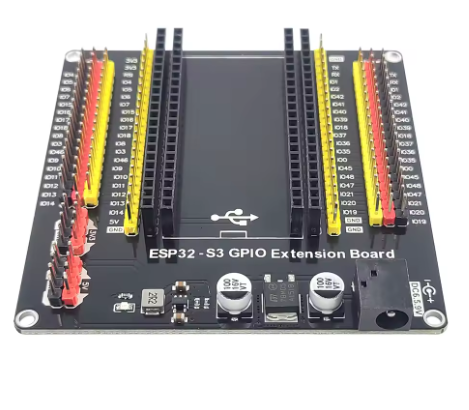
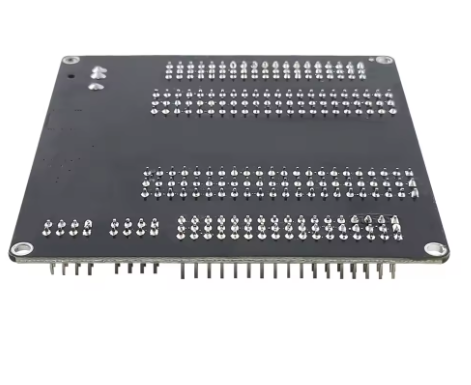
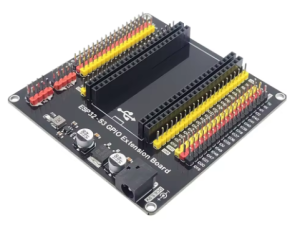
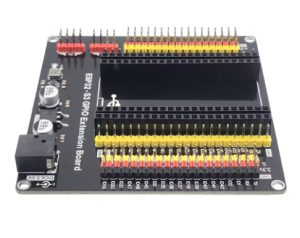
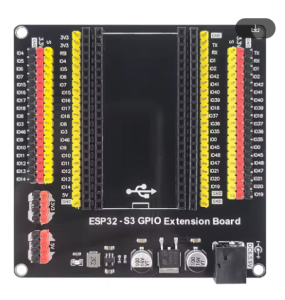
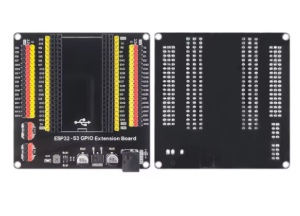
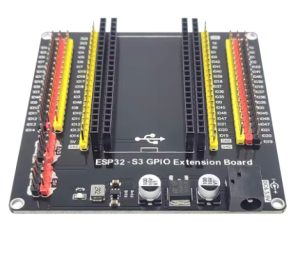
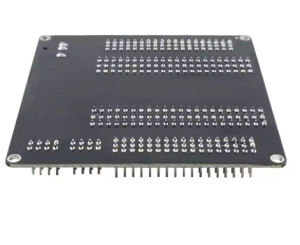
This 44-Pin GPIO IoT Expansion Board is a professional-grade interface solution specifically engineered for the ESP32-S3 series of development boards. In 2025, as AIoT (AI + IoT) applications demand more memory and more I/O, this expansion board serves as the essential foundation for stabilizing high-density projects using the ESP32-S3 N8R2 or N16R8 modules.
Product Description
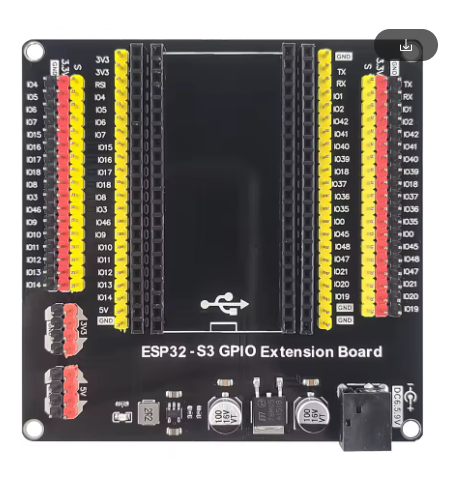
The 44-Pin ESP32-S3 Expansion Board is a robust breakout system designed to solve the physical and electrical challenges of advanced IoT prototyping. While standard ESP32 boards often cover the power rails on a traditional breadboard, this expansion shield breaks out all 44 pins into a spacious, clearly labeled layout.
It features an industrial-grade power management system that accepts a wide range of DC inputs, converting them into stable 3.3V and 5V rails. This is critical for ESP32-S3 modules running 8MB Octal PSRAM, which can be sensitive to the slight voltage fluctuations common in USB-only power setups. Whether you are building a smart retail kiosk with face detection or an industrial sensor gateway, this board provides the electrical protection and mechanical stability required for 24/7 operation.
Key Features
- Full 44-Pin Access: Specifically mapped for the ESP32-S3-WROOM-1 footprint, ensuring every GPIO—including high-speed SPI and JTAG pins—is accessible.
- Dual-Channel Power Input: Supports power via USB Type-C (5V) or a DC Barrel Jack (accepting 6.5V to 24V), providing flexibility for field deployments.
- GVS Prototyping Layout: Standardized Ground-Voltage-Signal (GVS) pin groupings allow for “plug-and-play” connectivity with 3-pin sensors, servos, and actuators.
- Industrial Stability: Onboard high-efficiency buck regulators provide up to 2A of current, easily powering external peripherals like 5MP cameras, TFT touchscreens, and relays.
- Breadboard Eliminator: Removes the risk of loose wires or high-resistance connections that cause “ghost” resets in Wi-Fi and Bluetooth projects.
- Integrated Mounting Holes: Includes 4x M3 mounting holes for secure installation in industrial control boxes or custom enclosures.