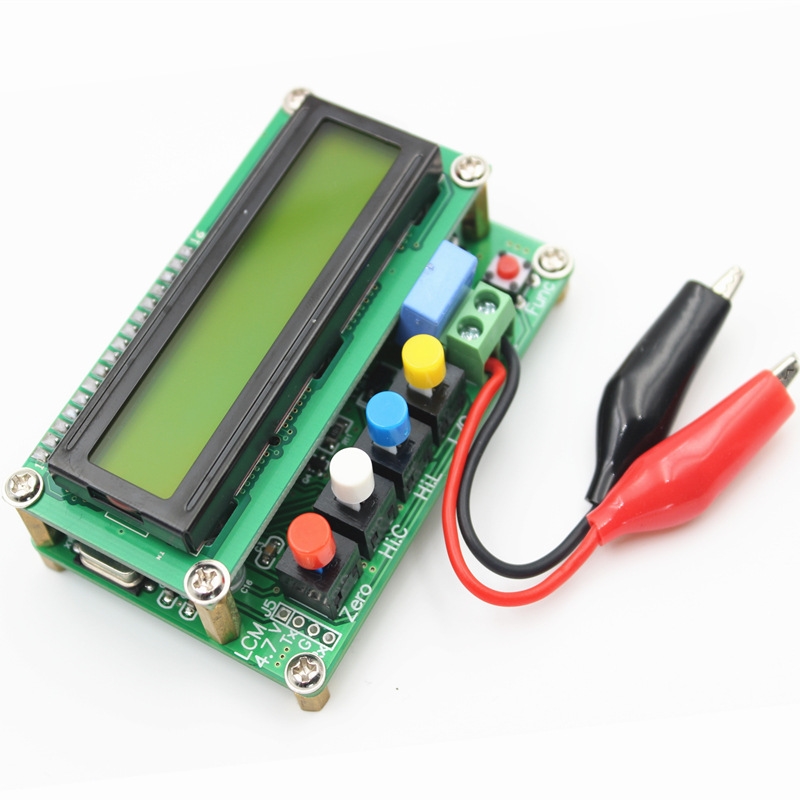
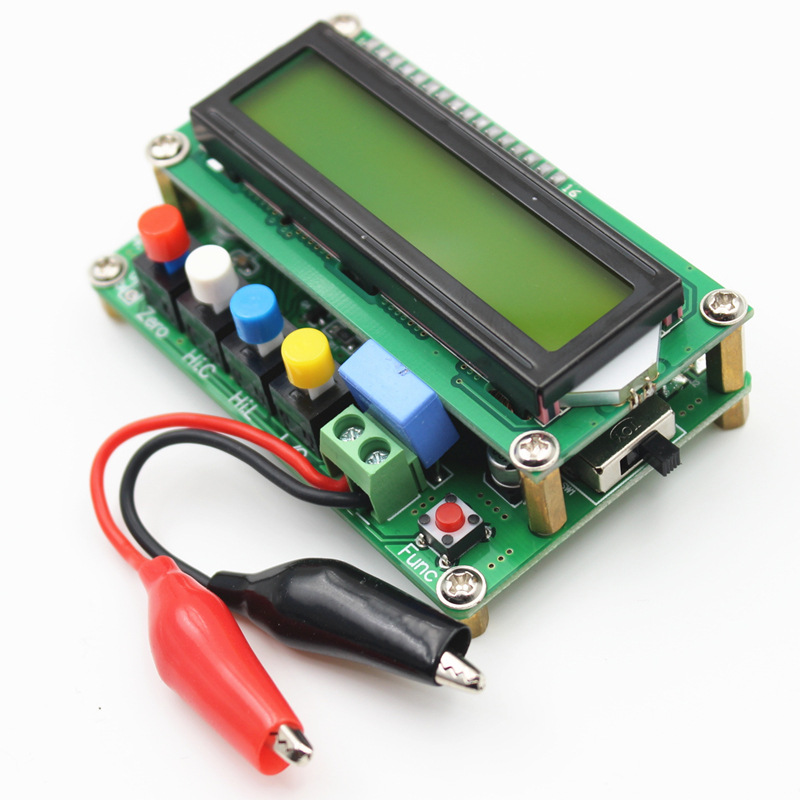
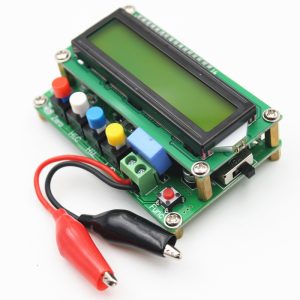
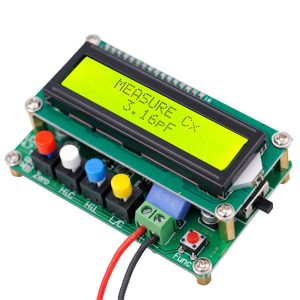
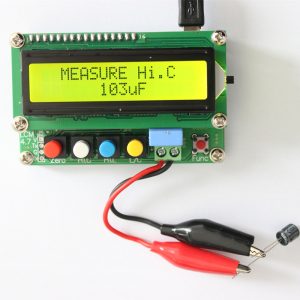
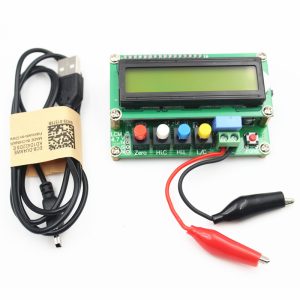
LC100-A High Precision Digital LC Meter – Multifunction Capacitance & Inductance Tester (LC100A)

SKU: FA1061-3
Capacitance (C)

Measurement Range:0.01pF – 10uF Minimum Resolution:0.01pF Accuracy:1%

Large Capacitance (Hi.C)

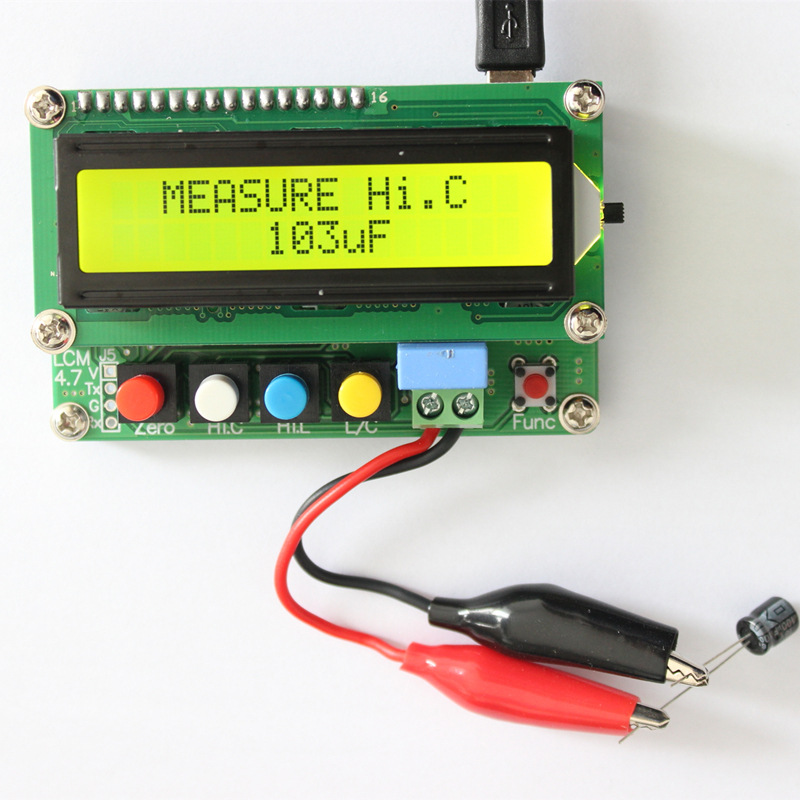
Measurement Range:1uF – 100mF Minimum Resolution:0.01uF Accuracy:5%

Inductance (L)

Measurement Range:0.001uH – 100mH Minimum Resolution:0.001uH Accuracy:1%

Large Inductance (Hi.L)

Measurement Range:0.001mH – 100H Minimum Resolution:0.001mH Accuracy:1% – 5%

Test Frequency

~500kHz (L/C modes); ~500Hz (Hi.L mode)

Power Supply

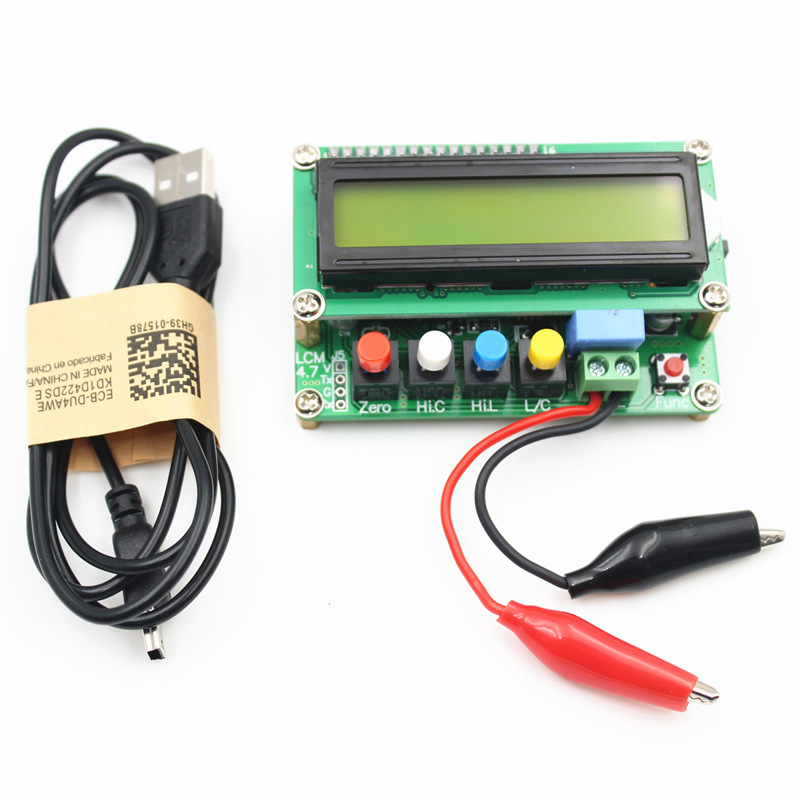
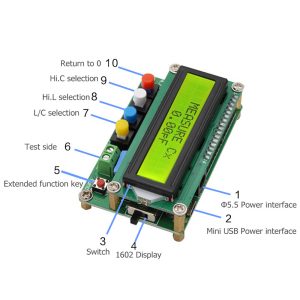
+5V via Mini USB or 5.5mm DC Socket.

Display

1602 LCD (4 digits

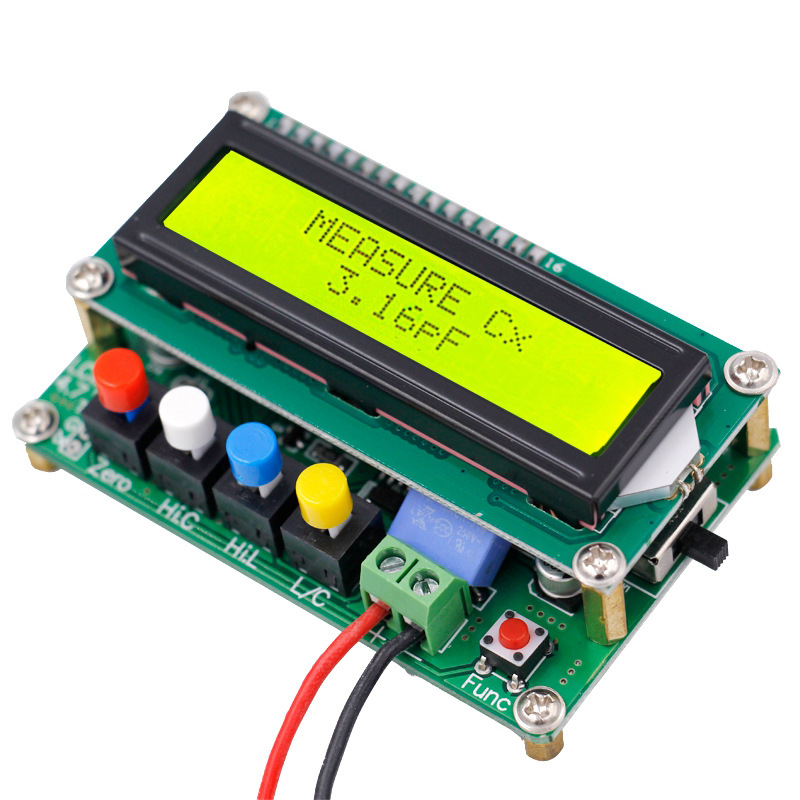
The LC100-A High Precision Digital LC Meter is a professional-grade diagnostic tool designed for high-accuracy measurement of capacitance and inductance. Unlike standard multimeters, this instrument uses LC resonance principle technology, making it exceptionally accurate for measuring small values below 1uH and 1pF. As of 2026, it is a preferred solution for microwave component testing, switching power supply design, and high-frequency filter development. 
Long Product Description
The LC100-A provides a comprehensive measurement solution by combining four distinct test ranges into one compact device. It features an advanced high-speed microcontroller that performs real-time precision calculations, delivering stable readings on a clear 1602 backlit LCD. The device stands out for its “Flexible Online Calibration,” which allows users to zero out parasitic capacitance and inductance from test leads at any time, ensuring laboratory-grade precision even in field conditions. Designed with versatility in mind, it supports multiple power options, including Mini-USB or a standard DC jack, making it suitable for both permanent lab benches and mobile repair kits. 
Key Features
  • Dual-Principle Technology: Uses LC resonance for high-accuracy small-value testing and a charge-discharge method for large capacitance measurements.
  • High-Speed MCU: Incorporates a precision microcontroller for fast data processing and 4-digit effective resolution.
  • Four Automatic Ranges: Dedicated modes for small/large inductance and small/large capacitance, including electrolytic capacitors up to 100mF.
  • Calibration Persistence: Calibration parameters are stored in internal FLASH memory, so settings are not lost when the device is powered off.
  • Frequency Display: Real-time oscillation frequency can be displayed to assist in understanding component behavior under different loads
Usage Instructions
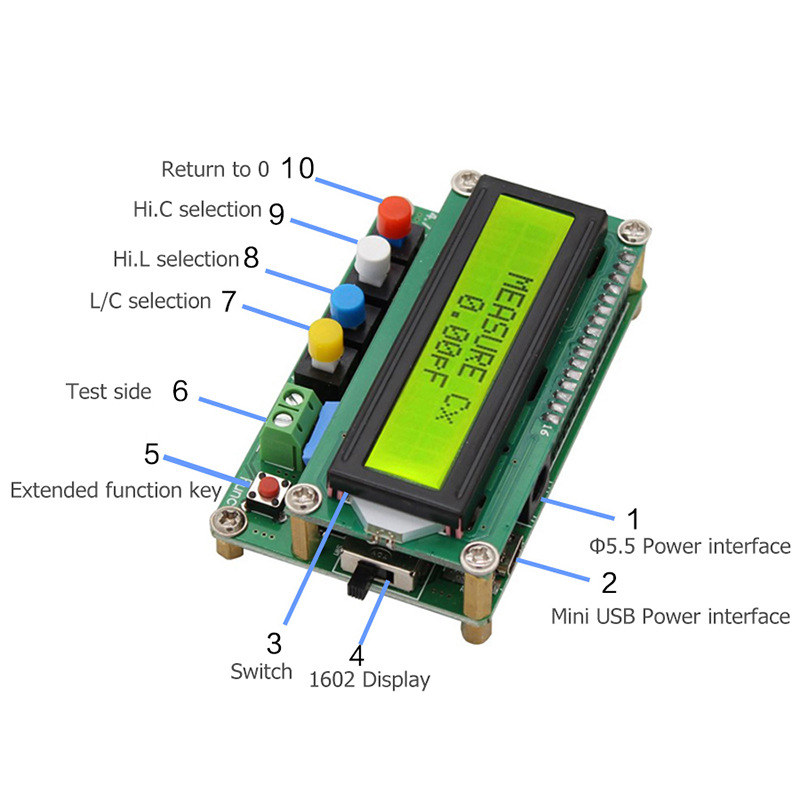
  1. Power On: Connect to a 5V power source and toggle the power switch.
  2. Mode Selection: Use the colored buttons to select your target range:
    • L/C (Yellow): For small capacitors and inductors.
    • Hi.L (Blue): For large inductors (transformers/filters).
    • Hi.C (White): For large electrolytic capacitors.
  3. Zeroing (Calibration):
    • Capacitance: With test clips open, press the Red Zero button. Wait for “CALCULATING…OK”.
    • Inductance: Short the test clips together, then press the Red Zero button.
  4. Measurement: Connect your component. Ensure capacitors are fully discharged before testing to prevent internal damage
Q: Can this meter measure ESR for capacitors?

No, the LC100-A is a dedicated capacitance and inductance meter. For ESR (Equivalent Series Resistance) measurements, you would need an LCR-T4 or a specialized ESR meter

Q: Why does it take several seconds to measure large capacitors?

Large capacitance (above 10mF) uses the charge-discharge measurement method. A 100mF capacitor can take approximately 7–8 seconds to process and display accurately

Q: Is it suitable for business bulk purchasing for manufacturing?

Yes. Its accuracy and ability to measure extremely low values make it ideal for quality control in microwave production and transformer manufacturing.

Q: Can I measure components still soldered onto a circuit board?

No. Measurement must be done off-board. Testing in-circuit will result in inaccurate readings due to parallel paths and potential damage from residual voltage

Q: What power adapters are compatible?

Any stable 5V DC power source. You can use a standard USB port, a 5V phone charger, or a DC adapter with a 5.5mm center-positive plug