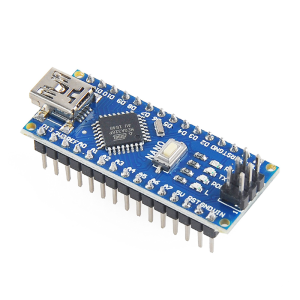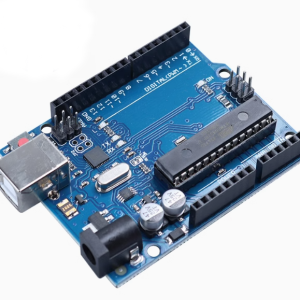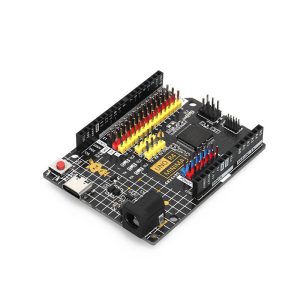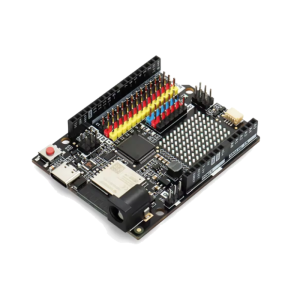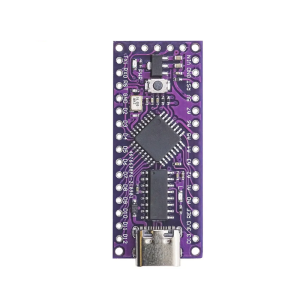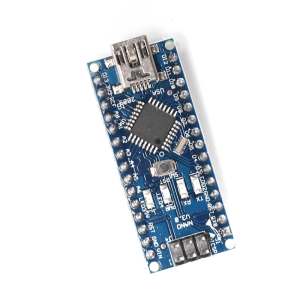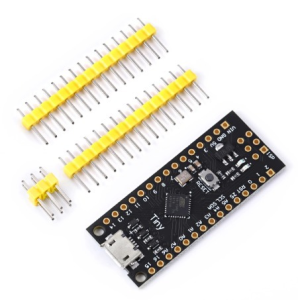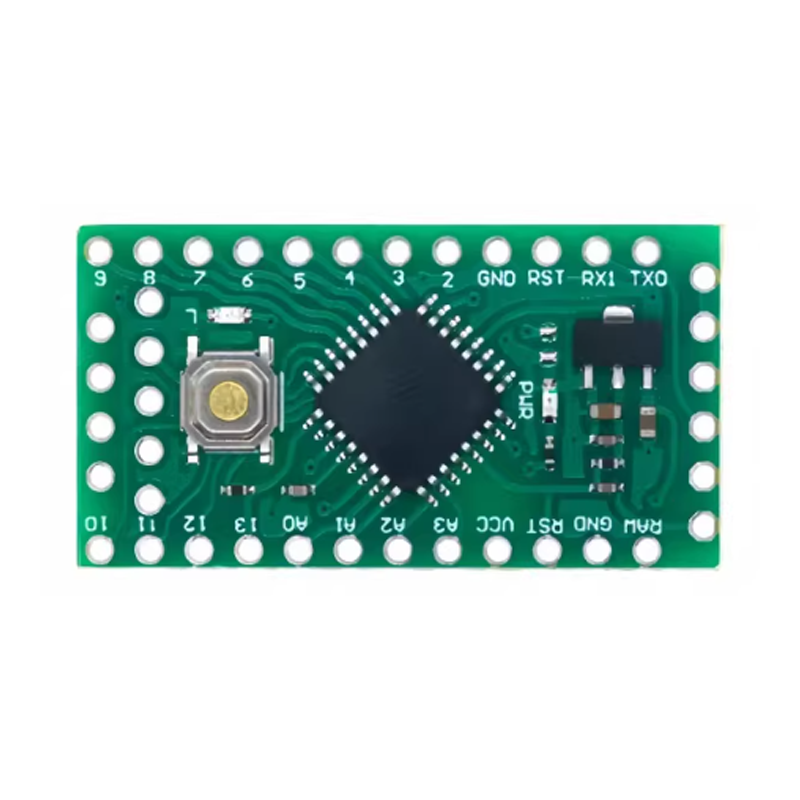
LGT8F328P 32-bit 3.3V Mini EVB Module LQFP-32 (BTE17-14) for Arduino Alternative

SKU: FA1010-3-2
Microcontroller

LGT8F328P (8-bit RISC, ATmega328P-compatible)

Maximum Clock Speed

32 MHz

Flash / SRAM

32 KB / 2 KB

EEPROM

Configurable 0/1/2/4/8 KB (emulated from Flash)

ADC / DAC

12-bit ADC (8 channels) / 8-bit DAC (1 channel)

GPIO Count

24 pins (4 configurable as high-current outputs)

Operating Voltage

1.8V – 5.5V (3.3V logic level)

Programming Interfaces

UART, SWD

The LGT8F328P Mini EVB Module (BTE17-14) is a compact development board built around the LogicGreen LGT8F328P microcontroller, designed as an enhanced alternative to the classic Arduino Pro Mini and ATmega328P platform. It retains the familiar Pro Mini form factor and pin layout while delivering significant performance and peripheral upgrades.

At the heart of the board is the LGT8F328P, a high-performance 8-bit RISC microcontroller that runs at up to 32 MHz — double the clock speed of the standard ATmega328P . It maintains 99% compatibility with the ATmega328P architecture, meaning existing Arduino code and libraries generally work without modification . The chip integrates 32 KB Flash, 2 KB SRAM, and configurable EEPROM (0/1/2/4/8 KB, emulated from Flash) .

The LGT8F328P brings several features that are not available on the standard ATmega328P. It includes a 12-bit ADC with up to 8 analog channels (compared to the 10-bit ADC on the ATmega328P), providing 4× finer resolution for analog sensor readings . A 1-channel 8-bit DAC enables true analog output without external components . The chip also features a computing accelerator (DSC) that speeds up integer operations, and 6 high-current push-pull I/O pins capable of driving up to 80 mA each — strong enough to directly drive LEDs and small loads without transistors .

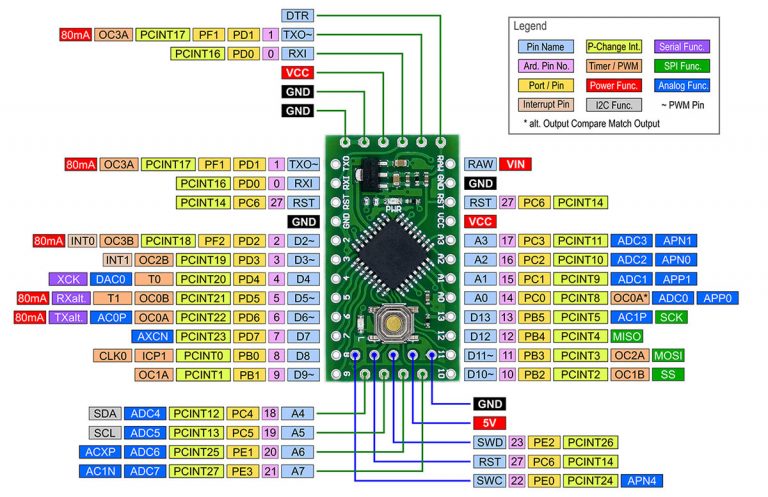
For communication and control, the board provides UART, SPI, and I2C interfaces, along with 8 PWM channels and 4 configurable power pins . An internal 1.024V/2.048V/4.096V reference with ±0.5% accuracy ensures stable analog measurements . The chip also includes a unique global device ID (GUID) for program encryption and device identification .

This BTE17-14 version operates at 3.3V logic level and supports programming via UART or SWD interface . The board follows the Arduino Pro Mini form factor, making it suitable for space-constrained projects where the Pro Mini was traditionally used.

Development is fully supported through the Arduino IDE with the lgt8fx board package (available via the dbuezas/lgt8fx GitHub repository) . Once installed, you can select the “LGT8F328P-LQFP32 MiniEVB” board type and program the module just like any Arduino board.

Whether you are upgrading from an ATmega328P project, building a compact sensor node, or exploring a low-cost 32MHz microcontroller with enhanced analog capabilities, the LGT8F328P Mini EVB Module offers a compelling balance of performance, compatibility, and value.


Features

  • LGT8F328P microcontroller @ 32 MHz — Double the clock speed of the ATmega328P with 99% compatibility .

  • 12-bit ADC (8 channels) — 4× finer analog resolution than the ATmega328P’s 10-bit ADC .

  • 8-bit DAC output — True analog output capability without external components .

  • High-current I/O pins (up to 80 mA) — 4 pins configurable as power outputs for direct LED and load driving .

  • Arduino Pro Mini form factor — Pin-compatible layout for existing Pro Mini projects and accessories .

  • Computing accelerator (DSC) — Hardware integer operation accelerator for faster code execution .

  • Internal precision reference — 1.024V/2.048V/4.096V ±0.5% for stable analog measurements .

  • Unique chip ID (GUID) — Global device number for program encryption and identification .

  • UART and SWD programming — Flexible programming and debugging options .

  • 3.3V operating voltage — Suitable for low-power and 3.3V sensor applications .


Technical Specifications 

# Parameter Specification
1 Microcontroller LGT8F328P (8-bit RISC, ATmega328P-compatible)
2 Maximum Clock Speed 32 MHz
3 Flash / SRAM 32 KB / 2 KB
4 EEPROM Configurable 0/1/2/4/8 KB (emulated from Flash)
5 ADC / DAC 12-bit ADC (8 channels) / 8-bit DAC (1 channel)
6 GPIO Count 24 pins (4 configurable as high-current outputs)
7 Operating Voltage 1.8V – 5.5V (3.3V logic level)
8 Programming Interfaces UART, SWD 

Usage

Getting Started

  1. Install the lgt8fx board package — In Arduino IDE, go to File > Preferences and add the following URL to “Additional Boards Manager URLs”: https://raw.githubusercontent.com/dbuezas/lgt8fx/master/package_lgt8fx_index.json .

  2. Install the board package — Open Tools > Board > Boards Manager, search for “lgt8fx” and install the package.

  3. Select the board — Choose “LGT8F328P-LQFP32 MiniEVB” (or the variant matching your module) from the Tools > Board menu .

  4. Connect a programmer — Use a USB-to-TTL serial adapter connected to the UART pins (TX/RX/GND), or use an SWD programmer for direct debugging .

  5. Upload your sketch — Open an example (such as Blink), select the correct port, and click Upload.

Power Options

  • 3.3V regulated supply — Recommended operating voltage for this module variant.

  • 5V supply — The chip supports up to 5.5V, but logic level is configured for 3.3V on this version .

Typical Applications

  • ATmega328P project upgrades — Drop-in replacement for Pro Mini and Uno projects seeking higher performance .

  • Compact sensor nodes — 12-bit ADC for precise analog measurements in space-constrained designs.

  • Low-power IoT devices — 3.3V operation and multiple sleep modes for battery-powered applications.

  • Direct-drive LED projects — High-current I/O pins can drive LEDs without external transistors .

  • Analog output applications — On-chip DAC for audio or control voltage generation .

  • Educational kits — Cost-effective alternative to standard Arduino boards for classroom learning.

  • Wearable and portable projects — Pro Mini form factor and low power consumption suit compact designs.

Notes for Business Buyers

  • ATmega328P code compatibility — Existing Arduino libraries and sketches generally work without modification, reducing migration effort .

  • Enhanced analog capabilities — 12-bit ADC and DAC provide functionality not available on the standard ATmega328P.

  • Cost-effective alternative — Offers higher performance than the standard Pro Mini at a competitive price point .

  • Suitable for bulk purchasing — Ideal for educational institutions, product development teams, and volume production.

Q: Is this board compatible with the Arduino IDE?

Yes. Install the lgt8fx board package via the Boards Manager using the URL https://raw.githubusercontent.com/dbuezas/lgt8fx/master/package_lgt8fx_index.json, then select the appropriate LGT8F328P board type .

Q: Will my existing ATmega328P code work on this board?

In most cases, yes. The LGT8F328P is 99% compatible with the ATmega328P, and most Arduino libraries work without modification. Libraries that rely on precise AVR timing may need adjustments

Q: What is the difference between this board and an Arduino Pro Mini?

The LGT8F328P runs at 32 MHz (vs. 16 MHz), has a 12-bit ADC (vs. 10-bit), includes an 8-bit DAC, and offers high-current I/O pins (up to 80 mA). It uses the same Pro Mini form factor .

Q: How do I program this module?

You can program it via UART using a USB-to-TTL serial adapter, or via the SWD interface for debugging. The board comes with a bootloader pre-installed for UART programming .

Q: Does this board have an onboard USB interface?

No. This version (BTE17-14) does not include an onboard USB-to-serial chip. You need an external USB-to-TTL adapter for programming .

Q: What is the operating voltage?

This module operates at 3.3V logic level. The LGT8F328P chip itself supports 1.8V to 5.5V, but this board is configured for 3.3V operation .

Q: Can I use 5V sensors with this board?

The board operates at 3.3V logic. For 5V sensors, you may need level shifting. Check your sensor’s voltage requirements before connecting.

Q: How much current can the GPIO pins source/sink?

Most GPIO pins provide standard current, but 4 pins are configurable as high-current push-pull outputs capable of sourcing up to 80 mA — sufficient to drive LEDs directly .

Q: What is the GUID feature?

GUID (Global Unique Identifier) is a unique chip ID built into the LGT8F328P. It can be used for program encryption, device authentication, and identifying individual boards in a network

Q: Can I purchase in bulk for a school or company?

Yes. This module is suitable for both individual users and business purchasing, including classroom kits, product development, and volume production.