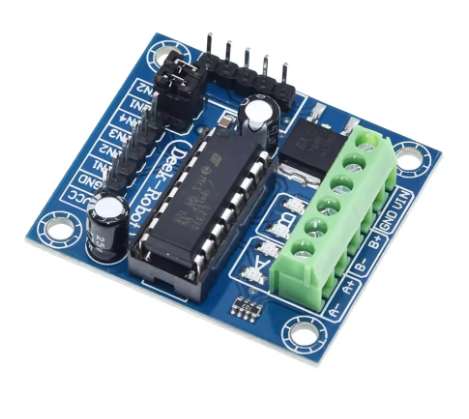
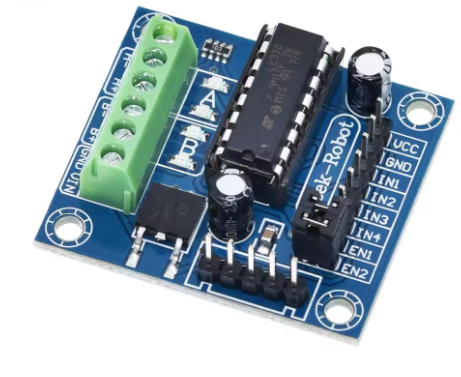
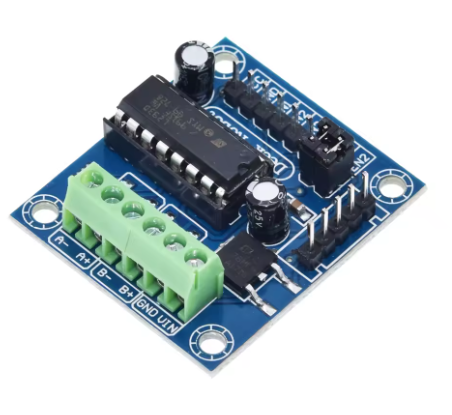
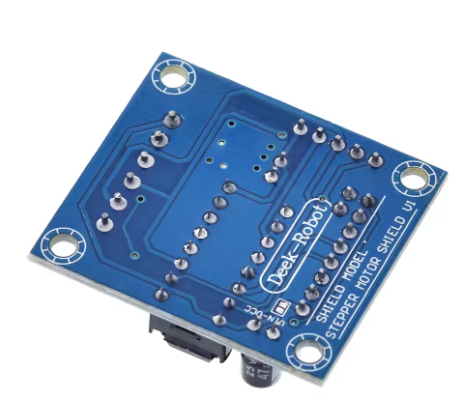
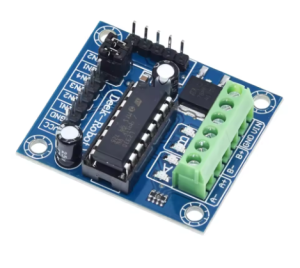
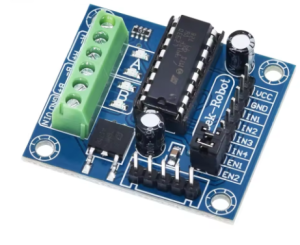
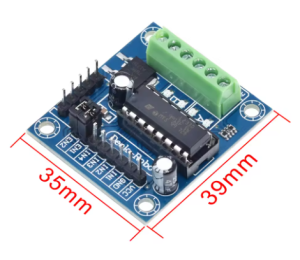
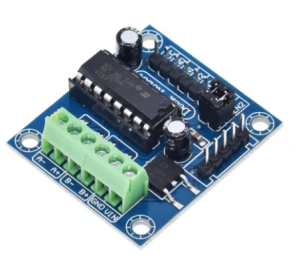
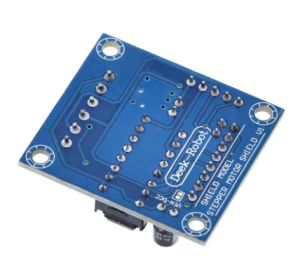
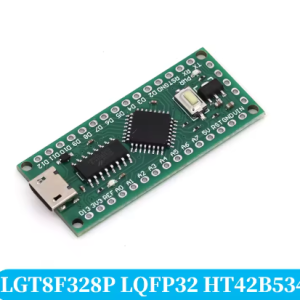
The Mini L293D Motor Driver Shield offers a compact and efficient solution for controlling DC motors or stepper motors in space-constrained robotics and automation projects. Designed as a smaller alternative to full-sized Arduino shields, this module integrates the reliable L293D quad H-bridge driver IC into a minimal footprint.
This driver functions as a Dual H-Bridge, allowing a microcontroller to safely manage the direction (forward and reverse) and speed of two independent DC motors or one 4-wire stepper motor. It provides essential current amplification and voltage isolation between your sensitive control logic and the higher-power demands of motors.
Featuring simple pin headers for direct interfacing with various microcontrollers (like the Arduino Nano, ESP32, or Raspberry Pi Pico via jumper wires) and screw terminals for secure power and motor connections, this mini board is ideal for building small-scale robots, smart cars, and educational prototypes where every millimeter counts.
Technical Parameters & Specifications
| Parameter |
Detail |
| Driver IC |
L293D |
| Functionality |
Dual H-Bridge (Control up to 2 DC motors or 1 Stepper Motor) |
| Operating Voltage (Logic) |
5V (from microcontroller I/O) |
| Operating Voltage (Motor) |
4.5V to 36V DC (External Supply Required) |
| Max Current per Channel |
600mA Continuous (1.2A Peak) |
| Compatibility |
Microcontrollers with 5V Logic (Arduino Uno/Nano/Mega, ESP boards via jumpers) |
| Connectivity |
Screw terminals (Power/Motors), Standard Pin Headers (Logic Input) |
| Safety Features |
Thermal shutdown protection, internal kickback protection diodes |
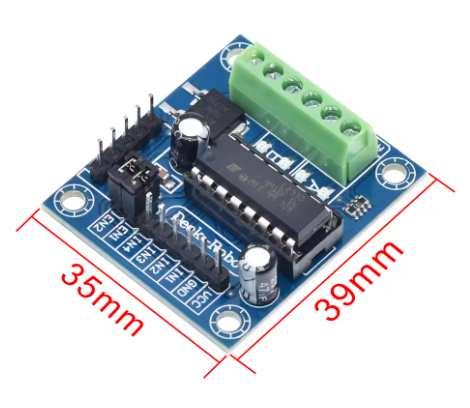
| Dimensions |
Ultra-compact form factor (varies by manufacturer, generally < 35mm x 30mm) |
The Mini L293D Motor Driver Shield excels in applications where minimizing size and maximizing efficiency are crucial.
- Mini/Micro Robotics: Essential for building small, light-weight robotic platforms, line-following robots, or obstacle-avoidance vehicles.
- IoT Actuators: Integrating small motor control into Internet of Things (IoT) devices, such as automated pet feeders or small smart blinds.
- STEM Education: An accessible and safe way for students to learn about motor control principles, H-bridges, and physical computing.
- Commercial Prototyping (Business Use): Ideal for businesses in the R&D phase of developing compact electronic products that require simple, reliable DC motor control before moving to custom PCB solutions.
Q: What is the main difference between this "Mini Shield" and the standard L293D Arduino Shield?
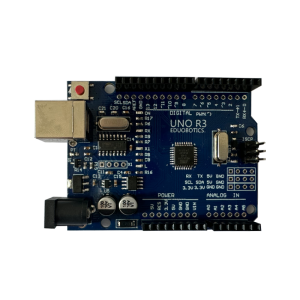
The primary difference is the form factor and interface. The standard shield plugs directly onto an Arduino Uno/Mega and uses a fixed pin mapping. The Mini Shield is more compact and typically uses generic pin headers, requiring the user to connect the logic pins manually with jumper wires, offering more flexibility for use with smaller boards like the Nano or custom PCBs.
Q: What types of motors can this board control?
It can control up to two standard brushed DC motors (speed and direction control) or one 4-wire bipolar stepper motor.
Q: What is the maximum current this mini driver can handle? (Relevant for Business Purchasing)
The L293D IC is rated for a continuous output current of 600mA (0.6 Amps) per channel, with a peak surge current of up to 1.2 Amps. For applications requiring higher current (e.g., NEMA 17 stepper motors or larger DC motors), we recommend upgrading to a more powerful driver like the L298N or specialized MOSFET-based drivers.
Q: Do I need a separate power supply for the motors?
Yes. The board requires two power inputs: 5V logic power from your microcontroller (via the VCC pin) and a separate external power supply (4.5V to 36V) connected to the motor power screw terminal. The motors will not run without this external supply.
Q: The motors are running slowly or inconsistently. What could be the issue?
This usually indicates insufficient current or voltage from your external motor power supply. Ensure your power supply can provide enough Amps for your specific motors and that the voltage is appropriate for the motor specifications (e.g., a 12V motor needs a 12V supply).
Q: How do I connect this to an Arduino Nano?
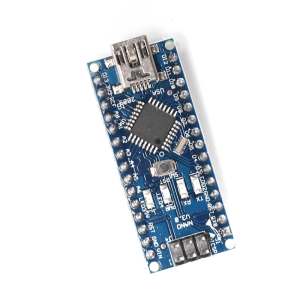
You will need male-to-female jumper wires. You connect the GND pin, VCC (5V logic), and the 4-6 required input logic pins from the Mini L293D board to the corresponding I/O pins you define in your Arduino Nano code.
Q: We are buying these for a business/educational workshop. Are sample code libraries available?
Yes, generic Arduino libraries for the L293D are widely available. Because the pin mapping is flexible with the Mini Shield, you can use standard functions or libraries (like the Adafruit Motor Shield library, adjusting the pin definitions) to get started quickly.