Product Overview
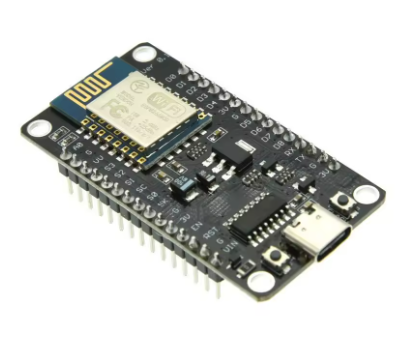
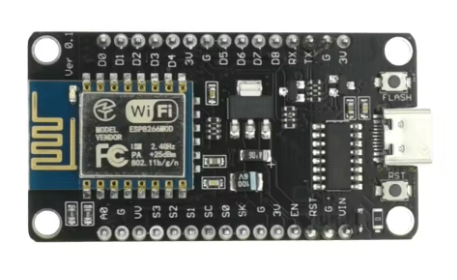
The NodeMCU V3 ESP8266 Development Board is an all-in-one IoT solution designed for seamless connectivity and rapid prototyping. This updated version features a modern USB-C interface and the high-stability CH9102X serial chip, ensuring faster data transfer and broader compatibility with modern hardware. Based on the proven ESP-12F module, it combines a powerful 32-bit microcontroller with integrated Wi-Fi, making it the industry standard for smart home automation, remote monitoring, and industrial sensor networks.
Key Features
- Modern Connectivity: Equipped with a robust USB-C port for improved durability and reversible plugging, replacing the fragile Micro-USB standard.
- High-Speed Serial Conversion: Utilizes the CH9102X USB-to-UART bridge for reliable driver support and high baud-rate communication.
- Integrated Wi-Fi: Supports full TCP/IP stack with station (client), soft-AP, and dual modes for versatile networking.
- Plug-and-Play Prototyping: Features a 30-pin breadboard-friendly layout with integrated power regulation and reset/flash buttons.
- Multi-Language Support: Fully compatible with Lua, Arduino IDE (C++), MicroPython, and CircuitPython.
- Low Power Consumption: Optimized for battery-operated applications with advanced sleep modes (Deep Sleep, Light Sleep).
Q: Does this board require a special driver for my computer?
Most modern operating systems (Windows 10/11, macOS) will automatically recognize the CH9102X chip. If not, a standard CH9102 driver can be downloaded to enable the COM port.
Q: Can I power this board using only the USB-C port?
Yes. The USB-C port provides both the data connection for programming and the 5V power required for operation. An onboard regulator converts this to 3.3V for the ESP8266 chip.
Q: Is this board compatible with 5V sensors?
The ESP8266 operates on 3.3V logic. While some pins may be 5V tolerant, it is highly recommended to use a logic level shifter when connecting to 5V sensors or peripherals to prevent permanent damage.
Q: What is the difference between this V3 board and the older V2?
The V3 (often called “LoLin”) has a slightly larger footprint for better stability and heat dissipation. This specific version upgrades the connection to USB-C, providing a more mechanical-secure and modern interface than the older V2 Micro-USB.
Q: Can this board be used for commercial/business products?
Absolutely. Many businesses use NodeMCU boards for pilot programs and small-batch industrial monitoring. Its FCC/CE compliant ESP-12F module ensures reliable performance in commercial environments.
Q: How do I put the board into Deep Sleep mode for battery power?
You must connect the GPIO16 (D0) pin to the RST pin. This allows the internal timer to wake the chip up after a designated interval.