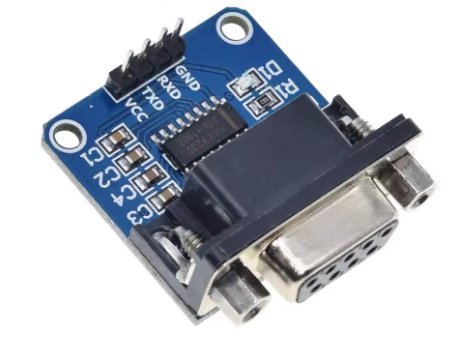
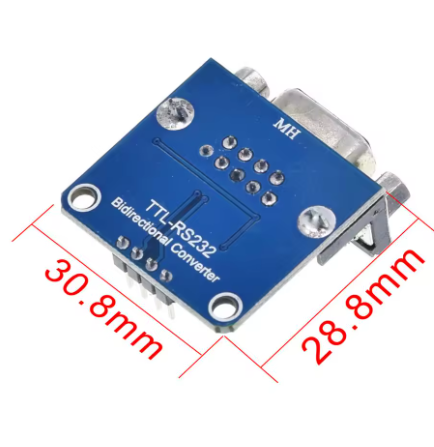
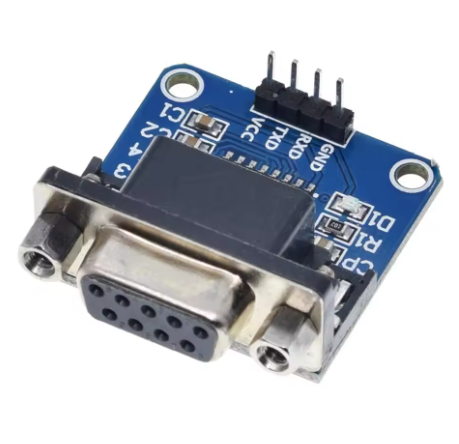
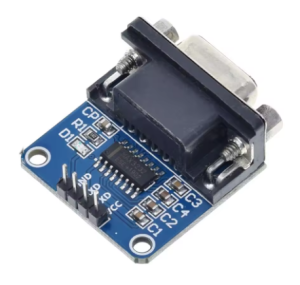
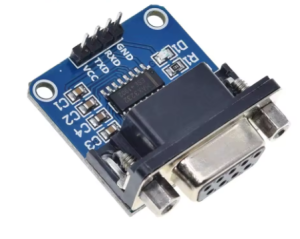
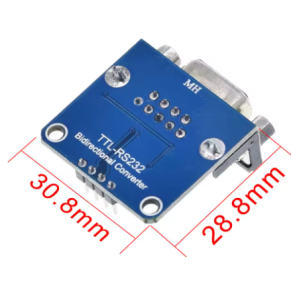
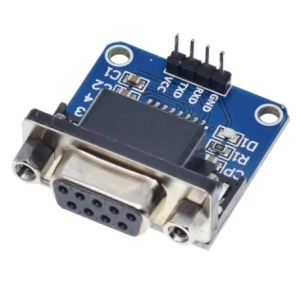
Premium RS232 to TTL Serial Converter with MAX3232 Chip – 3.3V/5V Compatible

SKU: FA2045
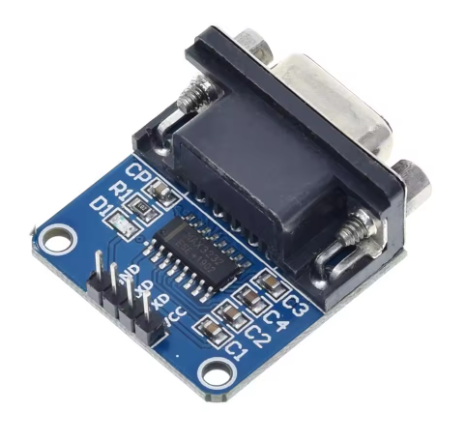
Control Chip

MAX3232 (True RS232 Transceiver)

Operating Voltage

3.0V to 5.5V DC

Logic Level (TTL)

3.3V / 5V Compatible

Interface 1

DB9 Female (RS232 Standard)

Interface 2

4-Pin Header (VCC, GND, TXD, RXD)

Max Data Rate

250 kbps

Operating Temp

-40°C to +85°C (Industrial Grade)

ESD Protection

Integrated ±15kV HBM Protection

Product Description
The Premium RS232 to TTL Serial Converter is an essential bridge for connecting legacy industrial hardware to modern microcontrollers and embedded systems. Built around the high-performance MAX3232 Integrated Circuit, this module facilitates seamless two-way communication between the high-voltage RS232 standard (found on PCs and industrial equipment) and the low-voltage TTL logic used by Arduino, Raspberry Pi, and STM32.
Unlike older converters, this module features a wide operating voltage range, making it natively compatible with both 3.3V and 5V systems without the need for external level shifters. Its compact design includes a high-quality female DB9 connector and a standard 4-pin header (VCC, GND, TX, RX), providing a robust, noise-resistant link for firmware flashing, industrial debugging, and long-term serial data logging.
Key Features
  • Genuine MAX3232 Architecture: Ensures stable, high-speed data transmission with superior electromagnetic interference (EMI) resistance compared to generic clones.
  • True 3.3V/5V Versatility: Automatically adapts to the logic level of your connected microcontroller, preventing accidental overvoltage damage.
  • High-Speed Data Rates: Supports reliable communication at speeds up to 250kbps, suitable for complex data streams and rapid firmware updates.
  • Industrial DB9 Connector: Features a high-durability female RS232 port with secure screw-locking compatibility for permanent installations.
  • Low Power Consumption: Optimized for energy efficiency, making it suitable for battery-powered diagnostic tools and field equipment.
  • Compact Form Factor: Small enough to be integrated into custom enclosures or used directly on a breadboard during the prototyping phase.
Usage & Applications
  • Industrial Maintenance: Connect modern laptops to older PLCs, CNC machines, or telecommunications hardware for diagnostics and configuration.
  • Firmware Flashing: Update or “unbrick” routers, hard drives, set-top boxes, and satellite receivers via their serial console ports.
  • Embedded Development: Interface RS232 sensors (GPS, Barcode Scanners, Scales) directly with an Arduino or Raspberry Pi.
  • Radio Integration: Programming and controlling commercial ham radios or professional walkie-talkie base stations.
  • Data Acquisition: Long-term logging of serial data from industrial lab equipment to a local database
Q: Can I power this module directly from my Arduino?

Yes. You can connect the VCC pin of the module to either the 3.3V or 5V pin on your Arduino. The module will automatically use that voltage as its logic reference for the TX and RX lines

Q: Do I need to install any drivers on my PC to use this?

No. This is a hardware-level voltage converter. Drivers are only required for the USB-to-Serial adapter if you are connecting this module to a computer via a USB port. If your computer has a native COM port (DB9), no drivers are needed

Q: How does the MAX3232 differ from the older MAX232 chip?

The primary difference is voltage compatibility. The older MAX232 requires 5V to operate, while the MAX3232 used in this module can operate perfectly at both 3.3V and 5V, making it compatible with modern low-power electronics.

Q: Why is my data coming through as "gibberish" or symbols?

This is usually caused by a baud rate mismatch or swapped wires. Ensure both your RS232 device and your microcontroller are set to the same speed (e.g., 9600). Also, try swapping the TX and RX lines on the TTL side.

Q: Is the DB9 connector male or female?

This module features a Female DB9 connector, which is the standard interface for connecting directly to a PC’s serial port or a USB-to-Serial cable